Why in News?
Recently, a Division Bench of the Madurai Bench passed a John Doe order restraining calls to defy the Supreme Court's interim order permitting the lighting of the Karthigai Deepam at the stone pillar (Deepathoon) atop Thirupparankundram hill in Madurai.
What is John doe orders and Section 163 BNSS?
- John Doe order (also known as an Ashok Kumar order in Indian jurisprudence) is an injunction directed against unidentified or unknown persons who cannot be named in advance when a court seeks to prevent threatened unlawful acts or violations.
- Scope of the High court's John doe order - The Madurai Bench restrained any open calls to defy or obstruct the Supreme Court's order, while drawing a clear line between permissible criticism of a court order and unlawful incitement to non-compliance.
- Constitutional duty - Article 144 requires all civil and judicial authorities across India to act in aid of the Supreme Court, meaning a pending review petition alone does not automatically suspend compliance unless stayed.
- Section 163 BNSS - Empowers an Executive Magistrate to issue urgent preventive orders in cases of nuisance or apprehended danger, which courts can scrutinize when challenged for overreach or impact on personal liberty and religious/customary practices.
What are the key legal and governance dimensions of the dispute?
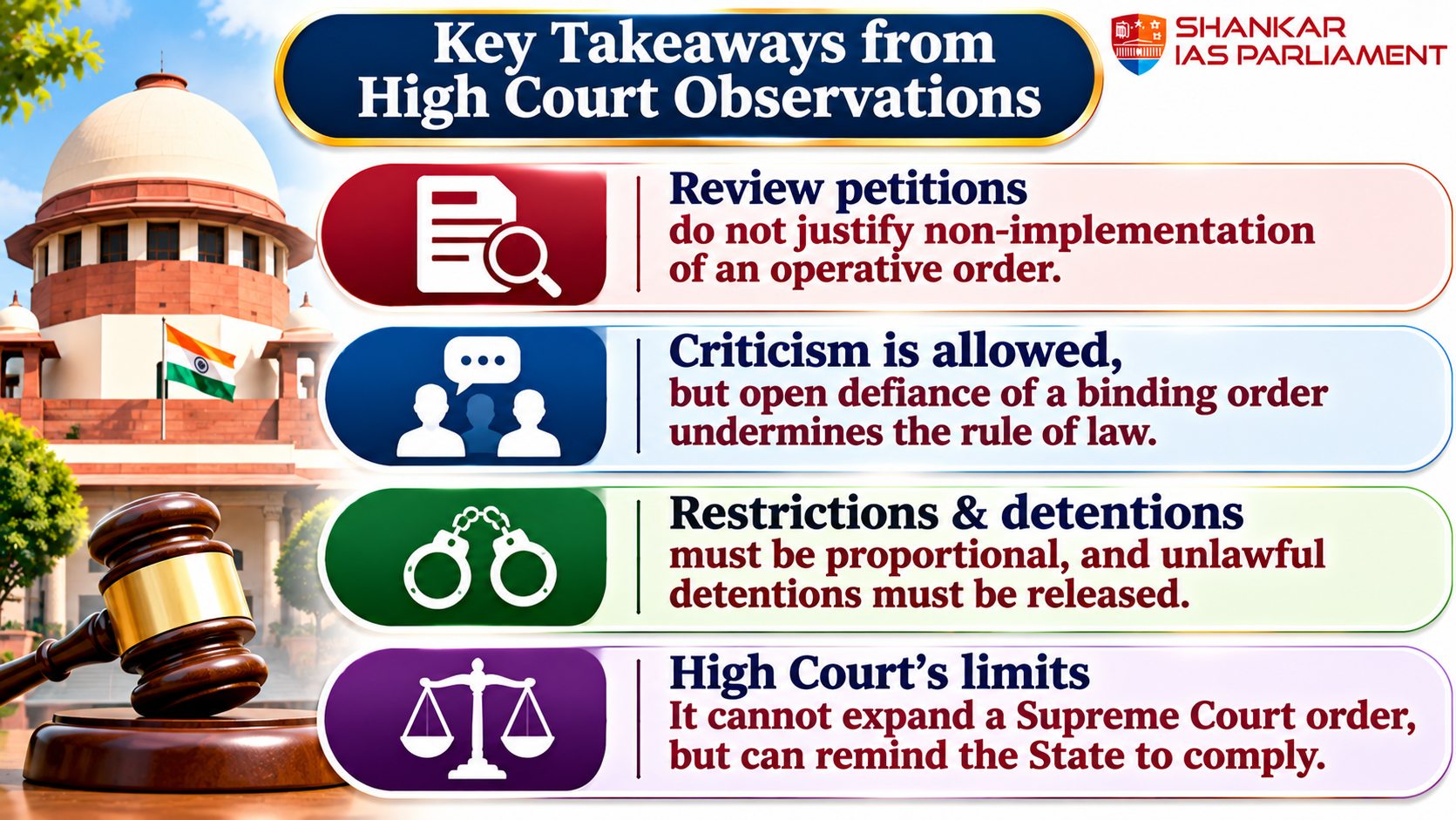
- Compliance pending review petitions- The High Court emphasized that filing or pendency of a review petition before the Supreme Court does not by itself justify non-implementation of an operative order.
- Criticism versus Defiance - While citizens and commentators may criticize judicial rulings—even sharply—calling for open defiance or obstruction of a binding order crosses into undermining the rule of law.
- Proportionality in prohibitory orders and detentions - Petitioners challenged district-wide Section 163 BNSS restrictions for affecting routine devotee movement and customary practices, and the High Court stressed that personal liberty is sacrosanct while calling for the release of unlawfully detained individuals.
- Limits of High court enforcement of Supreme court orders - A High Court cannot interpret or expand a Supreme Court order beyond its terms, though it can remind state officials of their constitutional obligation to obey binding directions.
Comparative Overview
|
Legal instrument
|
Core function
|
Role in the Thirupparankundram proceedings
|
|
John Doe Order
|
Preventive injunction binding unidentified persons threatened with unlawful conduct
|
Used by the Madurai Bench to restrain calls to defy the Supreme Court's lamp-lighting order
|
|
Article 144 of the Constitution
|
Mandates authorities across India to act in aid of the Supreme Court
|
Cited to underscore administrative duty to comply with the Supreme Court's interim directions
|
|
Section 163 BNSS, 2023
|
Authorizes urgent executive orders to prevent nuisance or apprehended danger
|
Invoked by Madurai district authorities and challenged before the High Court over scope and liberty impacts
|
What are the key governance and social challenges?
- Friction between Law-and-Order caution and judicial directions - Administrations managing sensitive sites face pressure to prevent gatherings and unrest while ensuring full compliance with court instructions.
- Preserving civil liberties during crowd control- Broad preventive restrictions and detentions can trigger litigation over proportionality, personal liberty, and access to worship or customary practices.
- Long-term resolution of underlying disputes- Interim, non-precedential arrangements address immediate seasonal events without resolving deeper questions of site status, custom, or long-term administration.
What is the way forward?
- State and district administrations should execute binding court directions promptly while keeping public communication clear to avoid confusion or escalations.
- Tailor law-and-order restrictions narrowly to genuine, time-bound security needs so routine movement, personal liberty, and peaceful observance are minimally disrupted.
- Protect robust public debate and criticism while preventing incitement to disorder or willful disobedience of court orders.
- Rely on orderly adjudication and consultative administration to maintain harmony around sensitive heritage sites over the long term.
Reference
The Hindu | Thirupparankundram Deepathoon row



