Mains: GS II – Health, Human Resources
Why in News?
Recently, the World Health Organization (WHO) report revealed that, more than 1 billion people are living with mental health disorders.
What is mental health?
- Mental health – The World Health Organization (WHO) defines mental health as a state of well-being in which every individual realizes his or her own potential, can cope with the normal stresses of life, can work productively and fruitfully, and is able to make a contribution to her or his community.
- Mental health is a public and global health topic that is not discussed as much as physical health.
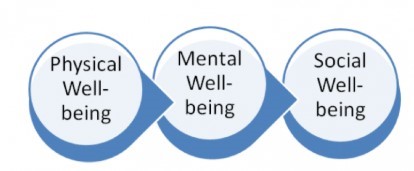
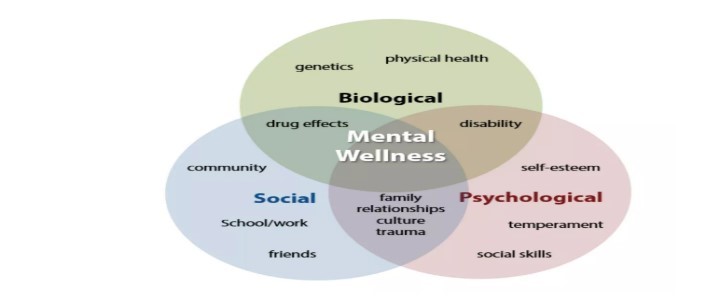
- Issues – The issues and impacts of mental health are
- Impacts everyone – Mental health conditions adversely affect people of all ages and income levels.
- Reason for disability – They represent the second biggest reason for long-term disability, contributing to loss of healthy life.
- Increases health care costs – They drive up health-care costs for affected people and families while inflicting substantial economic losses on a global scale.
- Transforming mental health services is one of the most pressing public health challenges.
- Stigma and reluctance – The hesitancy to seek help and treatment and lack of manpower remain the major concerns in the sector.
- The report states that most countries have functional mental health promotion initiatives such as early childhood development, school-based mental health and suicide prevention programmes.
- Over 80% of countries now offer mental health and psychosocial support as part of emergency responses, up from 39% in 2020.
What are the flaws in the mental care environment?
- Absence of legal reforms – While many countries have updated their policies, adopted rights-based approaches, and enhanced preparedness for mental health and psychosocial support during health emergencies, this momentum has not translated into legal reform.
- Countries remain off track to achieve the targets set in WHO’s Comprehensive Mental Health Action Plan.
- Fewer countries have adopted or enforced rights-based mental health legislation, and only 45% of countries evaluated laws in full compliance with international human rights standards.
- Reduced investments – The report reveals a concerning stagnation in mental health investment.
- Median government spending on mental health remains at just 2% of total health budgets, unchanged since 2017.
- Disparities in investments – While high-income countries spend up to $65 per person on mental health, low-income countries spend as little as $0.04.
- Less availability of mental health experts – The global median number of mental health workers stands at 13 per 100,000 people, with extreme shortages in low- and middle-income countries.
- Less Reforms and development of mental health services – Fewer than 10% of countries have fully transitioned to community-based care models, with most countries still in the early stages of transition.
- Inpatient care continues to rely heavily on psychiatric hospitals, with nearly half of admissions occurring involuntarily and over 20% lasting longer than a year.
- Integration of mental health into primary care is advancing, with 71% of countries meeting at least three of five WHO criteria.
- Gaps in data – Only 22 countries provided sufficient data to estimate service coverage for psychosis.
- Lack of care – In low-income countries fewer than 10% of affected individuals receive care, compared to over 50% in higher-income nations, highlighting an urgent need to expand access and strengthen service delivery.
What is India’s Status on Mental Health?
- Status in India – Mental illness affects around one in seven Indians, yet a large majority of those needing treatment do not receive it because of a severe shortage of mental-health professionals and inadequate access to care.
- Mental and physical health are closely connected.
- Initiatives – India already has important infrastructure in place, including Ayushman Bharat Arogya Mandirs, the District Mental Health Programme, and Tele-MANAS.
- Progress made – There has been significant infrastructure development, the national tele-mental health programme has expanded.
- The educational development is happening at a fast pace and focused work is being done to create awareness about mental health and the treatment.
- Insufficient budget – India’s direct mental health budget has remained at roughly Rs.1,000 crore for recent fiscal years, with FY 2025-26 allocating Rs.1,004 crore.
- This constitutes just over 1% of the Ministry’s budget, with significant portions going to central institutions and programmes.
- Adequate funding for community-based programmes and the effective utilisation of allocated funds is still a concern.
- Lack of experts – India has a significant shortfall of mental health professionals, with roughly 0.7 psychiatrists per 100,000 people, far below the WHO’s recommended ratio of 3 per 100,000 people.
What India could do Further?
- Expansion of Schemes – The next step is to expand the initiatives by training frontline health workers, strengthening community-based mental healthcare, and improving financial protection through insurance and government health schemes.
- Empowering Stakeholders – Empowering ASHA workers, investing in community-based care, and expanding affordable mental-health coverage.
- ASHA workers and other frontline health workers should receive better training so they can identify mental-health problems early, provide basic support, and connect patients with appropriate services
- Community-based programmes should be expanded, especially in rural and underserved areas, using trained community workers to make care more accessible and affordable.
- Mental-health treatment should become more financially accessible by expanding insurance coverage and outpatient benefits.
- Prioritising Mental Health – Treating mental health as an investment in human capital and economic development will be essential for building a healthier and more productive India by 2047.
- If India wants to achieve its vision of becoming a developed nation by 2047, mental health must become an integral part of public health policy rather than remaining a neglected issue.
- Mental health should be made a central part of India’s public health strategy if the country is to achieve the goal of Viksit Bharat 2047.
What is the way ahead?
- Ultimately, mental health is not merely a social or medical concern. It is an investment in India’s human capital, productivity, economic growth, and overall quality of life. Making mental well-being a core component of public policy will be crucial to achieving the ambitions of Viksit Bharat 2047.
If you are in distress, please reach out to MANAS at 14416 or 18008914416 and Sanjivini Society for Mental Health at 011-40769002
Reference
The Hindu| Mental Health



