Prelims: Current events of national and international importance | Energy
Why in News?
Recently, India’s peak demand touched 270.8 GW, highlighting the need for long‑duration energy storage (LDES) to balance renewable generation.
India’s Current Energy Storage Roadmap
- National Resource Adequacy Plan (2026) – envisages:
- 80 GW battery energy storage (4‑hour discharge).
- 94 GW pumped hydro storage (PHES) (6‑hour discharge).
- Limitation – Adequate for short‑term fluctuations, but insufficient for extreme weather (heatwaves, prolonged low generation).
LDES
- Definition – Technologies storing energy for 8 hours to days or weeks or seasons.
- Role – Provides reliability, balances supply‑demand, eases grid congestion, enhances resilience and ensures multi‑day stability during periods of peak demand or low generation.
LDES Technologies
- Pumped Hydro (PHES) – Uses two reservoirs at different heights; very efficient (70–80%) but possible only in suitable geography.
- Compressed Air (CAES) – Stores air in underground caverns or containers; releases it through turbines to make electricity.
- Thermal Storage – Keeps heat or cold in materials like molten salt; can supply power for 200 hours; still developing.
- Hydrogen Storage – Stores energy chemically as hydrogen; can last up to 1,000 hours; efficiency is lower.
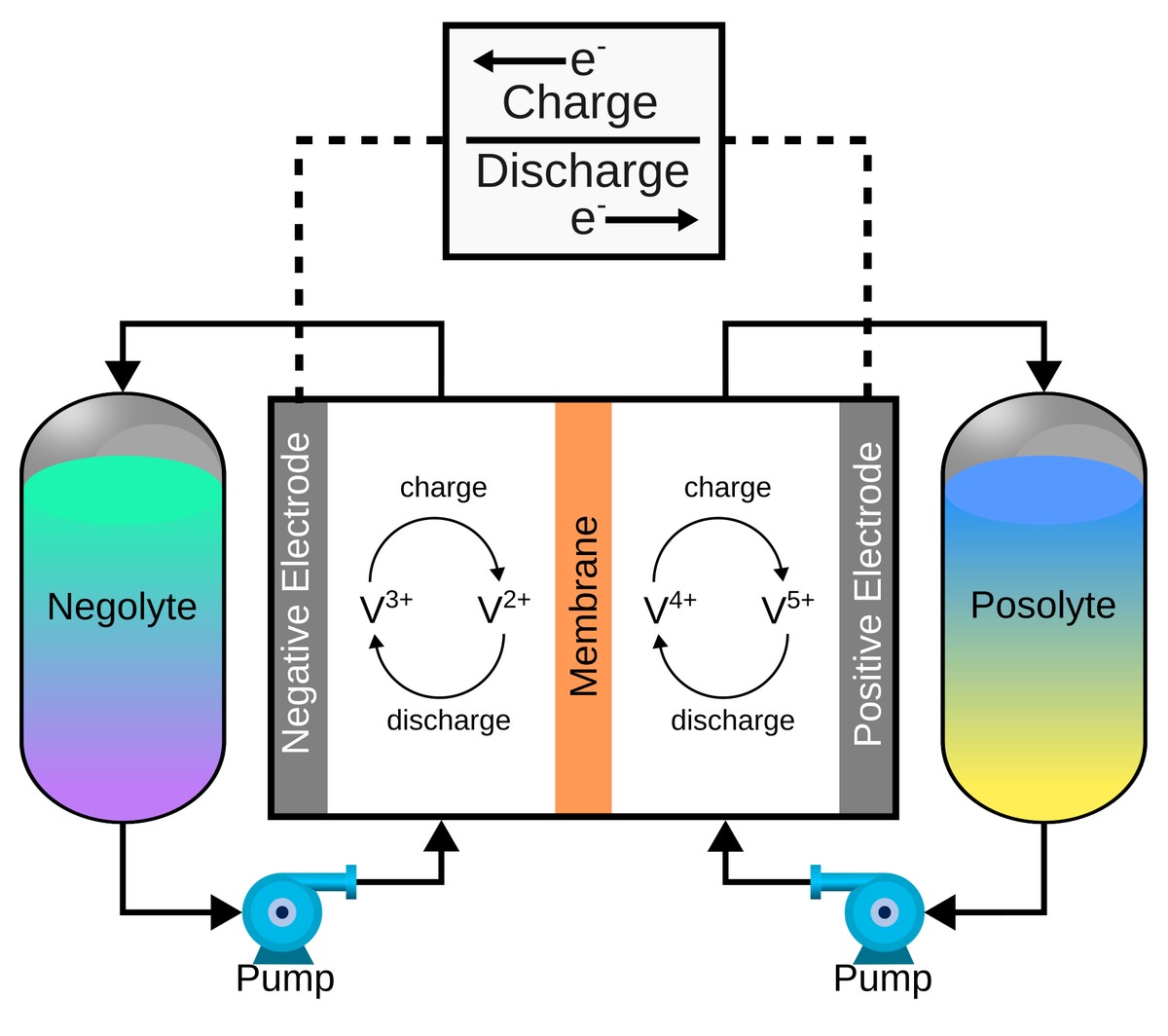
- Vanadium Flow Batteries – Store liquid electrolytes in tanks; easy to scale; provide steady power for 10–24+ hours.
Reference
The Hindu | LDES



