Mains: GS II | Polity
Why in News?
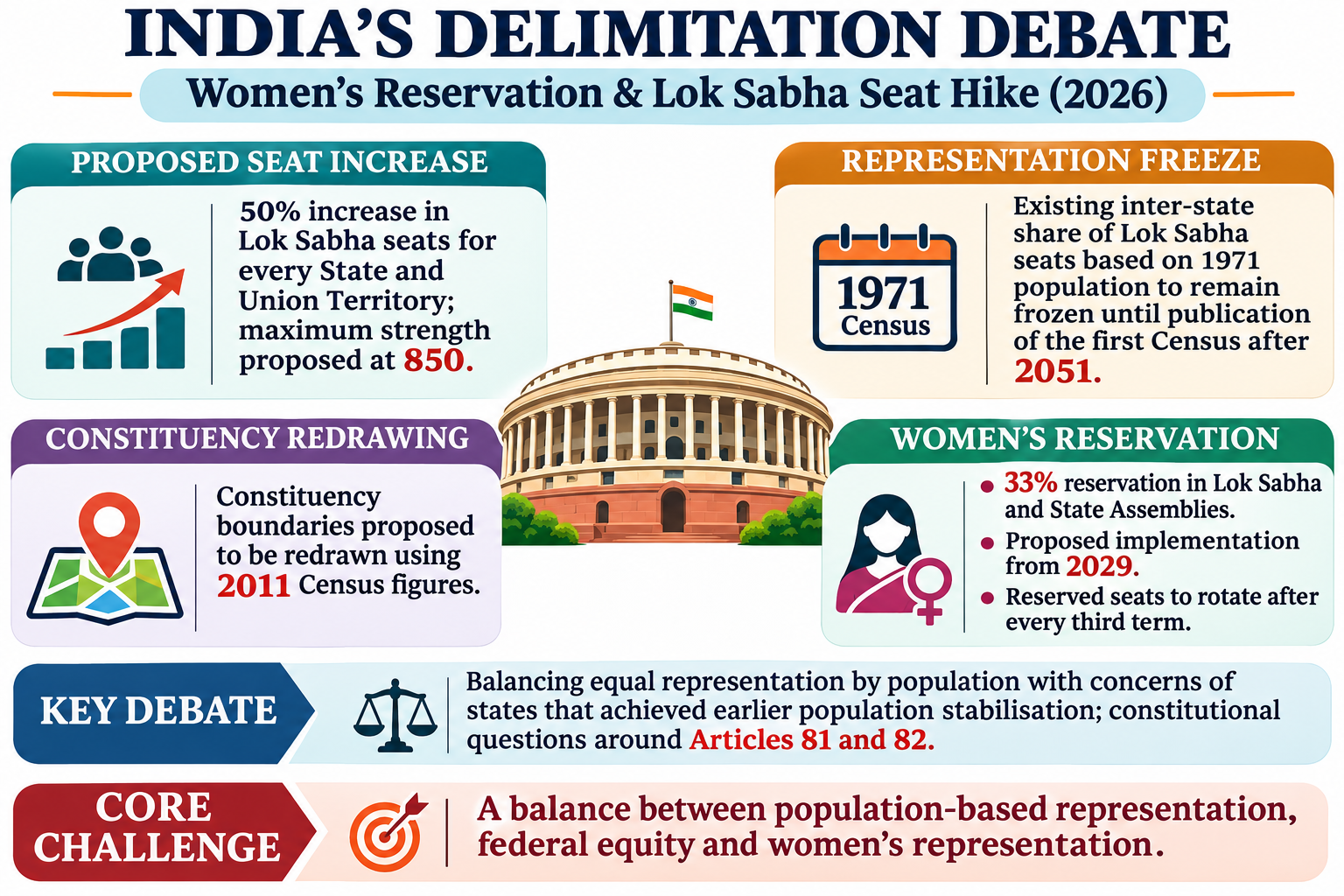
The Union Cabinet cleared a fresh Constitution Amendment Bill on proposing a 50% increase in Lok Sabha seats across states while freezing states' relative share of seats until 2051 ahead of a special parliamentary sitting.
How delimitation and women’s reservation became linked?
What are the constitutional, federal, and political dimensions?
|
Dimension |
Key constitutional and political considerations |
|
Constitutional Formula (Articles 81 and 82) |
Article 81(2)(a) sets a uniform state population-to-seat ratio subject to small-state rules, and the Constitution requires delimitation after each Census unless amended; legal experts note that an across-the-board 50% increase and freezing relative state shares requires clear constitutional alignment via Article 81 amendments rather than executive instruction alone. |
|
North–South Federal and Demographic Debate |
Southern states and regional leaders such as and the February 2024 Tamil Nadu Assembly resolution have sought protection of existing state seat shares (around 7.2% for Tamil Nadu) and population-stabilization incentives, while demographic historians note differing timelines of mortality decline and fertility stabilization across regions. |
|
Immediate Rollout vs. Delimitation Condition |
Opposition leaders argue that deleting Article 334A could allow women's reservation without waiting for Census and delimitation, whereas the government links the timeline to delimitation and its proposed 2029 target. |
|
Institutional and Electoral Process Scrutiny |
Critics have raised concerns over constituency boundary-drawing, all-party consultation, and confidence in electoral administration ahead of delimitation. |
What are the key challenges ahead?
What is the way forward?
Reference
Indian Express | How delimitation will change political representation?



