Overview
- Everyday Transformation – Swachh Bharat Mission (SBM) has laid a strong foundation for urban growth by shifting focus from simple waste collection/disposal to resource recovery and circularity.
Key Pillars of Sustainable Urban Growth –
- Value Recovery and Circularity – Promoting source segregation, recycling, reuse, and recovery as integral local practices.
- Civic Participation – Fostering community involvement and responsible habits across urban demographics.
- Digital Optimization – Utilizing data-driven systems and real-time digital monitoring for precise municipal service delivery.
Key City Case Studies
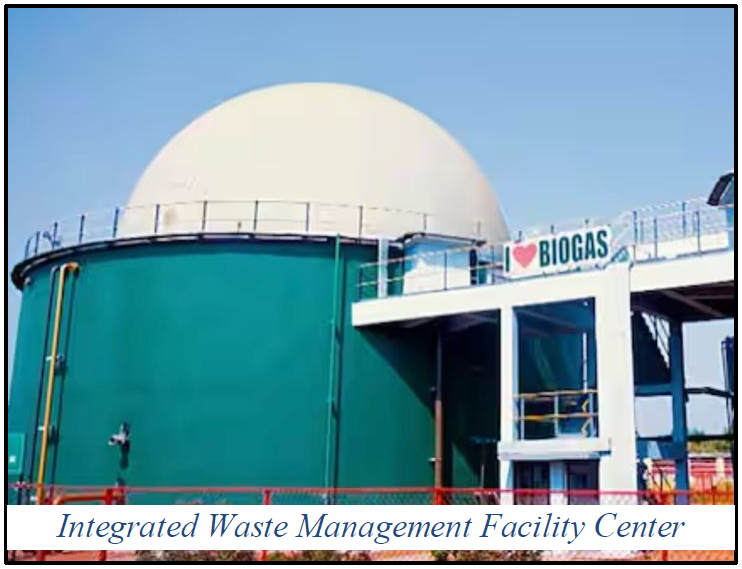
Greener Goa – Turning Waste into Energy (Saligao)
- Infrastructure Transformation – A former garbage dump spread across 113,000 m² in Saligao Valley was converted by the Goa Waste Management Corporation (GWMC) into an integrated eco-friendly hub.
- Operational Scale – Processes 250 metric tons of wet and dry waste daily (approx. 1/3 of Goa's total waste).
- Energy and Agricultural Output –
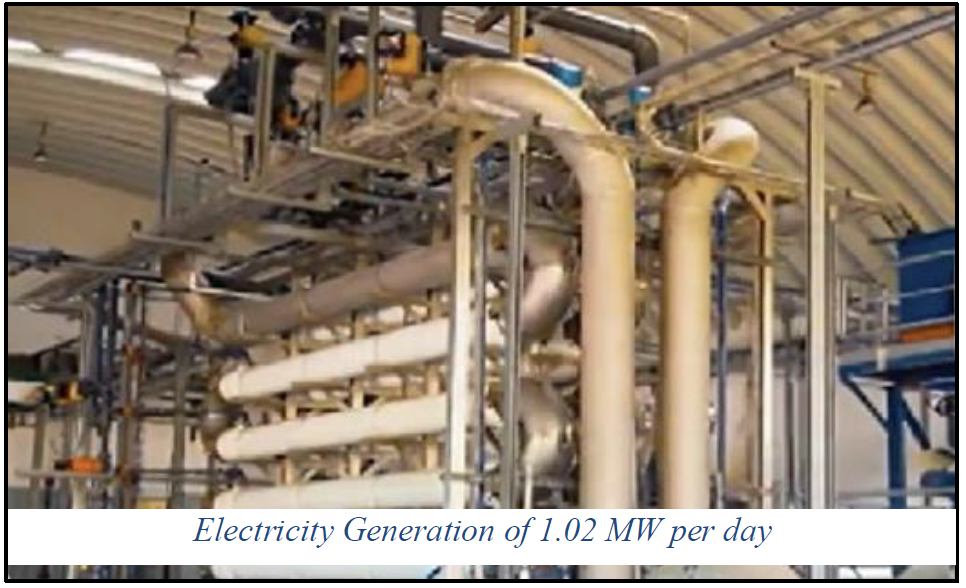
- Generates 1.32 kW of electricity from wet waste (powering 35 units, with half supplied to the Goa Electricity Department).
- Recovers recyclables from 100 metric tons of dry waste daily; remaining dry waste goes to cement plants for co-processing.
- Produces 7–8 tons of compost daily used by local panchayats for reforestation and gardening.
- Socio-Economic Impact – Operates 365 days a year to achieve zero-waste goals, transforming former waste pickers into a trained, full-time workforce with steady livelihoods.
Gandhinagar – Zero-Waste Journey Driven by Citizens
- Zero Waste Week (Sept 2–7, 2026) – Organized by Gandhinagar Municipal Corporation (GMC) across 25 city locations, directly engaging 600+ citizens and reaching 40,000+ via targeted social media campaigns.
- 3R Principles in Action –
- "My Theli" Stalls – Citizens donated used clothes, which local self-help group (SHG) women upcycled into reusable carry bags.
- "Swachhata Se Shuruvat" Campaign – Engaged school students through quizzes and interactive games centered on environmental responsibility.
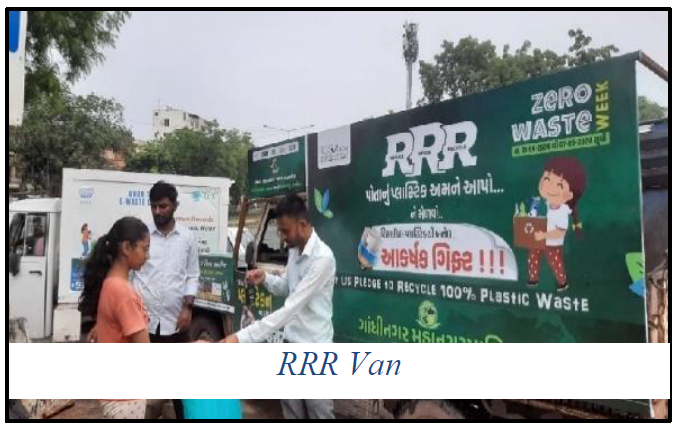
- Doorstep 3R Van – Collected old clothes, plastic, and e-waste directly from households, incentivizing participation with rewards and online testimonial sharing.
Kakinada – Smart Approach to Efficient Waste Management
- Demographic Coverage – Processes 144 tons of daily waste across 50 wards (382 micro pockets, each covering 250–350 households). Employed 973+ sanitation workers serving 112,993 households across 40,661 designated collection points.
- Technology Infrastructure –
- Online Waste Management System (OWMS) – Provides real-time tracking of waste collection and transportation.
- RFID and Facial Recognition – Gate-installed RFID tags are scanned during doorstep pickups, while a Facial Recognition System (FRS) tracks worker attendance.
- GPS-Enabled Logistics – 108 hopper vehicles equipped with GPS report route deviations directly to a Central Command Centre.
- Impact – Achieved 100% door-to-door waste collection and 60% source segregation among residents.
Ghaziabad – Turning Waste into Carbon Value
- Carbon Credit Accreditation – Ghaziabad Municipal Corporation (GMC) registered for an international United Nations-verified carbon credit project under the Verified Carbon Standard (VCS/UNFCCC).
- Pioneering Milestone – Follows Indore (Madhya Pradesh) to become the 1st urban local body in Uttar Pradesh and 2nd in India to monetize waste processing on the global carbon market.
- Core Initiatives and Environmental Impact –
- Replaced traditional streetlights citywide with energy-efficient LED lighting.
- Scaled wet waste composting to divert organic material from landfills and suppress methane emission.
- Projected to cut carbon emissions by 2.7 lakh tonnes (CO₂e), generating 2.7 lakh certified carbon credits to sell on international markets for municipal revenue.
Conclusion – Building Cities That Value Every Resource
- Integrated Urban Systems – Combining citizen action with digital oversight and green technology establishes cleaner, resource-efficient, and circular urban ecosystems.
- Scalable National Model – Local innovations show that waste processing can simultaneously protect the environment, boost local economies, and enhance urban living standards.
Reference
PIB



