Mains – GS III – Disaster management
Why in news?
Recent events in Gurugram show the growing vulnerability of Indian cities to both extreme heat and intense rainfall.
What is the issue?
- In May 2026, Gurugram experienced intense summer heat waves with 42°C, while several parts of Haryana crossed 44°C. Where IMD also issued heatwave warnings.
- In August, 2026, heavy monsoon rainfall caused severe waterlogging on major roads and low-lying areas.
- Underlying problems – It is not only extreme weather but also
- Unplanned urbanisation,
- Poor drainage,
- Loss of green spaces and
- Inadequate disaster preparedness.
- Natural hazard vs urban disaster – According to the UN Office for Disaster Risk Reduction (UNDRR)
- The disaster risk emerges from the interaction between a hazard and the vulnerability and exposure of people and infrastructure.
- For example – A heatwave, cloudburst or cyclone is a natural hazard. It becomes a disaster when people and infrastructure are exposed with poor preparedness.
India’s urban population is expected to reach 951 million by 2050, and more than 144 million new homes may be required by 2070.
|
Case study – Bengaluru – Example of Land-Use Transformation
|
- Research by the Indian Institute of Science found that Bengaluru's built-up area increased from around 8% in 1973 to nearly 74% in 2013.
- While vegetation declined from 68% to less than 15%.
- This illustrates how rapid land-use change can increase both urban flooding and heat stress.
|
Why are Indian cities becoming more vulnerable?
- Unplanned urbanisation – Rapid construction is replacing agricultural land, vegetation and open spaces.
- Natural drainage channels and floodplains are increasingly encroached upon.
- Increase in impervious surfaces – Concrete, asphalt and buildings reduce groundwater infiltration.
- Rainwater flows rapidly as surface runoff, increasing waterlogging.
- Urban heat island effect – Dense buildings, asphalt and reduced vegetation absorb and retain heat.
- Urban centres can be 3–4°C warmer than surrounding areas.
- Loss of Green and blue infrastructure – Declining tree cover, wetlands, lakes and open spaces reduce both cooling and water-retention capacity.
- Climate change – Climate change is increasing the frequency and intensity of extreme heat and episodes of intense rainfall.
What are the economic and social costs of urban disasters?
- Loss of life and health – Extreme heat and floods can cause deaths, injuries, heat-related illnesses and water-borne diseases.
- Loss of wages – Informal workers may lose daily income when extreme weather prevents them from working.
- Disruption of small businesses – Flooding and heat can damage shops, stocks and equipment, reducing business activity.
- Damage to infrastructure – Roads, buildings, drainage systems, electricity networks and public facilities may be damaged.
- Traffic and productivity losses – Waterlogging and extreme heat cause traffic jams, delays and reduced workplace productivity.
- Higher healthcare expenditure – Increased illness and injuries raise household and government spending on healthcare.
- Repeated displacement and recovery – Frequent disasters force people to relocate temporarily and require repeated spending on repairs and rehabilitation.
What are the recent policy and institutional changes?
- Disaster Management (DM) Act, 2005 – Created disaster management institutions at the national, state and district levels.
- DMA Amendment, 2025 – Section 41A enables states to establish Urban Disaster Management Authorities (UDMAs) in state capitals and cities with municipal corporations
- Exception Delhi and Chandigarh.
|
Urban Disaster Management Authorities (UDMAs)
|
- Headed by – the Municipal Commissioner.
- Responsible for – Preparing and implementing urban disaster management plans.
- A national database is envisaged for risk assessments, mitigation plans and real-time disaster information.
|
- Heatwaves and Lightning – In 2026, heatwaves and lightning were included among notified natural calamities for the 2026–31 Finance Commission period.
- This enables states to access disaster response funds for eligible relief and disaster mitigation funds for heatwave mitigation.
What are the persisting challenges in urban disaster management?
- Institutional gap – Many states have not yet established Urban Disaster Management Authorities.
- Fragmented Governance – The responsibilities remain divided among municipal bodies, district administrations and state departments.
- Implementation of Urban Disaster Management Authorities remains limited.
- Lack of Urban Planning Capacity – A NITI Aayog report (2021) found that 65% of 7,933 urban settlements lacked a master plan.
- India had fewer than 4,000 sanctioned town-planner posts against an estimated requirement of around 12,000. Many sanctioned positions remained vacant.
- Planning–Implementation Gap – Master plans often fail to adequately protect lakes, floodplains, drainage channels and open spaces.
- Limited legal integration – Climate and disaster plans may remain advisory rather than becoming part of statutory land-use decisions.
What measures can be taken?
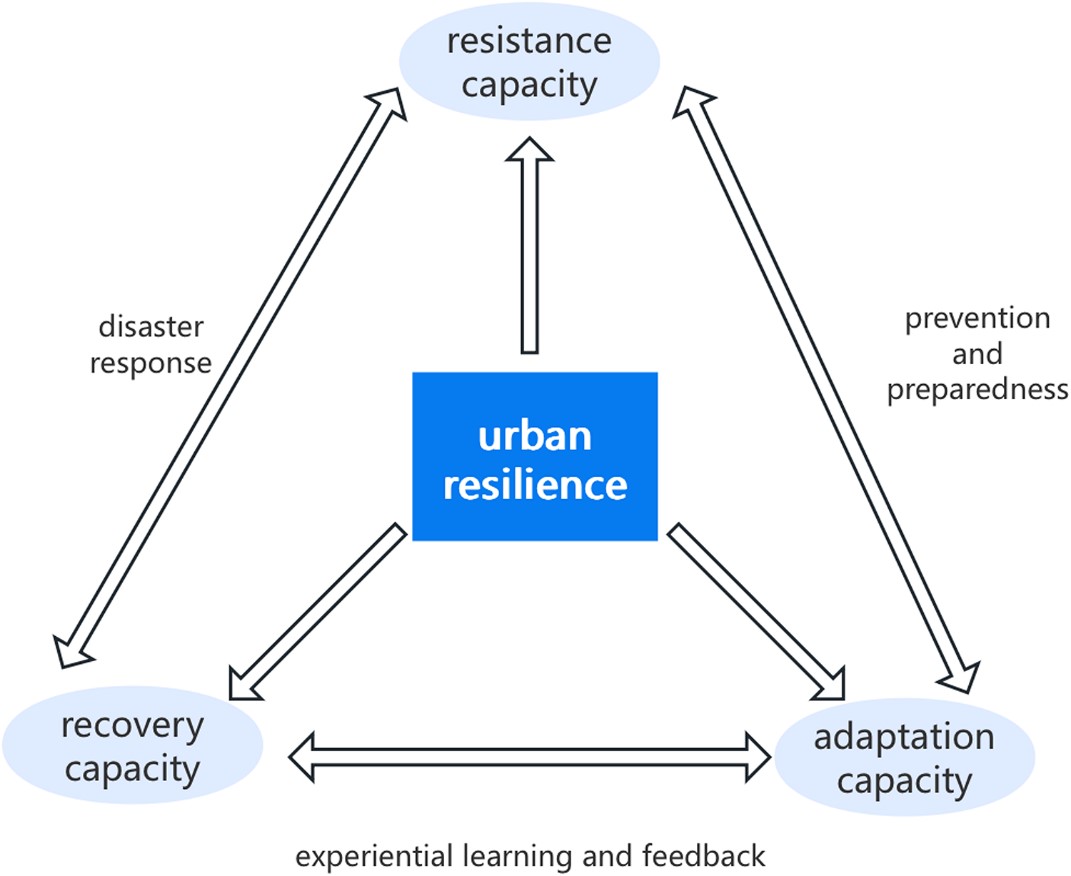
- Risk-informed urban planning – Prepare detailed flood-risk and heat-risk maps.
- Restrict construction in flood-prone areas. Integrate climate risks into statutory master plans.
- Strengthen blue-green infrastructure – Protect wetlands, lakes, floodplains and drainage channels.
- Expand urban forests, parks, tree cover and permeable surfaces.
- Improve drainage systems –Promote rainwater harvesting and urban water retention. Upgrade drainage according to changing rainfall intensity.
- Safeguard natural drains – Restore natural drainage channels. Prevent encroachment and dumping in storm-water drains.
- Heat-resilient cities – Increase tree cover and shaded public spaces. Promote cool roofs and climate-responsive building designs.
- Capacity building – Recruit qualified urban planners, hydrologists, climate experts and engineers for urban planning and implementation.
- Shift from relief to prevention – Link municipal grants and infrastructure spending with compliance with disaster-risk plans.
- Improve preparedness – Use early warnings to trigger pre-decided actions such as school closures, traffic diversions and changes in outdoor working hours.
What lies ahead?
- Indian cities cannot eliminate extreme rainfall or heatwaves, but they can reduce their impacts.
- Urban disasters are increasingly a consequence of planning and governance failures rather than weather alone.
- India needs to move from a “disaster response” approach to a “risk-informed urban development” approach.
- It needs every road, building, drainage project and land-use decision incorporates climate and disaster resilience.
Reference
The Indian Express| Urban Flooding and Heatwaves in Indian Cities



