Mains: GS III – Energy security
Why in news?
E20 is a promising alternative to fossil fuels in the long-term, but requires behavioural changes among consumers.
What is ethanol blending?
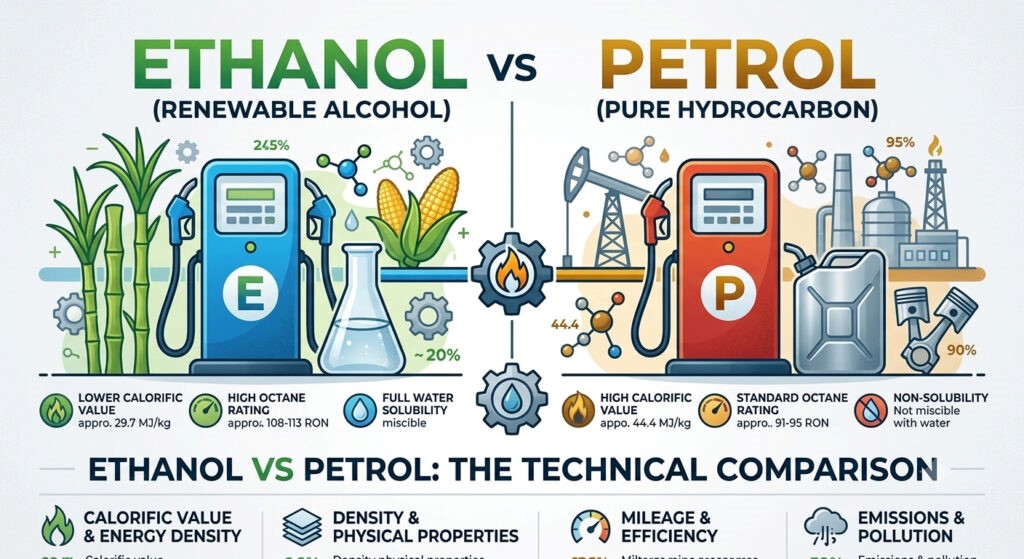
- Ethanol blending – It is the practice of mixing ethyl alcohol (a renewable plant-based biofuel) with standard petrol to create a cleaner-burning vehicle fuel
- Source – Ethanol is made by fermenting sugars and starches from crops like sugarcane, corn, maize, or surplus food grains.
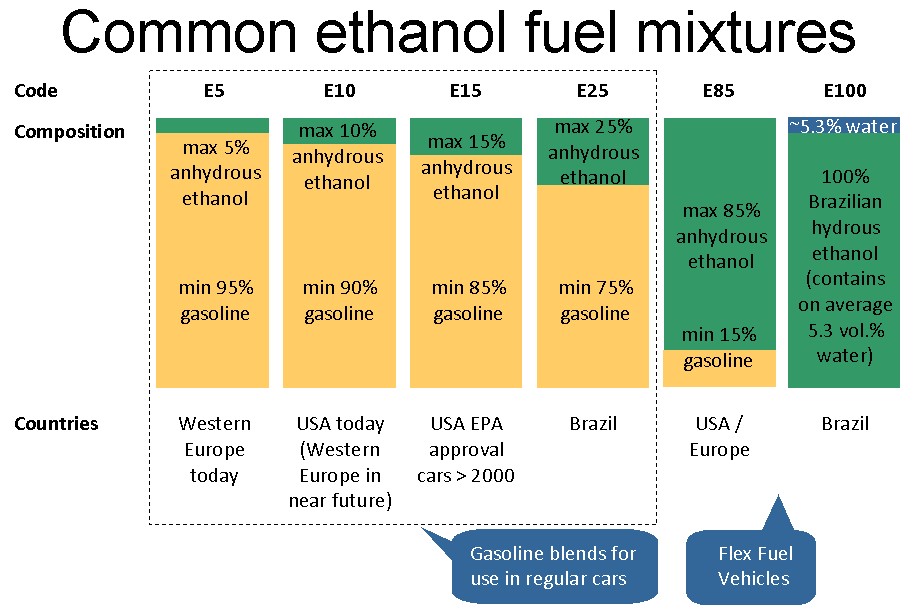
- Naming – Blends are named by their ethanol percentage, such as
- E10 (10% ethanol, 90% petrol)
- E20 (20% ethanol, 80% petrol)
- E85 (80% to 85% ethanol and 15% to 20% petrol) strictly meant for compatible flex-fuel vehicles (FFVs).
- Key benefits –
- Ethanol contains oxygen molecules that help fuel burn more completely, reducing harmful carbon monoxide and hydrocarbon exhaust.
- Energy Security – Mixing plant-based fuel with petrol reduces the amount of crude oil a country must import.
- It gives farmers an extra market to sell surplus crops and agricultural waste
What are the possible challenges associated with ethanol blending?
- Food vs Fuel – Diversion of food grains and sugarcane for ethanol may affect food availability and prices.
- Water stress – Sugarcane-based ethanol can increase groundwater pressure due to high water requirements.
- Regional imbalance – Ethanol production is concentrated in a few states, creating logistical and supply-chain challenges.
- Environmental concerns – Cultivation, processing and transport may involve significant water use and emissions.
- Farmer dependence – Excessive focus on sugarcane may encourage monocropping and distort cropping patterns.
- Federal coordination – Effective implementation requires coordination among the Centre, states, farmers, OMCs and automobile manufacturers.
- Feedstock sustainability – Overdependence on a few feedstock’s can make ethanol supply vulnerable to crop failures.
- Transition challenge – Ethanol alone cannot decarbonise transport; it must complement EVs, public transport, green hydrogen and energy efficiency.
Why is Ethanol blending important for India?
- Energy security – Reduces dependence on imported crude oil.
- Foreign exchange savings – Lower crude oil imports reduce the import bill.
- Lower fossil-fuel consumption – Ethanol partially substitutes petrol.
- Climate benefits – Can reduce lifecycle greenhouse-gas emissions compared with pure fossil petrol.
- Price stability – Greater domestic fuel sources can reduce vulnerability to international crude-oil price shocks.
- Agricultural linkages – Creates an additional market for sugarcane and other feedstocks used for ethanol production.
- Strategic autonomy – Reduces India's exposure to geopolitical disruptions in major oil-producing regions.
Why are consumers dissatisfied?
- Lower fuel efficiency – E20 can result in lower fuel efficiency in some vehicles compared with lower ethanol blends.
- High cost – Consumers are not seeing a direct price benefit at petrol pumps.
- Limited fuel choices – The transition has largely been supply-driven, leaving consumers with limited fuel choices.
- Lack of awareness – Government benefits such as foreign-exchange savings and greater energy security are indirect and difficult for consumers to perceive.
What measures can be taken?
- Differential pricing – Price ethanol-blended fuel lower than conventional petrol to compensate for lower mileage.
- Consumer choice – Where technically and logistically feasible, allow different fuel blends to coexist during the transition.
- Vehicle compatibility – Ensure automobiles are designed and certified for higher ethanol blends.
- Transparent communication – Publish data on fuel savings, import substitution and environmental benefits.
- Gradual transition – Align blending targets with vehicle compatibility and availability of ethanol.
- Feedstock diversification – Reduce excessive dependence on sugarcane and promote sustainable feedstocks such as agricultural residues.
- Lifecycle assessment – Evaluate ethanol policy on water use, land use, food security and emissions along with energy-security gains.
What lies ahead?
- India's ethanol policy reflects the larger challenge of green transition in a developing economy.
- Public policy need to ensure that the costs of transition are not disproportionately borne by consumers.
- A successful E20 transition therefore requires a combination of energy security, environmental sustainability, consumer choice, technological adaptation and fair pricing.
Reference
The Indian Express| Urban Flooding and Heatwaves in Indian Cities



