Lateral Entry
The UPSC recently issued advertisement to recruit 45 candidates through lateral got criticism from opposition party that the centre was trying to bypass reservation policies.
- Lateral entry is the appointment of specialists (including those from the private sector) in government departments on a contract basis for a period of 3 years.
- This contract can be extended up to 5 years based on the candidate’s performance.
- The concept of lateral entry was first endorsed by the Second Administrative Reforms Commission established by it in 2005.
- Recommended by – NITI Aayog in 2017.
- Posts - Based on the above recommendation, the first vacancies for lateral entrants were advertised in 2018, but only for Joint Secretary level positions.
Joint Secretary is the third-highest rank (after Secretary and Additional Secretary) in a Department, and functions as the administrative head of a wing in the Department.
- Posts of the rank of Director and Deputy Secretary were opened later.
- Directors are one rank below Joint Secretaries, and Deputy Secretaries are one rank below Directors, although in most ministries, they perform the same job.
- Directly recruited Central government employees are not eligible for these posts.
- Experience - Applicants for the post of joint secretary should have a minimum of 15 years experience in the relevant domain.
- Age limit
- Joint secretary – 40 and 55.
- Director – 35-45.
- Deputy secretary posts - 32-40
- No quota - Reservation or caste-based quotas do not apply to these recruitments.
- In the last few years, a total of 63 appointments have reportedly been made through lateral entry out of which 35 were sourced from the private sector.
- The latest batch of lateral recruitment is seen as the biggest move to reform the bureaucracy by tapping in external talent.
References
- The Indian Express | Lateral entry into bureaucracy
- Business Standard | Lateral entry
Namdhari sect
8 persons were recently injured after 2 factions of the Namdhari sect opened fire at each other over a land dispute near the dera in Sirsa’s Jiwan Nagar in Haryana.
- The Namdharis are a Sikh sect that differs from mainstream Sikhs chiefly in that it believes that the lineage of Sikh Gurus did not end with Guru Gobind Singh (10th human Sikh Guru).
- The Namdharis were also known as “Kukas” because of their trademark style of reciting the “Gurbani” (Sayings/Teachings of the Guru).
- This style was in a high-pitched voice called “Kook” in Punjabi. Thus, the Namdharis were also called “Kukas”.
- Kuka Movement - The Kuka movement marked the 1st major reaction of the people in Punjab to the new political order initiated by the British after 1849.
- The Namdhari Movement, of which the Kuka Movement was the most important phase, aimed at overthrowing the British rule.
- Founded by - Satguru Ram Singh on Baisakhi in 1857.
- Satguru Ram singh
- He challenged the status quo, advocated social reform, and resisted the Raj in various ways.
- He asked his followers to boycott everything which bore the stamp of the British Government.
- He appointed Governors and Deputy Governors to organize Kukas in different districts of Punjab.
- He also inspired young men by giving them military training.
- The British inflicted terrible punishments on the Namdharis and deported Ram Singh to Rangoon, from where he never returned.
- The Namdharis believe Ram Singh is still alive, and will return one day. Until then, they mourn his absence by wearing white.
- Kukas supported civil disobedience and the Non-Cooperation movement for Indian independence.
- Supreme Gurbani - Namdhari Sikhs consider the Guru Granth Sahib as the Supreme Gurbani, but they also believe in a living human Guru.
- Belief - The Namdharis consider the cow to be sacred, they are teetotallers, and avoid even tea and coffee.
- Headquarters - The sect’s sprawling headquarters is located in Ludhiana’s Bhaini Sahib near village Raiyaan, where Ram Singh was born.
- Spread across - The sect has its deras across Punjab and Haryana, and has a presence in a few other countries, too.
References
- The Indian Express | Namdhari sect
- Hindustan Times | Namdhari sect clash in Sirsa
Prokaryotes
Scientists recently found that prokaryotes are remarkably resilient to climate change and as a result, could increasingly dominate marine environments.
- A prokaryote is a single-cell organism whose cell lacks a nucleus and other membrane-bound organelles where Eukaryotic cells have membrane-bound organelles, such as a nucleus and mitochondria.
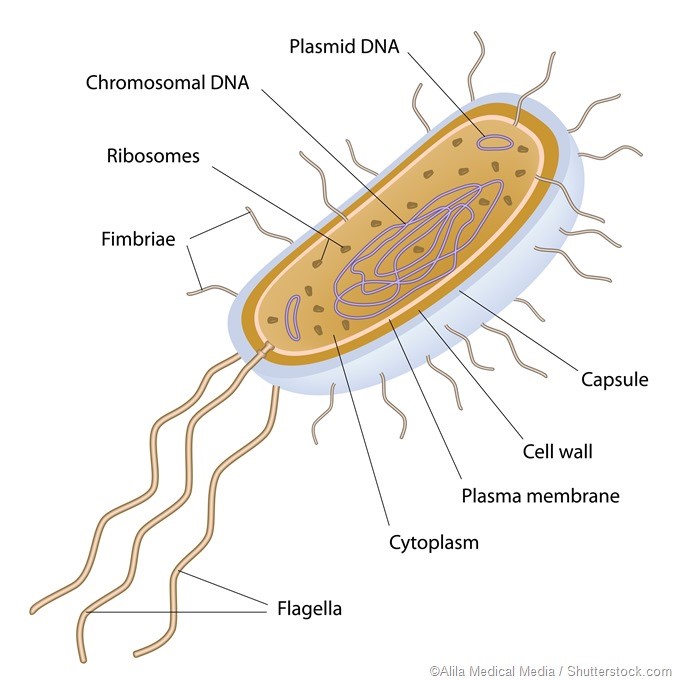
- Prokaryotes include both bacteria and archaea, another type of single-celled organism.
- Structure - Most prokaryotes are small, single-celled organisms that have a relatively simple structure.
- These organisms are thought to be the oldest cell-based lifeforms on Earth.
- Organelles - Prokaryotic cells are surrounded by a plasma membrane, but they have no internal membrane-bound organelles within their cytoplasm.
- Size - Prokaryotic cells are typically 0.1–5.0 micrometers (μm) in diameter, which is much smaller than eukaryotic cells, which can range from 10–100 μm.
- Adaptability - They thrive across the entire planet on land and in water, from the tropics to the poles.
- Significance - They play a crucial role in the world’s food chains, helping support the nutrient needs of fish humans catch and eat.
- Carbon emission - Marine prokaryotes grow extremely fast a process that emits a lot of carbon.
- In fact, prokaryotes to an ocean depth of 200 metres produce about 20 billion tonnes of carbon a year double that of humans.
- This massive carbon output is balanced by phytoplankton another type of microscopic organism which turns sunlight and carbon dioxide into energy, through photosynthesis.
- Recent findings – Prokaryotes play an important role in keeping the oceans in balance. But the research shows this balance is at risk.
- It is found that prokaryotes are remarkably resilient to climate change and as a result, could increasingly dominate marine environments.
- This could reduce the availability of fish humans rely on for food, and hamper the ocean’s ability to absorb carbon emissions.
References
The Hindu | Prokaryotes
Malabar Tree Toad
According to a recent study, Climate change may decrease the distribution range of the Malabar Tree Toad (MTT) by up to 68.7 %t of the current estimated distribution in India’s protected areas (PAs).
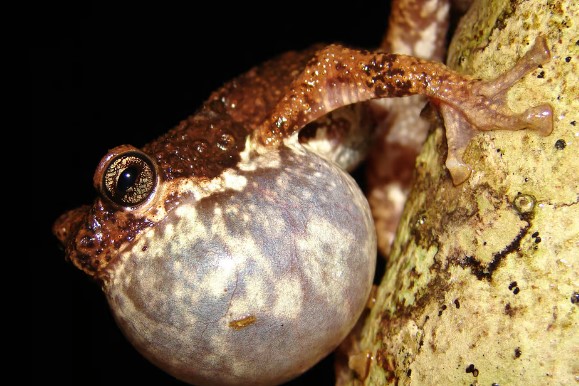
- Malabar Tree Toad (MTT) – It is a small warty Asian Toad amphibian species endemic to western ghats.
Toad is a common name for certain frogs, especially of the family Bufonidae, that are characterized by dry, leathery skin, short legs, and large bumps.
- Scientific name - Pedostibes tuberculosus.
- Genus – It is the only species in the monotypic genus Pedostibes.
- Physical Characteristics
- This is a slender frog with a moderate-sized head.
- The male has a subgular vocal sac.
- Females are larger than males.
- Adults of this toad grow to 3.6-3.85 cm in length.
- Habitat –It is the only arboreal toad species in India, having the unique capability to climb trees.
- It is found in wet tree hollows or leaf bases containing water.
- They are found along Western Ghats at elevations of 250 m to over 1000 m, often beside streams.
|
Habitats of Malabar Tree Toad
|
|
Tamilnadu
|
- Kalakad Mundanthurai Tiger Reserve
|
|
Kerala
|
- Silent Valley National Park
|
|
Karnataka
|
- Sharavathi Valley Wildlife Sanctuary
- Mookambika Wildlife Sanctuary
- Brahmagiri Wildlife Sanctuary
- Kudremukha National Park
|
|
Goa
|
- Netravali Wildlife Sanctuary
- Mhadei Wildlife Sanctuary
- Mollem National Park
|
- Discovery - It was first discovered in 1876.
- It was later rediscovered in 1980 at Silent Valley National Park in Kerala.
- Conservation Status
- IUCN – Endangered.
- Wild of Protection Act ,1972– Schedule II
- CITES – Not listed.
- Threat – Habitat fragmentation, pollution, disease and orphological deformities with climate change has led to the decline of amphibian populations in the past 40 years.
- Annual precipitation influences species populations and distribution.
Amphibians are one of the most sensitive groups to the impacts of climate change due to their unique ecology.
- Drought situation experienced by toads and frogs of Karnataka in 2023 impacted their breeding and nesting habitats.
References
- DownToEarth | Malabar Tree Toad
- INaturalist | MTT
International Earth Sciences Olympiad (IESO)
The Indian student team has bagged multiple prestigious medals at the 17th edition of the International Earth Sciences Olympiad (IESO).
- IESO – It is established in 2003 at the International Geoscience Education Organization Council Meeting in Calgary, Canada.
- It is an annual competition for secondary school students from across the globe.
- Aim - To generate awareness of earth sciences through teamwork, collaboration, exchanging ideas, and competition.
- Vision - To generate interest of the young in various fields of earth system sciences, with a focus on promoting awareness and solution-centric discussions around climate change, environmental challenges and natural disasters.
- Competition Categories
- Theory and Practical
- Earth Science Project
- International Team Field Investigation
- Data Mining.
- 17th Edition of IESO - It held in Beijing, China, from August 08-16, 2024.
- India & IESO - India has participated in the IESO since 2007 and hosted its 10th edition in Mysore.
- The four-membered Indian team comprising students from Gujarat, Kerala, Chhattisgarh, and Rajasthan have won three gold and bronze each and two silver medals across three competition categories.
- INESO - To encourage the participation of Indian students (of grades 9 to 12) in IESO, the MoES supports the Indian National Earth Science Olympiad (INESO) held in various schools across India.
- INESO is a national-level prelude to the IESO and is facilitated annually by the Geological Society of India in collaboration with MoES.
- Assessment topics - Geology, Meteorology, Oceanography, and Environmental sciences.
- The MoES supports the INESO and IESO as part of the REACHOUT scheme under the PRITHVI (PRITHvi Vigyan) scheme.
- REACHOUT - Research, Education, Training and Outreach scheme.
- It aims to support research, education, and training in Earth System Science in India.
- REACHOUT is an umbrella scheme of the following 6 sub-schemes.
- Research and Development in Earth System Science (RDESS).
- Outreach and awareness.
- Knowledge Resources Center Network (KRCNet).
- BIMSTEC Centre for Weather and Climate (BCWC).
- International Training Centre for Operational Oceanography (ITCOocean).
- Program for development of skilled workforce in Earth system sciences (DESK).
References
- PIB | IESO
- MoES | REACHOUT



