|
One Liners 17-08-2026
|
|
History, Art and Culture
|
18 Monuments Delisted from Protected List
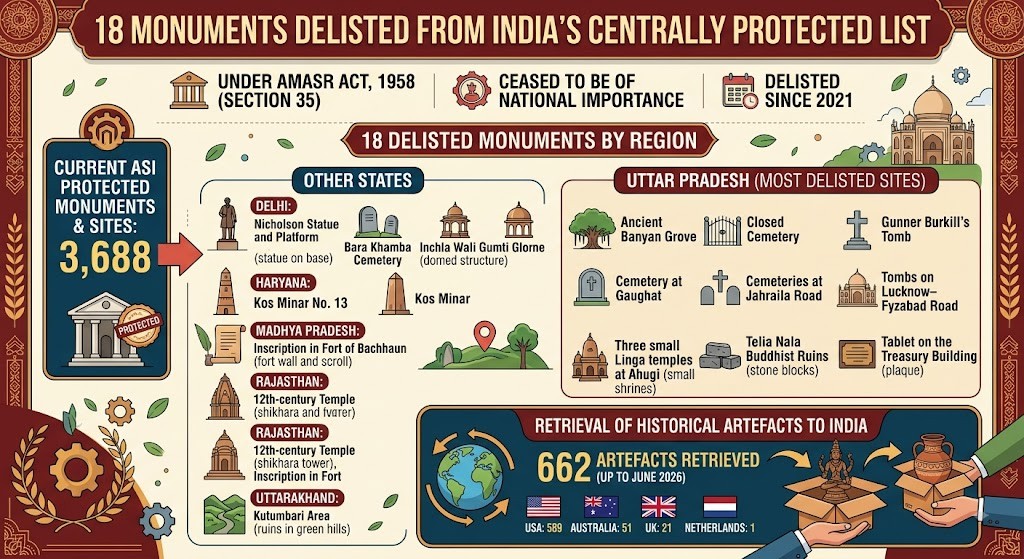
Since 2021, Centre delisted 18 monuments under the AMASR Act, 1958 as they ceased to be of national importance.
- Uttar Pradesh’s Monuments –
- Ancient Banyan Grove
- Closed Cemetery
- Gunner Burkill’s Tomb
- Cemeteries at Gaughat & Jahraila Road
- Tombs on Lucknow– Fyzabad Road,
- 3 Linga temples at Ahugi
- Telia Nala Buddhist Ruins
- Treasury Building Tablet.
- Other Monuments –
- Nicholson Statue
- Bara Khamba Cemetery
- Inchla Wali Gumti (Delhi)
- Kos Minars (Haryana)
- Bachhaun Fort Inscription (Madhya Pradesh)
- 12th‑century Temple and Fort Inscription (Rajasthan)
- Kutumbari Area (Uttarakhand).
- ASI Coverage – Archaeological Survey of India (ASI) now maintains 3,688 centrally protected monuments/sites.
- Section 35 of AMASR Act – It allows delisting of monuments losing national importance.
- Artefacts Retrieved – India retrieved 662 historical artefacts from abroad till June 2026.
- Sources – 589 from USA, 51 from Australia, 21 from UK, 1 from Netherlands.
|
|
Geography
|
|
Major oil spill at Hara mangrove forests in Persian Gulf
Recently, Major oil spill at Hara mangrove forests threatened as West Asia conflict hampers cleanup, risking marine life and coastal defences.
- Hara mangroves – UNESCO Biosphere Reserve, nursery for shrimp, crabs, fish, and migratory birds.
- Consists mainly of Grey Mangrove Trees.
- Roots filter saline water, prevent erosion, act as carbon sinks.
- Impact – Risk of collapse in food chain, damage to fisheries, tourism, and local livelihoods.
|
|
Study on Wildfires
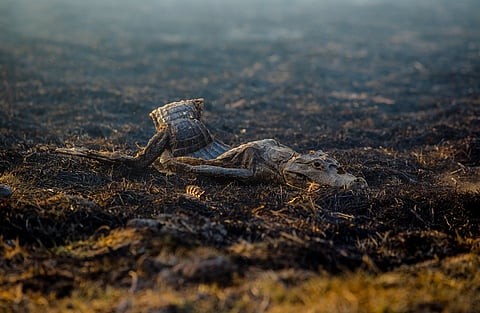
Over 4 million hectares of protected tropical forest, twice Wales’ size, destroyed globally since 2001.
- Scale – 4 million+ hectares lost (2001–2024), mostly in tropical Americas (89%), especially Brazil.
- Acceleration – Destruction rate nine times higher since 2016; one‑third of losses in 2024 alone.
- Findings – Protected areas burn less than unprotected, but follow same worsening wildfire trend.
- Implications – Climate change intensifies risk; protection alone insufficient.
- Researchers urge fire prevention in conservation planning with community collaboration.
|
|
Social Issues
|
|
Cancer as Notifiable Disease
Recently Supreme Court directs 19 States/UTs to consider declaring cancer notifiable for early detection and care.
Current Status – 17 States/UTs have already notified cancer as a notifiable disease.
Centre’s Stand – Health is a state subject; compliance left to States/UTs.
Court Orders – Remaining 19 States/UTs to consider recommendations and file affidavits.
Significance – Ensures early detection, proper care, and nationwide cancer screening.
|
|
Polity & Governance
|
Sapta Dhara Framework
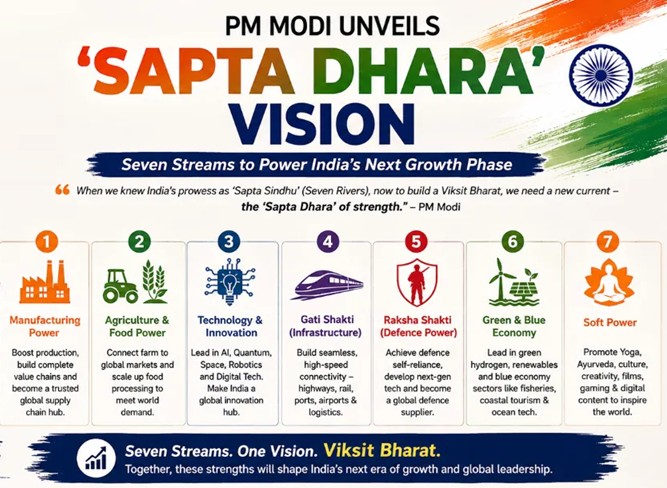
Recently, on the 80th Independence Day, the Prime Minister introduced the Sapta Dhara (Shakti Ki Sapta dhara) framework.
- It aims to achieve the goal of Viksit Bharat by 2047, covering seven major areas of national development.
- The 7 areas are manufacturing – Agriculture and food processing; Technology and Innovation; Gati Shakti; Defence Self-reliance; Green and Blue economy; and India’s soft power.
- Under technology and innovation, the government plans to train 1 crore youth in Artificial Intelligence (AI) over the next year.
- India has set a target of 100 GW nuclear energy capacity by 2047, with five new nuclear reactors expected to become operational in the next 6–7 years.
|
Trading of Major Minerals on Exchange
Government to allow transparent mineral trading via electronic platform from next financial year.
-
Initiative – Ministry of Mines notified rules; Indian Bureau of Mines as nodal regulator.
-
Exchange to trade iron ore, bauxite, limestone, manganese initially.
-
Coal Exchange – Ministry of Coal set up separate exchange; Coal Controller Organisation as regulator.
-
Benefits – Ensures price discovery, quality verification, market surveillance.
-
Reduces disputes, cartelisation, insider trading.
-
Critical Minerals Parks – 4 parks in Andhra Pradesh, Odisha, Gujarat, Maharashtra for lithium, nickel processing.
-
Part of National Critical Mineral Mission (7 years).
|
|
Security
|
Modern Civil Defence Volunteer Force
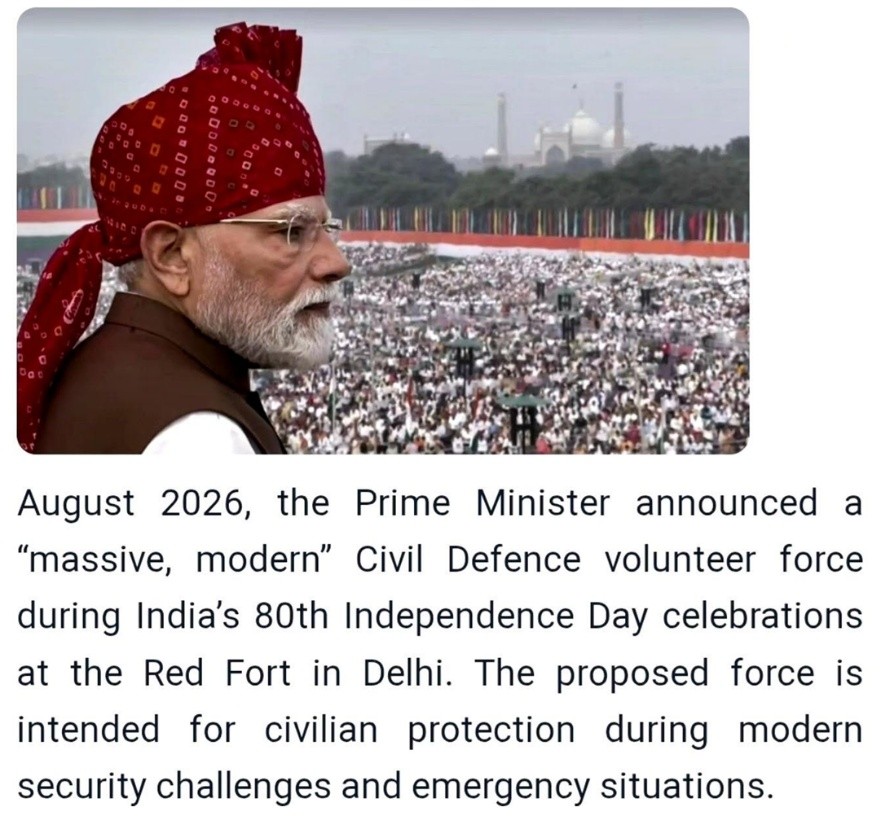
Recently, on the 80th Independence Day, the Prime Minister announced a “massive modern” Civil Defence volunteer.
- The proposed force will strengthen civilian protection during modern security challenges and emergency situations.
- India’s Civil Defence system is governed by the Civil Defence Act and Rules, 1968.
- Civil Defence volunteers support warning systems, evacuation, rescue, first aid, fire-fighting and protection of critical infrastructure during emergencies.
- The new volunteer force will receive modern training and advanced emergency-response protocols.
- Home Guards are a related auxiliary force under State control and assist the police, civil administration and disaster-response teams.
|
|
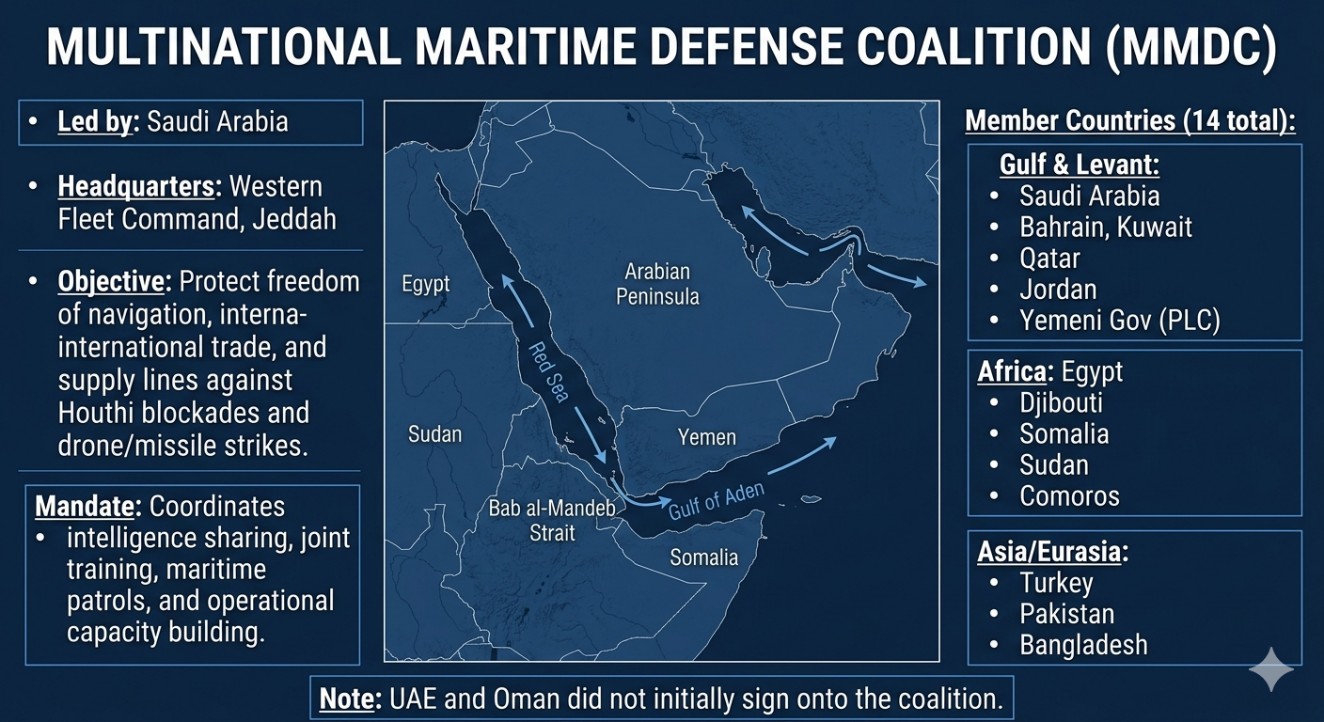
Multinational Maritime Defence Coalition (MMDC)
Multinational Maritime Defense Coalition (MMDC) is a newly formed 14-country military alliance established.
- Objective – To protect freedom of navigation, international trade, and energy supply lines in the vital waterways surrounding the Arabian Peninsula.
- Collective security framework – To shield the Red Sea, the Bab al-Mandeb Strait, and the Gulf of Aden from escalating maritime threats.
- Notably Houthi-controlled blockades and drone/missile strike.
- Led by – Saudi Arabia.
- Headquarters – Saudi Arabia’s Western Fleet Command in Jeddah.
- Mandate – It coordinates intelligence sharing,
- Joint training exercises
- Maritime patrols
- Operational capacity building to counter drones, anti-ship missiles, and uncrewed vessels
- Gulf and Levant – Saudi Arabia, Bahrain, Kuwait, Qatar, Jordan, Yemeni Government (PLC)
- Member countries
- Africa – Egypt, Djibouti, Somalia, Sudan, Comoros
- Asia and Eurasia – Turkey, Pakistan, Bangladesh
- Note – Major regional players like the UAE and Oman did not initially sign onto the coalition
|
|
Science
|
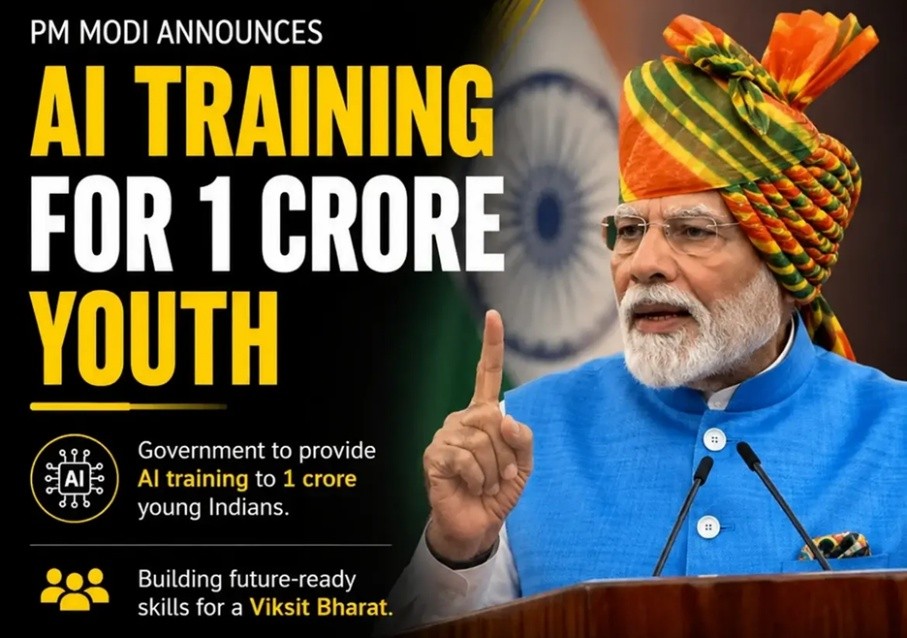
AI Skilling of 1 Crore Youth
Recently, on the 80th Independence Day, the Prime Minister announced training in AI skills for 1 crore youth within 1 year.
- The initiative aims to equip youth with AI skills and prepare them for emerging technology opportunities.
- The announcement was made during the 80th Independence Day address from the Red Fort, New Delhi.
- It is part of the broader focus on technology and innovation under the Sapta Dhara framework.
- The government highlighted the rapid expansion of AI across different sectors.
- The initiative seeks to strengthen India’s technology and innovation ecosystem and help youth participate in the global AI economy.
|
|
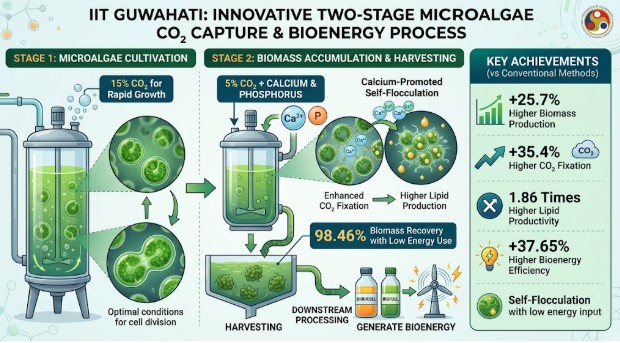
2-Stage Microalgae CO₂ Capture Process
- Developed by – IIT Guwahati.
- Purpose – To Improve CO₂ fixation, biomass production and bioenergy generation while overcoming growth inhibition caused by prolonged high CO₂ exposure.
- First Stage (High Concentration) – Uses a high CO₂ concentration of 15% to drive rapid initial microalgal growth and carbon assimilation.
- Second Stage (Modulation and Supplementation) –
- Lowers CO₂ concentration to 5% to restore optimal pH balance.
- Adds calcium and phosphorus to stabilize the environment, prevent nutrient depletion, and boost carbonic anhydrase activity.
- Promotes cell self-flocculation (auto-sedimentation) via calcium clustering.
- Performance and Efficiency
- Fixation and Biomass – Achieves 35.4% higher CO₂ fixation and 25.7% higher biomass yield than conventional single-stage methods.
- Bioenergy Output – Yields a 1.86-fold increase in lipid productivity and a 37.65% improvement in intracellular bioenergy efficiency.
- Harvesting – Enables a low-energy biomass recovery rate of 98.46% through calcium-phosphorus auto-flocculation.
|
|
Miscellaneous
|
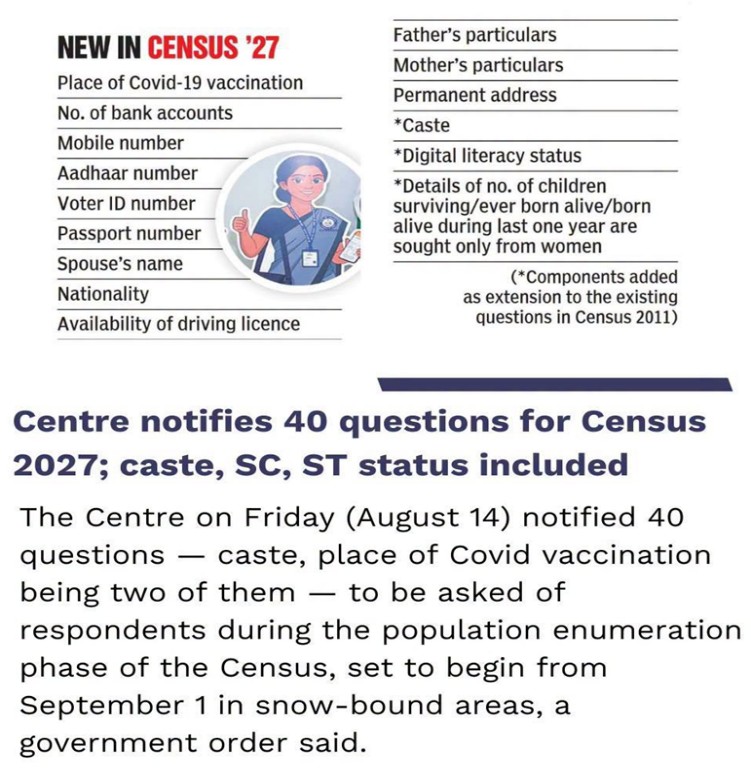
Census 2027 – 40 Questions
Recently, the Centre has notified 40 questions for the second phase of Census 2027.
- It includes caste, Aadhaar, voter ID, bank accounts and other details.
- For the 1st time in independent India, caste will be recorded for all communities, apart from Scheduled Castes (SCs) and Scheduled Tribes (STs).
- The questionnaire includes 13 new questions compared with the 29 questions asked in Census 2011.
- New details include parents’ particulars, spouse’s name, nationality, digital literacy, permanent address and place of COVID-19 vaccination.
- It will also collect details on bank accounts, mobile number, Aadhaar, voter ID, passport and driving licence, where applicable.
- Population enumeration will begin in August/September 2026 in snow-bound areas and across most of India in February 2027.
|



