Mains: GS III – Economy
The FAO Food Price Index reached its highest level in three and a half years in July 2026, primarily due to geopolitical tensions and natural disruptions.
FFPI – It is a monthly indicator published by the Food and Agriculture Organization of the United Nations.
It monitors fluctuations in international market prices for a selected basket of globally traded food and agricultural commodities.
The index is the weighted average of five commodity group price indices: cereal, vegetable, dairy, meat, and sugar, based on their average export shares.
Base year – The average index value for the period from 2014 to 2016 is standardised to 100.
An index scores above or below 100 indicates the extent to which global food prices have increased or decreased relative to this benchmark.
Commodity coverage – It encompasses the monitoring of 24 distinct food and agricultural items across major global trading markets.
Objectives – To track global market trends by monitoring price changes in key food commodities.
To identify the primary food groups responsible for influencing price changes.
To support policy development for effective food security and international trade management.
|
Food and Agriculture Organization (FAO) |
|
Heatwaves and drought – Prolonged hot, dry conditions in major producing regions reduce wheat and maize yields.
El Niño impacts – Unpredictable rainfall lowers production prospects in key agricultural areas.
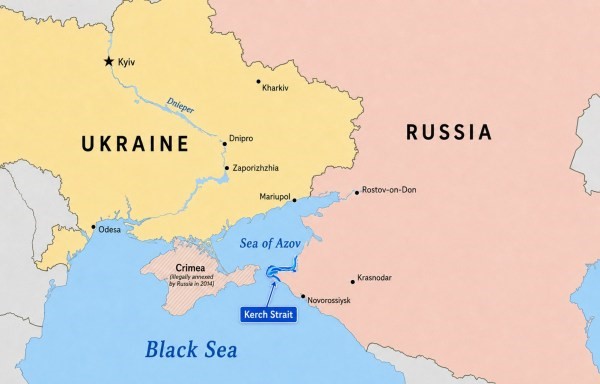
Russia–Ukraine conflict – It has resulted in intensified missile and drone attacks on Black Sea ports and vessels, significantly disrupting grain exports.
Strikes on Novorossiysk, Izmail, and other Black Sea – It facilities have increased operational risks and insurance costs, leading to a reduction in vessel traffic.
Key Chokepoint Risk – Black Sea, Sea of Azov and Kerch Strait disruptions threaten global wheat, corn and sunflower‑oil supply routes.
Instability in the Strait of Hormuz – It affects energy flows, increasing fuel, fertilizer, and transport costs, and indirectly contributing to food inflation.
High fuel prices – Rising crude oil and energy costs increase expenses for farm machinery, processing, and transportation.
Costly fertilizers – Higher energy costs increase fertilizer prices, leading farmers to reduce use or switch to less intensive crops, which lowers overall yields.
Biofuels – Increased global demand for alternative fuels diverts food crops such as sugarcane and vegetable oils to ethanol and biodiesel production, tightening food supplies.
Elevated Edible Oil Prices – India imports a significant proportion of its cooking oil, including palm and soybean oil. Increases in global price indices directly translate into higher domestic retail prices.
Rising Import Costs – The increased prices of imported goods such as pulses and certain cereals contribute to higher overall retail food inflation.
Imported Fuel and Fertiliser Pressures – Global price surges, often resulting from energy and shipping disruptions, increase the cost of sourcing domestic agricultural inputs.
Rising Subsidy Expenditure – The government allocates increased funding to subsidies, such as those for fertilisers, to support local farmers and stabilise retail prices.
Consumer Strain – Lower-income households allocate a substantial portion of their income to food, so global price increases directly diminish their purchasing power.
Trade and Export Controls – Bans, export duties, and minimum export prices were imposed on sensitive staples such as wheat, non-basmati rice, and sugar to conserve domestic supplies.
Import Duty Rationalization – Import duties and taxes on crude and refined edible oils were reduced to lower domestic retail prices.
Open Market Sales Scheme (OMSS) – Government stocks of wheat and rice were released into the open market to stabilize local wholesale prices.
Stock Limits – Strict inventory holding limits were imposed on traders for essential commodities such as pulses, onions, and edible oils to prevent hoarding and black marketing.
Direct Intervention and Buffers – Strategic buffer stocks were maintained and subsidized food distribution was expanded under national welfare programs to protect vulnerable populations.
Diversify import sources – To decrease dependence on a small group of countries for edible oils, pulses, and other essential food products.
Establish buffer stocks – Maintain adequate reserves of cereals, pulses, and edible oils to mitigate the impact of global supply disruptions.
Promote climate-resilient agriculture – Adoption of drought-resistant crop varieties, micro-irrigation techniques, and crop diversification strategies.
Enhance domestic production and supply chains – Increase oilseed yields and optimizing storage, transportation, and logistics to reduce costs and minimize waste.
India's long-term strategy should transition from reactive price controls to the development of resilient food systems by integrating climate-smart agriculture, diversified imports, strategic reserves, predictable trade policies, and targeted social protection.
Such an approach would enhance both food security and macroeconomic stability in the face of increasingly frequent global shocks.
Indian Express | Food Prices Push Up



