The National Strategy for Additive Manufacturing (NSAM) 2.0 is the upcoming second phase of India's national 3D printing and digital manufacturing policy led by the Ministry of Electronics and Information Technology (MeitY).
Core Objectives & Focus Areas
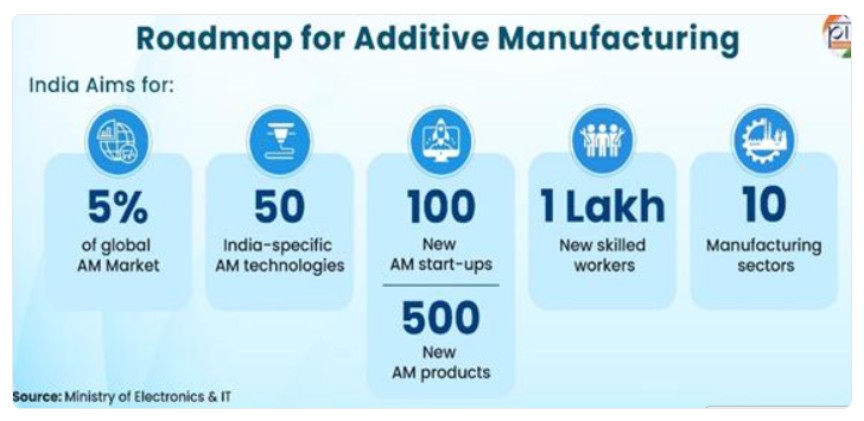
Innovation & Commercialisation – Accelerate domestic Intellectual Property Rights (IPR) generation, transition over 65 indigenous AM platforms and prototypes into mass-production, and capture 5% of the global additive manufacturing market.
Market Target – Aim for a USD 5 billion Indian additive manufacturing market by 2030.
Digital Network Integration – Unify distributed research laboratories, testing facilities, and fabrication hubs into a cohesive national digital manufacturing network.
Affordability & MSME Support – Lower capital barriers for imported machinery and feedstocks by establishing cluster-based common facility centers.
AM-Electronics Value Chain – Strengthen domestic capabilities for printing electronics sub-assemblies, antennas, batteries, and photonic integrated circuits.
Defence & Strategic Sector – Expand rapid on-site repair, precast field fortifications, and maintenance, repair, and overhaul (MRO) workshop capabilities for the Armed Forces.
Sustainability & Global Alignment – Drive Sustainable Development Goal (SDG)-driven pilots and harmonize domestic standards with international testing benchmarks.
Progress from Phase 1 (Launched Feb 2022)
Skilling – Trained over 1,54,000 individuals (exceeding initial targets).
Start-ups & Tech – Supported 56+ AM start-ups and fostered 65 India-specific technologies.
Infrastructure – Established seven Development and Deployment Centres across Hyderabad, Mehsana, Pune, Visakhapatnam, Kolkata, Mandi, and Bengaluru.
Symposium – The 2nd National Additive Manufacturing Symposium (NAMS) was held in New Delhi on March 13, 2026, to shape NSAM 2.0 priorities.
Infrastructure
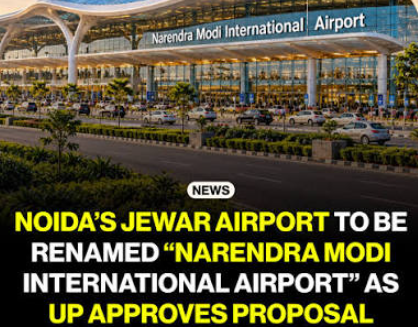
Narendra Modi International Airport, Noida-Jewar
The Uttar Pradesh Cabinet approved a proposal to rename the Noida International Airport in Jewar as Narendra Modi International Airport, Noida-Jewar. Chief Minister Yogi Adityanath announced the decision on October 9, 2026.
Key Details
Location – Jewar, Gautam Buddha Nagar district, Uttar Pradesh, serving the National Capital Region (NCR) alongside Delhi's Indira Gandhi International Airport.
Timeline & Operations – Prime Minister Narendra Modi inaugurated the airport on March 28, 2026. Commercial operations officially started on June 15, 2026, with an IndiGo flight landing from Lucknow.
Ownership & Development – Developed via a public-private partnership by Yamuna International Airport Private Limited (a subsidiary of Zurich Airport International AG) and Noida International Airport Limited.
Capacity & Phases – Phase I features a single runway and a terminal designed for 12 million passengers per year. Total capacity is planned to scale up to 70 million passengers annually across future phases.
Health
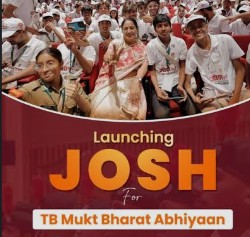
JOSH (Joint Squad for Health) initiative
The JOSH (Joint Squad for Health) initiative is a youth-led community health outreach campaign launched by the Government of India on October 8, 2026. Operating under the Pradhan Mantri TB Mukt Bharat Abhiyaan, its primary goal is to mobilize public participation (Jan Bhagidari) to eliminate tuberculosis (TB) across India.
The program utilizes a "whole-of-government" approach, creating a structured network that channels youth energy into grassroots health work to track down "missing" TB cases.
Team Composition & Structure
The initiative deploys more than 6,347 JOSH squads nationwide. Each individual squad functions at the block or ward level and is strictly structured as follows:
Leadership – One designated Class-I Government Officer.
Youth Force – Five National Cadet Corps (NCC) cadets and five MY Bharat (Mera Yuva Bharat) volunteers.
Core Objectives & Functions
The JOSH squads move beyond traditional hospital boundaries to take healthcare straight to people's doorsteps:
Active Case Finding – Conducting door-to-door household screenings to identify individuals showing early or unrecognised TB symptoms.
Testing & Support – Encouraging vulnerable populations to undergo diagnostic molecular and AI-assisted x-ray testing.
Treatment Adherence – Ensuring patients do not abandon their medication courses, which typically last between 6 to 18 months.
Stigma Reduction – Educating local communities to dispel myths and eliminate discrimination against TB patients.
Institutional & Digital Framework
Collaborating Ministries – The campaign is a trilateral partnership between the Ministry of Health and Family Welfare, the Ministry of Youth Affairs and Sports, and the Ministry of Defence.
Phase 1 Footprint – The initial rollout targets 55 districts across 11 States and Union Territories before expanding nationwide to all 804 districts.
Tech Integration – Squad activities are monitored in real-time through a dedicated feature on the TB Mukt Bharat App. The app also includes Khushi Avatar.
World Mental Health Day
World Mental Health Day is marked today, October 10, 2026, with the official global theme “Lived experiences heard: real voices, real change” as announced by the World Health Organization and the World Federation for Mental Health.
Key Focus of 2026
Meaningful Participation – Emphasizing that people with lived experience (PWLE) of mental health conditions must actively shape policies, services, and clinical practice rather than just being consulted.
WHO Atlas 2024 Survey Insights:
80% of mental health policies and plans were developed with input from people with lived experience.
59% of mental health legislation consulted people with lived experience.
45% have ongoing collaboration with advocacy groups.
37% of primary care training included people with lived experience.
Deinstitutionalization Progress – Data shows 9% of systems have fully transitioned to community care, while 53% are in an early transition stage.
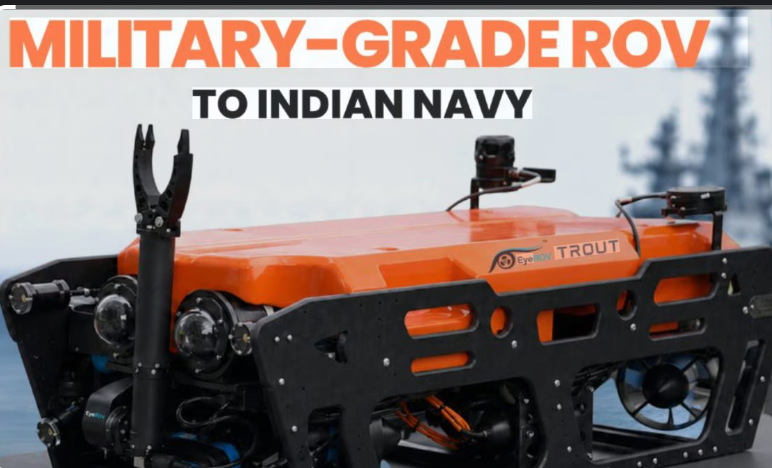
India’s first indigenous military-grade underwater Remotely Operated Vehicle (ROV) is the EyeROV TROUT, developed and delivered to the Indian Navy by Kochi-based deep-tech startup EyeROV.
Development Program – Built under the iDEX (Innovations for Defence Excellence) DISC 7 SPRINT Challenge for the Indian Armed Forces.
Order & Delivery – On October 7, 2026, EyeROV delivered the first two units out of a total order of five systems to the Indian Navy.
Depth & Operational Rating - Rated to operate at depths of up to 300 metres in harsh marine environments.
Compliance & Standards – Qualified through the Directorate of Quality Assurance (Naval) — DQA(N) and engineered to comply with Environmental Stress Screening (ESS) and military standards.
Core Applications:
Underwater surveillance and reconnaissance
Search and recovery missions
Infrastructure and port/harbour security inspections
Robotic intervention and threat detection
Science
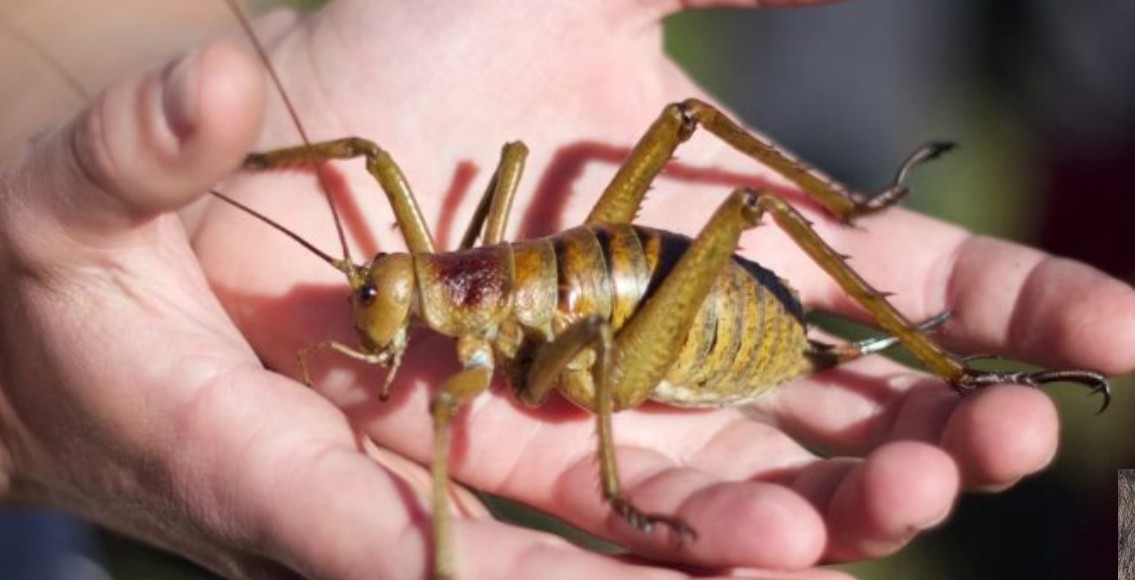
World's heaviest insect species Sample
The wētāpunga (Deinacrida heteracantha), the world's heaviest insect species native to New Zealand, has been brought back from the brink of extinction through a 15-year captive breeding and conservation program.
Key Facts About the Wētāpunga
Weight and Size – Adult females can grow up to 4 inches (10 cm) long (with legs extending up to 20 cm) and weigh around 70 grams—making them heavier than a small mouse or a sparrow.
Appearance & Diet – Often called a "living fossil" or an "armored tank" of the forest, it is flightless, cannot jump, and feeds mainly on fresh green foliage, leaf litter, and protein.
Decline – Land clearing by European settlers and the introduction of invasive predators like rats, cats, and stoats wiped out mainland populations, leaving the species restricted to a single sanctuary: Te Hauturu-o-Toi (Little Barrier Island) by the 1990s.
The 15-Year Conservation Effort
Breeding Program – Launched around 2010 by the Department of Conservation, Auckland Zoo, and Butterfly Creek, teams collected a small founding group from Little Barrier Island.
Industrialized Rearing – Young nymphs were raised in specialized communal mesh cages on a diet of fresh leaves, leaf litter, and fish-flake protein (crucial for survival), pushing survival rates up to 80%.
Reintroductions – Over 45 separate translocations released approximately 11,000 wētāpunga across eight predator-free islands and two fenced mainland sanctuaries.
Status Improvement – Monitoring confirmed multiple wild-born generations, upgrading the species' official status from Threatened – Nationally Endangered to Threatened – Nationally Increasing.
Index
Trade and Development Report 2026
The UNCTAD Trade and Development Report 2026 was launched with title: The geoeconomics of development highlights key projections and structural shifts in the global economy.
Global Growth and Trade Projections
Global Growth – Projected to slow to 2.6% in 2026, down from 2.9% in 2025.
Trade Growth – Merchandise and services trade is expected to expand by about 4% in real terms in 2026, following a 4.4% growth in 2025.
Regional Dynamics – Asia is projected to contribute 59% of global economic growth in 2026. Developing economies are expected to see growth slow to 4%.
Country Highlights – India is projected to expand at 7.3%, China at 4.5%, and Indonesia at 5.2%.
Main Drivers and Concentration
AI Merchandise Boom – Artificial intelligence-related goods (including semiconductors and servers for data centers) are the primary driver of merchandise trade, accounting for about one-sixth of global goods trade value and 42% of its growth in 2025.
Unequal Value Capture – In a case study of an advanced AI server rack, 68% of the traced value goes to profits, while workers receive less than 15%.
Financial Risks – The heavy concentration in AI-related tech creates bubble and credit vulnerabilities that could impact broader markets.
Policy, Geopolitics, and Shocks
Geoeconomic Fragmentation & Energy – Rising export controls and industrial strategies complicate sector entry, while Middle East conflicts pushed oil prices above $110 a barrel.
Aid & Green Transition – Official development assistance is set to drop by nearly 7%, though cheaper renewables offer a viable path for diversification.
Miscellaneous
Central Asian Flyway (CAF) Digital Hub
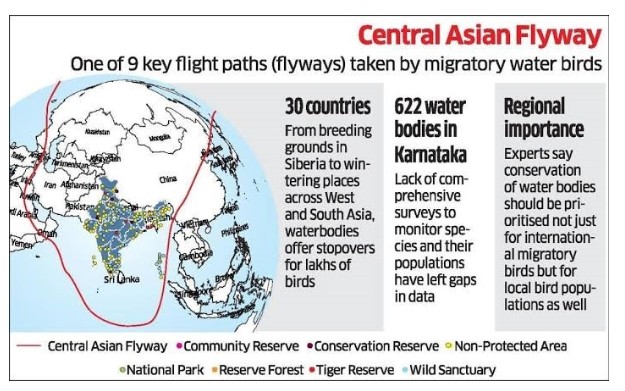
The Central Asian Flyway (CAF) Digital Hub is a regional, open-access online platform developed by the Central Asian Conservation Network (CACN) to support the conservation of migratory birds and their habitats across 30 countries in North, Central, and South Asia.
Core Purpose
Bridge Data Gaps – The flyway spans from the Russian Arctic down to the Maldives, covering over 600 bird species. Historically, data on these populations was fragmented across individual researchers, local groups, and different countries.
Cross-Border Collaboration – The platform unites scientists, birdwatchers, educators, and conservation agencies to share knowledge and coordinate protection strategies.
Key Features and Portals
Bird Collision Reporting Portal – A tracking tool that lets researchers, infrastructure managers, and the public log bird injuries or deaths caused by power lines, wind turbines, and other man-made structures.
Ringing and Resighting Portal – A dedicated space to record field sightings of tagged birds (using leg flags, metal rings, or neck bands) to map migration paths.
Educational & Awareness Resources – A library of public-facing materials—such as children's stories like Selenge, the Little Goose and Her First Migration—to teach communities about wetlands and bird protection.
Regional CAF Database – A multilingual digital repository centralizing scientific literature, site data, and species status updates.
Background– The platform complements broader international efforts like the Central Asian Flyway Initiative, which was formalized under the Convention on Migratory Species (CMS) with support from regional partners including India, WWF Hong Kong, and the Ornithological Society of the Middle East (OSME).
Complete skeletal remains of two Iron Age
Archaeologists recently uncovered complete skeletal remains of two Iron Age individuals at Thelunganur near Salem in Tamil Nadu, India.
Key Details of the Discovery
Location – Thelunganur, near Salem, Tamil Nadu, India