Prelims: Current events of national and international importance | Species
Why in news?
The little stint comes in lakhs from the Arctic to the shores of India, particularly to coastal mudflats, salt pans, and wetlands—including Point Calimere in Tamil Nadu and coastal sites in West Bengal.
- Scientific name – Calidris minuta.
- Family – Scolopacidae (sandpipers and allies).
- Tiny Siberian traveller – The little stint is a tiny migratory shorebird that travels thousands of kilometres from its Arctic and Siberian breeding grounds to spend the winter in wetlands across India.
- Habitat – Occupies freshwater and brackish wetlands, mudflats, marshes, and coastal habitats.
- Hotspots – In Tamil Nadu, major wintering sites include the Point Calimere Wetland Complex (where over a lakh of these birds gather annually), the Gulf of Mannar, and the salt pans of Thoothukudi.
- Distribution – It has an extensive range across Europe, Africa, and Asia. Very rare vagrant in North America.
- Migration – Every year, flocks numbering in the hundreds of thousands migrate along the Central Asian Flyway from the Siberian and European Arctic to spend the winter in Indian coastal wetlands, mudflats, estuaries, and salt pans.
- They typically arrive around autumn and depart back north between March and May.
Key features
- Size – About 12–14 cm long with a 28–31 cm wingspan, typically weighing around 17–44 g (often ~25 g).
- Appearance – It is compact with a straight, fine-tipped black bill, dark-centred upper feathers with pale edges, a white underside, and rapid feeding movements.
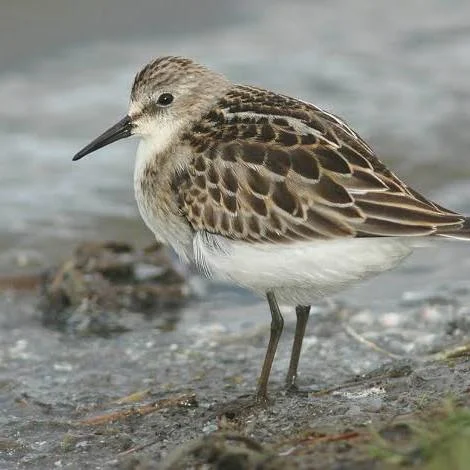
- Diet – It picks tiny invertebrates such as insects, crustaceans, worms, and molluscs.
- Conservation status
- IUCN Red list – Least Concern.
- Threats – Wetland and mudflat loss, salt-industry habitat alteration, pollution, climate change, illegal hunting or trapping, and diseases such as avian botulism and avian malaria.
Reference
The Hindu | Meet the little stint: The tiny Siberian traveller visiting India’s wetlands



