Prelims: Current events of national and international importance | Environment
Why in News?
Forest scientists in Rajasthan have documented Salvadora alii, a species of Peelu (Jaal) in the state for the first time, with findings reported in November 2026.
- The discovery follows nearly 16 years of floristic exploration and research motivated by ecological and climatic similarities between Sindh and Rajasthan.
- It adds a third Salvadora species to Rajasthan’s flora alongside Salvadora oleoides ("Meetha Jaal") and Salvadora persica ("Khari Jaal").
Key Highlights
- Districts Recorded- Presence of the species has been documented across Jodhpur, Jalore, Bhilwara, and Bharatpur districts in Rajasthan.
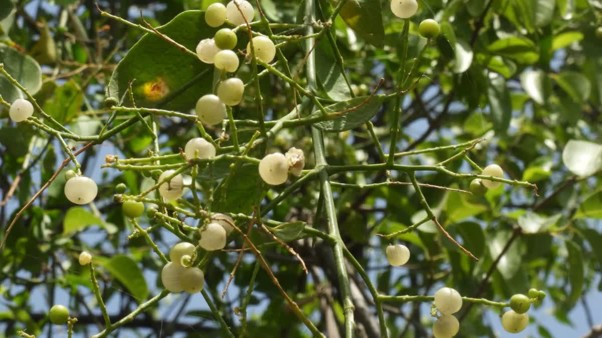
- Distinctive White Fruits - Unlike S. oleoides and S. persica—which bear pinkish-red or reddish-brown ripe fruits—Salvadora alii is easily distinguished by its white, juicy ripe berries.
- Prior Indian & Global Records - Salvadora alii had earlier been recorded in several Indian states, including Madhya Pradesh, Gujarat, Maharashtra, and Uttar Pradesh, before its first formal record in Rajasthan.
- Arid & Semi-Arid Resilience - As a member of the Salvadoraceae family, it thrives in dry, warm environments with low rainfall and sandy soils.
|
Features
|
Detail
|
|
Scientific Name
|
Salvadora alii
|
|
Family
|
Salvadoraceae
|
|
Common / Vernacular Names
|
Peelu / Pilu / Jaal / White-Berry Toothbrush Tree
|
|
Key Distinguishing Feature
|
White ripe berries (vs. pinkish-red / reddish-brown in S. oleoides and S. persica)
|
|
Other Salvadora Species in Rajasthan
|
Salvadora oleoides ("Meetha Jaal") and Salvadora persica ("Khari Jaal")
|
Ecological Significance
- Arid & Saline Adaptation - Salvadora species (such as S. persica and S. oleoides) are xerophytic and salt-tolerant shrubs/small trees well-suited to arid and semi-arid landscapes, supporting soil stabilization, shelterbelts, and local fodder needs (such as for camels and goats).
- Ethnobotanical Uses - Members of the genus are widely known in traditional medicine and oral hygiene famously linked to Miswak (chewing sticks/twigs derived from Salvadora species)—as well as for seed oil and local ecological value.
Reference
ETV Bharat | New Species Of 'Peelu’



