Prelims: Current events of national and international importance | Environment
Why in News?
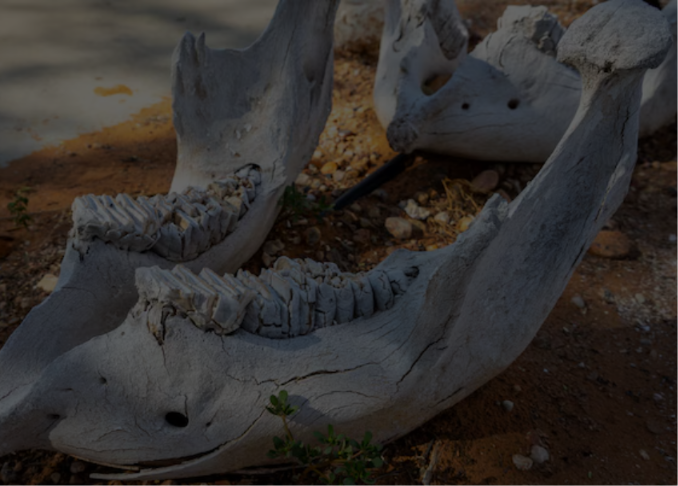
A fossilised prehistoric elephant jaw measuring approximately 75 cm in length and 25 cm in width has been discovered along the Narmada River.
Key Highlights
|
Features |
Detail |
|
Scientific Name |
Palaeoloxodon namadicus (Extinct Asian / Indian straight-tusked elephant) |
|
Discovery Site |
Patai Ghat (Deori tehsil, Raisen district, Madhya Pradesh) along the Narmada River |
|
Epoch & Estimated Age |
Pleistocene epoch (preliminary estimate ~7–8 lakh years for the jaw; species range Middle to Late Pleistocene) |
|
Size & Megafauna Status |
Among the largest proboscideans and land mammals known (estimated shoulder heights ~4.5–5 m and masses often cited around ~18–19+ tonnes) |
|
Indian Distribution |
Narmada and Godavari basins, post-Siwalik Pleistocene beds, Ganga valley, and parts of eastern/central India |
Evolutionary Context
Reference



