Prelims – Current events of National and International importance| Art & culture.
Why in News?
Recently, the Indian Prime Minister received a Daruma Doll from the chief priest of the Shorinzan Daruma-Ji Temple during his visit to Japan.
- The Daruma is a Japanese doll, traditionally made out of papier-mache, often gifted or placed in homes, offices, and temples.
- It is considered auspicious and a good luck charm in Japanese culture.
- Origin – Takasaki City in Gunma.
- Associated with the Shorinzan Daruma-ji Temple, a centre of Daruma culture.
- Shape – It is a round, hollow, weighted at the bottom without arms or legs.
- Colour – It varies greatly in colour and design depending on region and artist.
- It is most commonly available in red.
- They also appear in various colours and each carries specific meanings.
- Red – Good fortune and Prosperity
- White – Love and Harmony
- Gold – Wealth and Success
- Green – Health and Fitness.
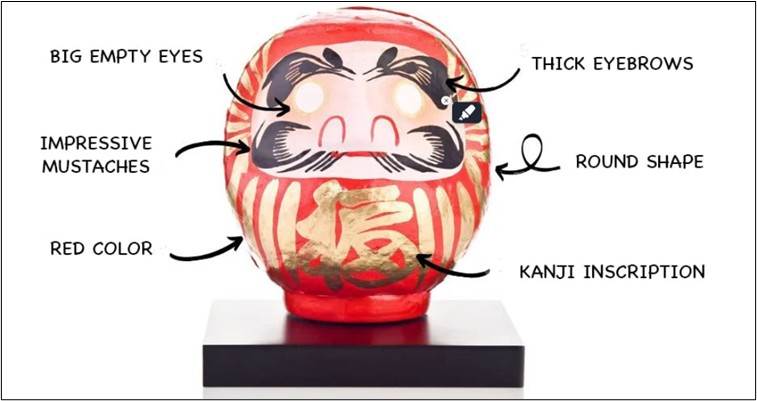
- Symbolism – It represents the popular Japanese proverb ‘Nana korobi ya oki,’ meaning fall seven times, get up eight.
- It symbolises the power of resilience and perseverance.
- Traditional Connection – It is based on the legacy of Bodhidharma, an Indian monk from Kancheepuram, founder of Zen Buddhism, called Daruma Daishi in Japan.
- Goal-Setting Practice – People colour one eye of the doll before setting a personal goal with the intention of achieving it.
- The other eye remains blank until the goal is fulfilled. It serves as a constant reminder to take action toward achieving your goal.
Reference
The Indian Express| Daruma Doll



