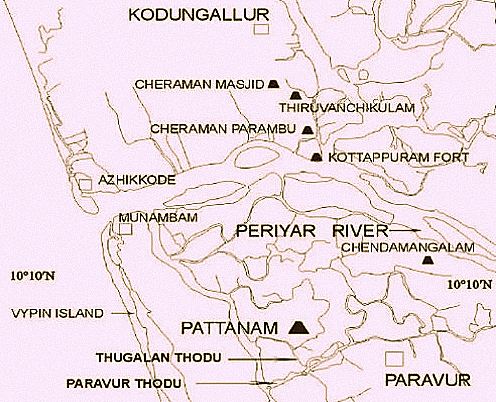
Pattanam Excavation site
Ancient DNA study confirms West Eurasian genetic imprints in Kerala’s Pattanam
- The excavations suggest that the site was first occupied by the indigenous and ‘Megalithic’ (Iron Age) people, followed by the Roman contact in the early historic period.
- It appears that the site was continuously occupied at least from the 2nd century BC to the 10th century AD.
- Scientists used the DNA from the human skeletons to pinpoint the genetic ancestry of the people found in the region.
- Most excavated skeletal remains from the Pattanam site were in a very fragile state due to the tropical, humid, and acidic soil conditions.
- The unique imprint of West Eurasian and Mediterranean signatures found in these samples exemplify a continuous inflow of traders and multicultural mixing in ancient South India.
- This is the first genetic data generated, so far, to infer their origin and genetic makeup of Pattanam archaeological site.
Reference
- The Hindu │ Pattanam Excavation site
Voyager 2
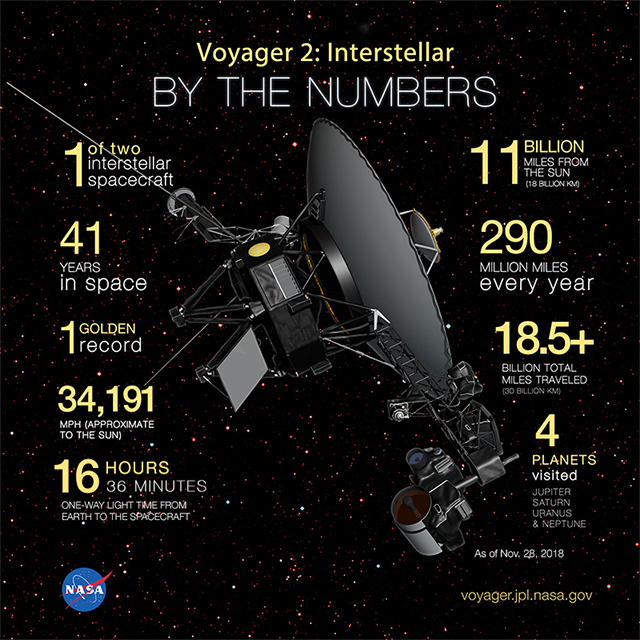
The Voyager 2 spacecraft, which is now travelling in interstellar space, has gotten a new lease of life after mission engineers developed a new plan to keep its instruments running for longer.
- The Voyager 2 spacecraft was launched in 1977 and it is now more than 20 billion kilometers away from Earth.
- The ageing Voyager 2 spacecraft has begun using a small reservoir of backup power to keep its instruments working despite a reduced power supply.
- Voyager 2 and Voyager 1 are the only spacecraft that have ever operated outside the heliosphere, which is considered to be the border of our solar system.
- The heliosphere is a bubble of particles and magnetic fields generated by the Sun.
- Both the Voyager spacecraft is helping scientists better understand the heliosphere and how it protects our planet from interstellar energetic particles and other radiation.
- Both Voyager 1 and Voyager 2 are powered by radioisotope thermoelectric generators (RTGs) or nuclear batteries.
- These nuclear batteries convert the heat from decaying plutonium into electricity.
- Since the plutonium is continuously decaying, it means that the generator produces lesser and lesser power as time goes on.
Reference
- The Indian Express│ Voyager 2
Gum Arabic
Sudan’s eruption into conflict has left international consumer goods makers racing to shore up supplies of gum Arabic, a key ingredient in everything from fizzy drinks to candy and cosmetics.
Consequences
- About 70% of the world’s supply of gum Arabic, for which there are few substitutes, comes from the acacia trees in the Sahel region that runs through.
- For companies like Pepsi and Coke, they can’t exist without having gum Arabic in their formulations.
- In their manufacturing process, food and drink companies use a spray-dried version of the gum that is powder-like.
- While cosmetics and printing manufacturers may be able to use substitutes.
- There is no alternative to gum Arabic in fizzy drinks, where it prevents ingredients from separating.
Reference
- The Indian Express│ Gum Arabic
National Manufacturing Innovation Survey (NMIS) 2021-22
Department of Science and Technology, released the “National Manufacturing Innovation Survey (NMIS) 2021-22
Highlights of the survey
- The National Manufacturing Innovation Survey (NMIS) 2021-22 is a joint study by the Department of Science and Technology (DST) and the United Nations Industrial Development Organization (UNIDO).
- It helps to evaluate the innovation performance of manufacturing firms in the India and can help enhance competitiveness of Indian manufacturing.
- The NMIS 2021-22 study was conducted as a 2-pronged survey that examined the innovation processes, outcomes, and barriers in manufacturing firms.
- This study is a follow-up of DST’s first National Innovation Survey held in 2011.
- The NMIS 2021-22 survey had two specific components: the firm-level survey and the sectorial systems of innovation (SSI) survey.
- The Firm-level survey captured data related to types of innovations and innovative measures taken by firms, including the process of innovation, access to finance, resources, and information for innovation.
- It also recording the factors impacting the innovation activities in a firm.
- The Sectorial System of Innovation survey mapped the manufacturing innovation system and its enabling role in achieving innovations in firms.
- The SSI study measured the interactions between stakeholders of the innovation ecosystem, relative barriers to innovation.
- It also measured the convergence or divergence of current policy instruments in select five key manufacturing sectors important to the Indian economy, textiles; food & beverage; automotive; pharma; and ICT.
- The findings from the firm-level survey are captured in the ‘Assessment of Firm-Level Innovation in Indian Manufacturing’.
Reference
- PIB│ National Manufacturing Innovation Survey (NMIS) 2021-22
United Nations Permanent Forum on Indigenous Issues (UNPFII)
Inclusion of indigenous people in realizing their socio-economic development took center stage at the 22nd session of the United Nations Permanent Forum on Indigenous Issues (UNPFII).
Key features
- UNPFII, the largest international annual gathering of indigenous people, began at the UN headquarters in New York.
- The experiences suffered by indigenous people originate from colonialism and are linked to armed conflict, exploitation of land and natural resources and systematic violence against them.
- Namibia fully acknowledges the connection of indigenous people to the land as well as the need to adopt and implement specific affirmative action measures, he said.
- The representative of Chagossian Voices, a community platform, and other indigenous speakers brought to light examples of systematic disregard by governments and authorities.
- The representative urged member states to ensure the full participation of indigenous peoples in the World Intellectual Property Organization’s (WIPO) diplomatic conference on a draft genetic resources and associated knowledge instrument.
- Kenya-based non-profit, and the Russian Association of Indigenous Peoples of the North (RAIPON) underlined the need to preserve the cultural identity and languages of indigenous people.
- RAIPON’s delegate suggested an international conference of teachers of indigenous languages and culture.
- Article 16 of the Declaration on the Rights of Indigenous People acknowledges such peoples’ right to establish their own media.
Reference
- Down to Earth | United Nations Permanent Forum on Indigenous Issues (UNPFII)



