Prelims: Current events of National and International Importance| Science & Technology
Why in News?
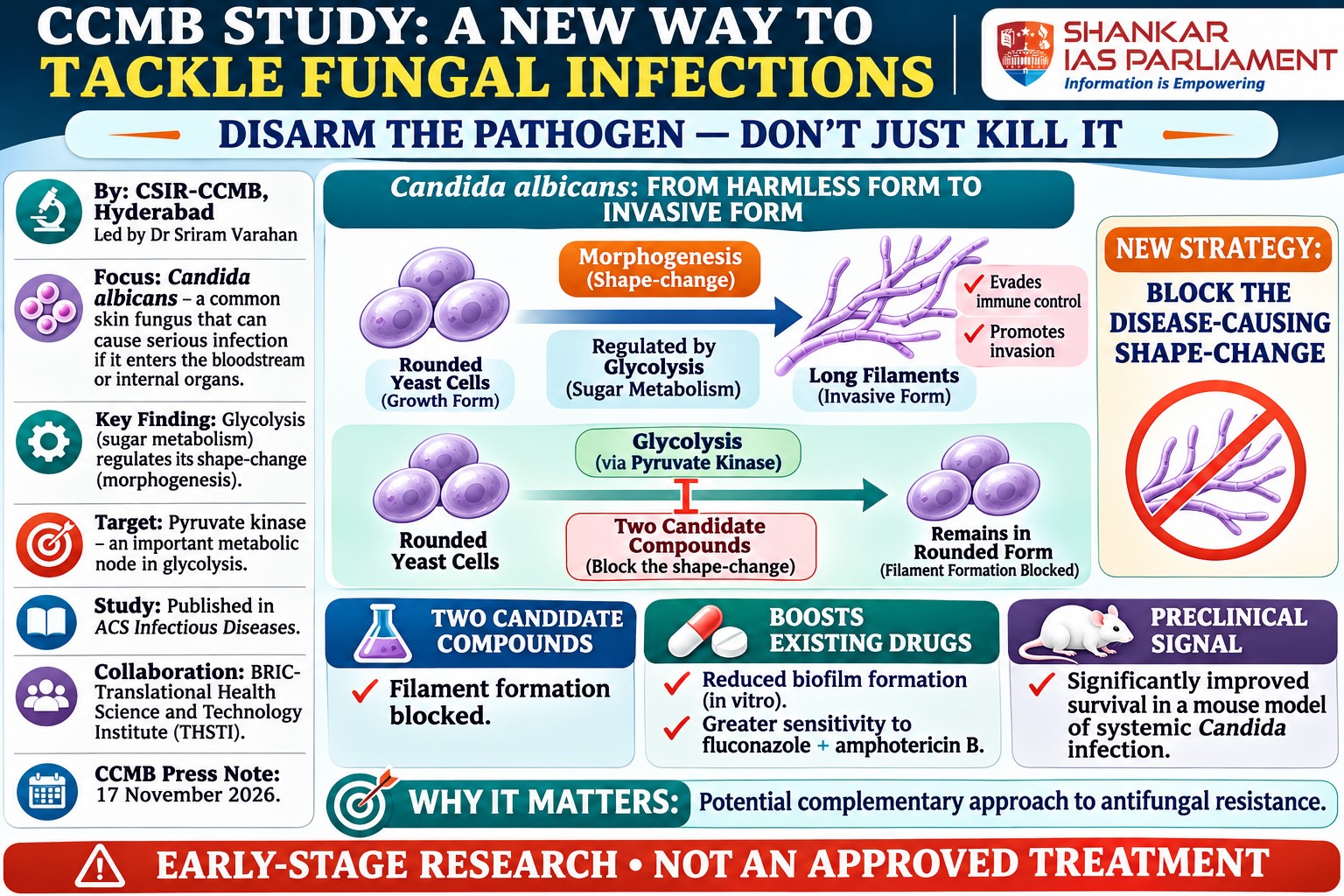
Researchers at the CSIR-Centre for Cellular and Molecular Biology (CCMB), Hyderabad, led by Dr. Sriram Varahan, identified an "anti-infective" strategy against fungal infections that stops Candida albicans from turning invasive rather than killing the fungus outright.
- Publication – Published in ACS Infectious Diseases in November 2026 in collaboration with the BRIC-Translational Health Science and Technology Institute (THSTI), the approach targets sugar metabolism to block the fungus from shifting into its disease-causing shape.
Working of the New Approach
- Preventing morphogenesis – Candida albicans normally lives harmlessly on human skin and inside the body, but it can cause severe infections if it reaches the bloodstream or internal organs.
- It spreads by transforming from round yeast cells into long, thread-like filaments (morphogenesis) that invade tissues and evade immune defenses.
- Targeting glycolysis– By screening small molecules that act on glycolysis (the pathway cells use to break down sugar), the team found two compounds that keep the fungus in its rounded form even as it grows.
- Key enzyme identified– The study pinpointed pyruvate kinase, a glycolysis enzyme, as an important regulator of this shape shift.
Observations and Next Steps
- Reduced biofilms and drug synergy– One compound reduced protective biofilm formation and increased the fungus's sensitivity to standard antifungals like fluconazole and amphotericin B.
- Animal model results– Testing a lead compound in a mouse model of systemic Candida infection significantly improved survival rates.
- Why it matters– Because traditional drugs that kill fungi outright drive drug resistance, disarming disease-causing behavior could lower resistance pressure and complement existing therapies.
- Researchers noted that more studies on safety, efficacy, and therapeutic suitability are still needed.
Reference
The Hindu| New Approach to Fungal Infections



