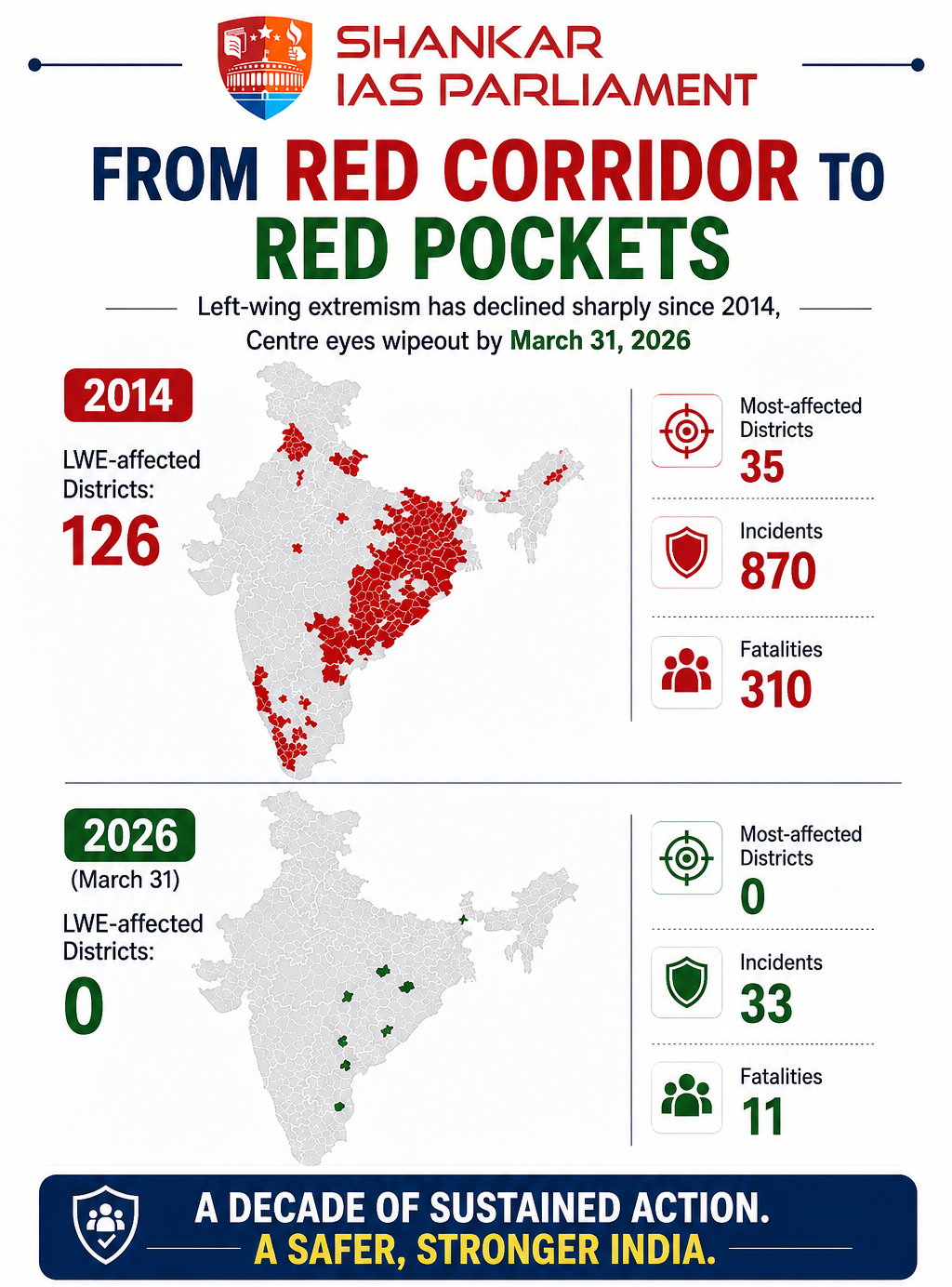
On 31 March 2026, India declared itself effectively free from Left‑Wing Extremism (LWE).
What is Left‑Wing Extremism?
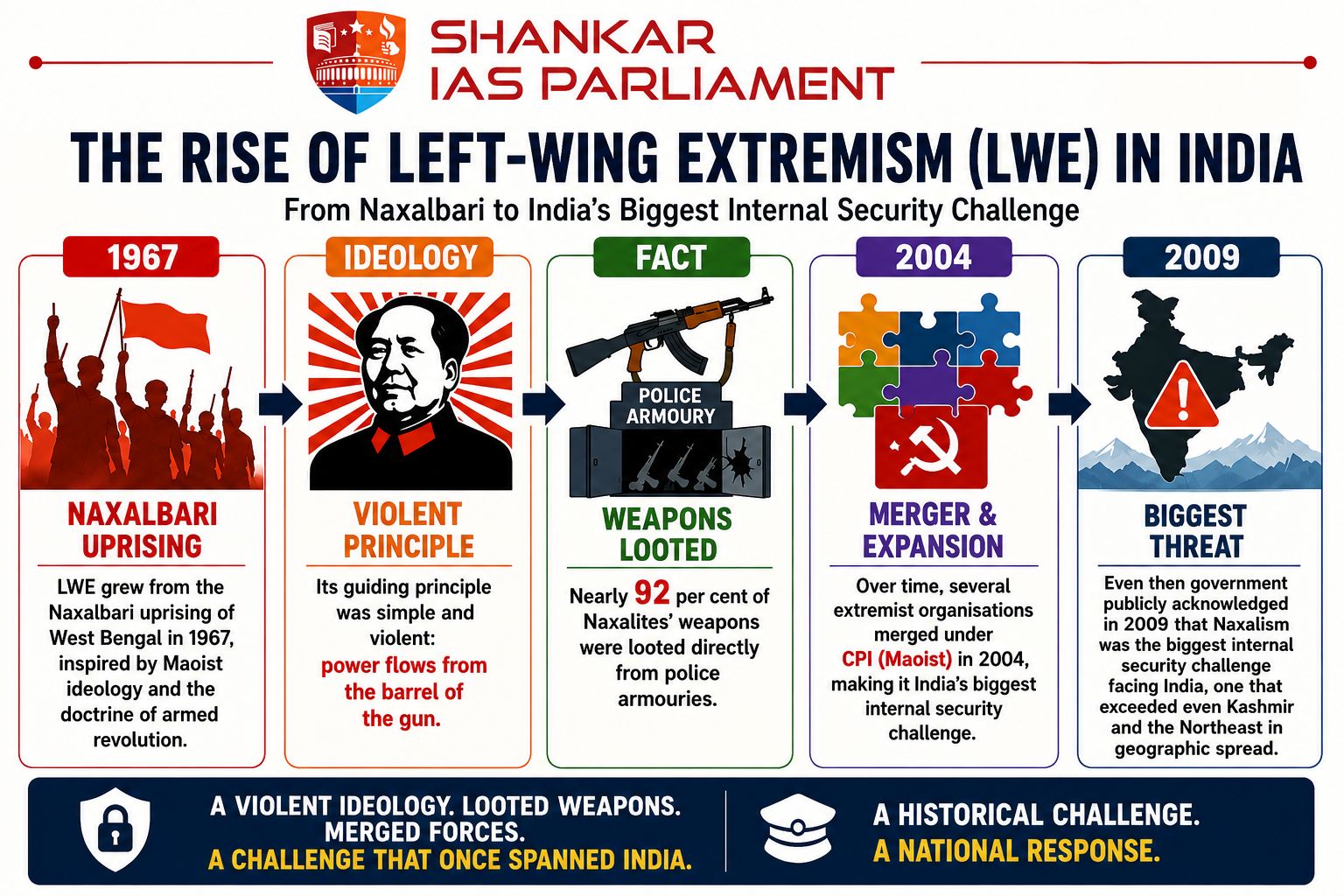
Left-Wing Extremism – In India, it mainly refers to Maoist/Naxalite armed insurgency (not just left ideology), led primarily by CPI (Maoist), using violence to create a governance vacuum and challenge the constitutional state.
Extent of LWE in 2014 – A total of 126 districts across 10 states were affected.
States Severely Affected
Chhattisgarh – It contains major Maoist strongholds, with particularly intense violence reported in the Bastar region.
Jharkhand – Extensive forested areas facilitate operations by the Communist Party of India (Maoist).
Odisha – Violence is concentrated in the southern border districts of the state.
Bihar – Maoist groups maintain an operational presence, with frequent clashes occurring in rural and hilly areas.
States Partially Affected –Maharashtra, West Bengal, Andhra Pradesh and Telangana.
States Slightly Affected –Madhya Pradesh and Uttar Pradesh
What are the historical context of LWE?
How has India strategically approached LWE over time?
What the key strategy taken by government?
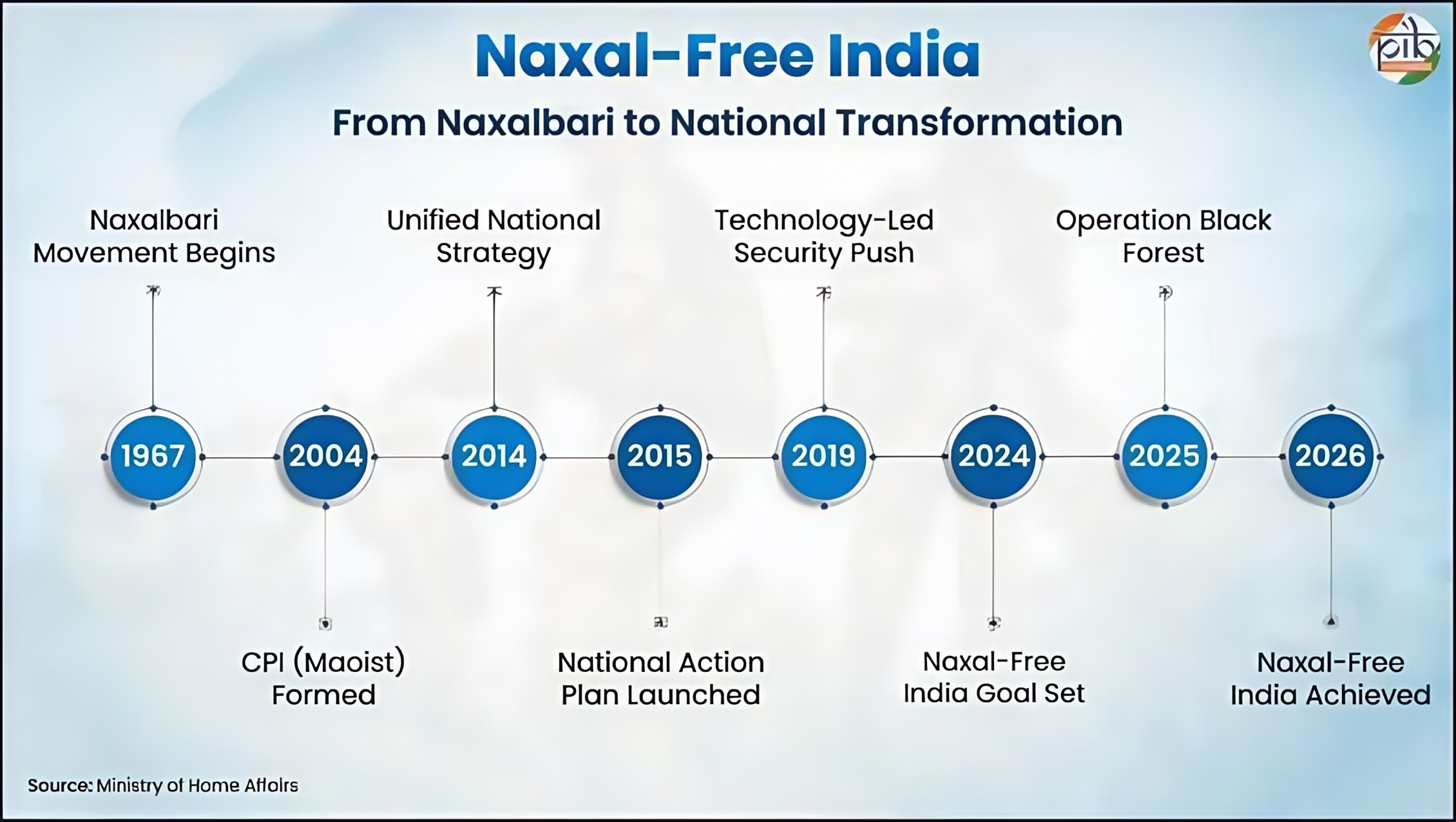
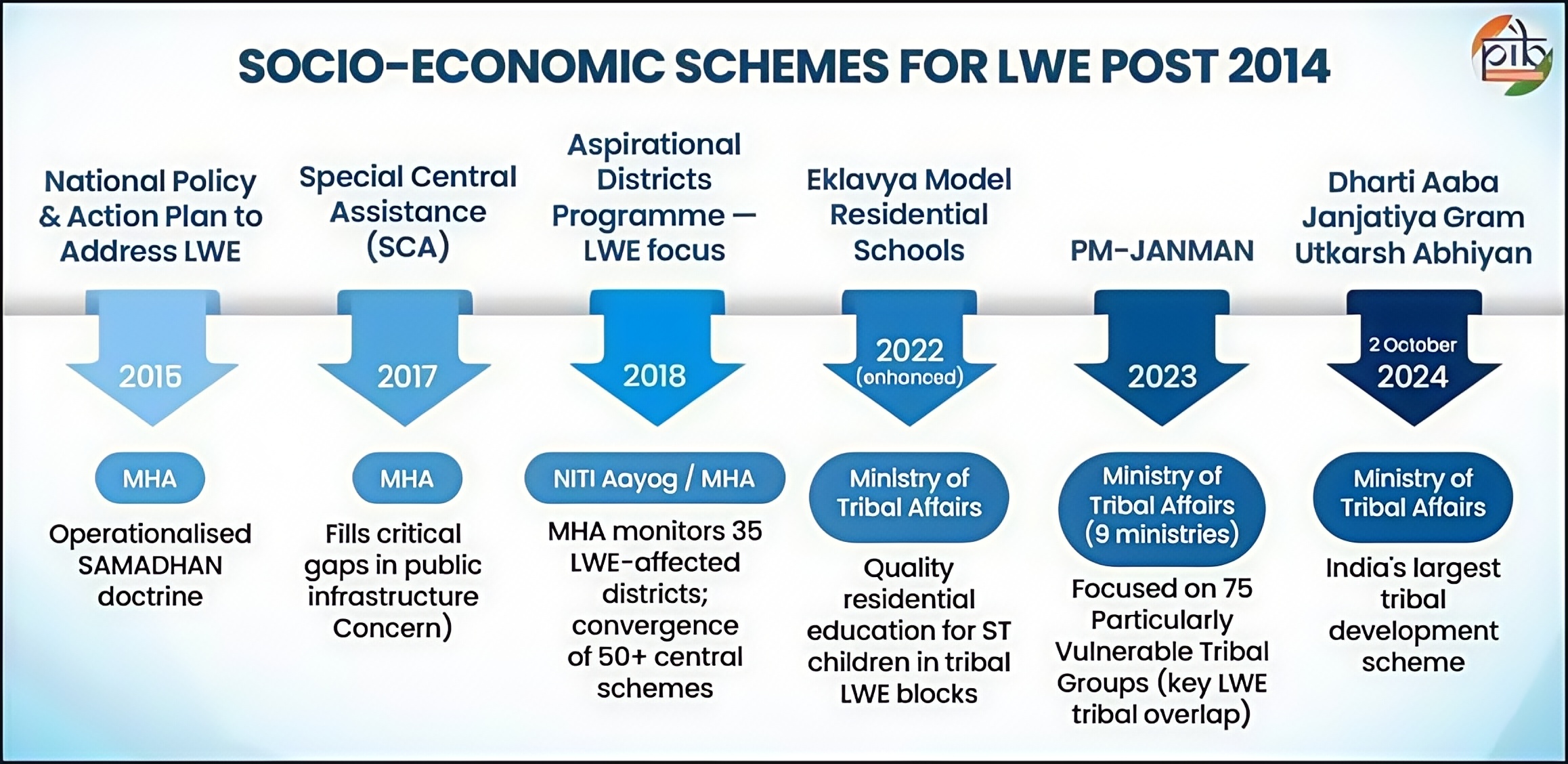
National Policy and Action Plan – The Unified Framework (2015) replaced ad hoc responses with a comprehensive, whole-of-government strategy.
Central Armed Police Forces were deployed and received specialized training.
Key funding schemes include the following:
Security Related Expenditure,
Special Infrastructure Scheme, and
Special Central Assistance (SCA) schemes.
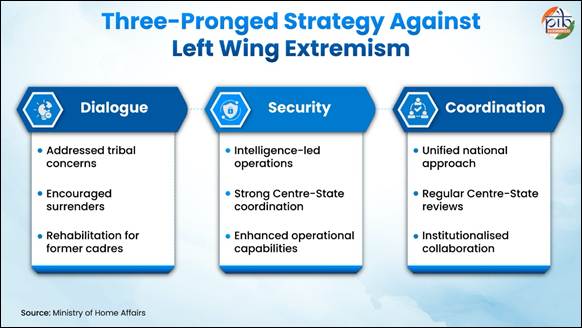
Three‑Pronged Strategy – The Ministry of Home Affairs leads the overall framework.
This approach ensures coherent policy implementation and bridges gaps between agencies.
The strategy shifts from fragmented, ad hoc responses to an integrated national approach.
Security Grid Expansion – Strengthened state presence, improved mobility, better intelligence sharing, and increased counter-insurgency capacity.
Key Measures
Fortified Police Stations
CAPF Camps
Helipads
Vehicles and Hospitals.
Integration of Elite Forces – The merging of CoBRA, DRG, STF, and Greyhounds through joint training exercises.
This exercises established an interoperable, multi‑layered force with a defined command structure, enhancing coordination and operational effectiveness.
Technology as a Transformative Factor - The government deployed unmanned aerial vehicles (UAVs), drones, satellite imagery, and artificial intelligence (AI) analytics to enable real-time surveillance and enhance operational precision.
Data systems incorporate advanced tools for location tracking, call-log and mobile data analysis, and social media monitoring.
These systems enable the Ministry of Home Affairs (MHA) to track movements and communications, thereby increasing operational efficiency.
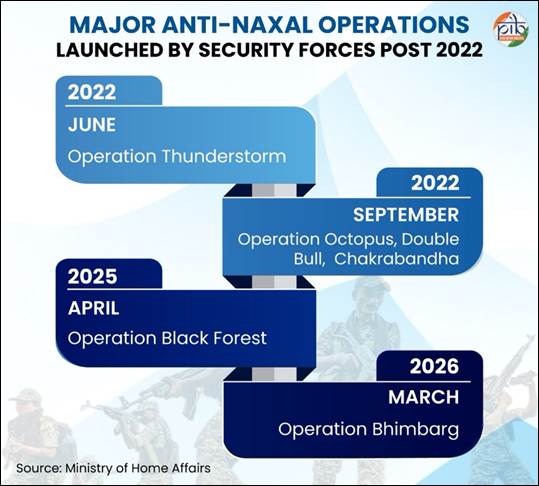
Operations to Trace, Target, Neutralise – It included Black Forest, Octopus, Double Bull, Thunderstorm, Bhimbarg, and Chakrabandha.
Key breakthroughs
Black Forest – Security forces dismantled a major stronghold, eliminated over 30 Maoists, and achieved a significant increase in arrests and surrenders.
Double Bull – The districts of Gumla, Lohardaga, and Latehar were declared Naxal-free.
Financial Disruption – A dedicated NIA unit was established to disrupt Maoist funding.
Red Carpet for Surrender – The government enhanced security efforts by prioritizing rehabilitation, introducing the “Red Carpet for Surrender” initiative.
Civil society and local leaders played a key role in building confidence in the rehabilitation measures.
Infrastructure and Connectivity – Extend city-level facilities to tribal regions and integrate remote areas with mainstream governance.
The government promoted the development of roads, digital connectivity, financial inclusion, education and skills training, and youth outreach, thereby strengthening socio-economic integration in the affected regions.
It strengthens last-mile service delivery for marginalized communities and ensures equitable access to essential public services.
Tribal Welfare & Rehabilitation – To reduce LWE influence by expanding access to education, healthcare, housing, and livelihood support in tribal regions.
Rehabilitation efforts – It include providing surrendered cadres with skill training, livelihood assistance, PMAY housing, and self-employment grants.
Their children receive free education up to Class XII.
Village grants offer incentives to democratically elected panchayats in Naxal-free areas.