Mains: GS II | Health
Why in News?
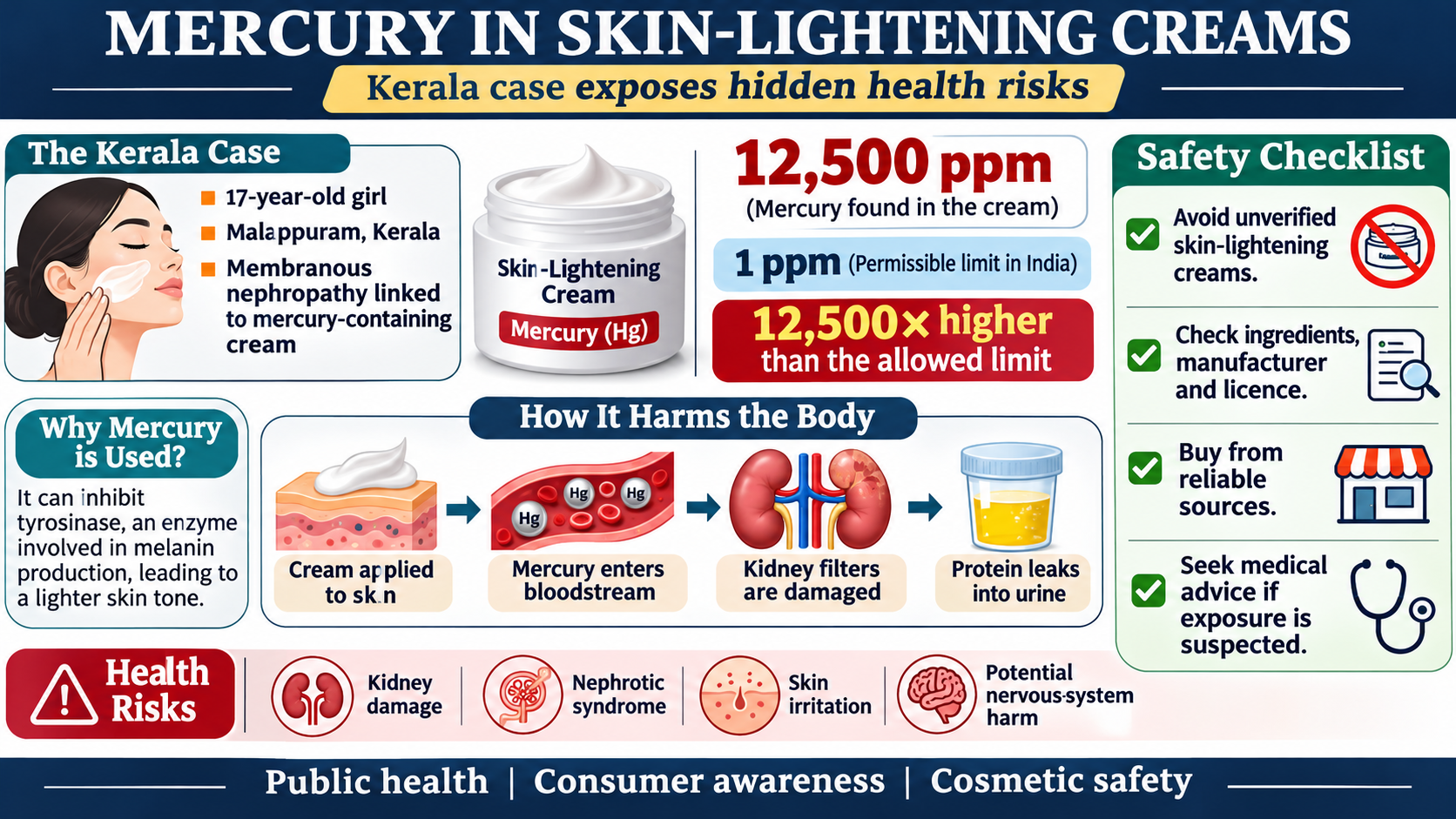
A teenager in Kerala's Malappuram district developed membranous nephropathy, a severe kidney disorder, following prolonged use of a fairness cream that reportedly tested at 12,500 ppm of mercury.
What is the Malappuram case?
How mercury works in skin-Lightening creams and its health imapcts?
What are the regulatory, international, and social dimensions?
|
Dimension |
Existing framework and ground reality |
|
Domestic Legal Framework |
Governed by the Drugs and Cosmetics Act, 1940 and the Cosmetics Rules, 2020. It caps unintentional trace mercury in finished cosmetics at 1 ppm (with specific rules for eye-area preservatives) and mandate full ingredient disclosure, batch numbers, and manufacturer/importer details; criminal liability also arises under the Bharatiya Nyaya Sanhita (BNS) for selling noxious products and cheating. |
|
International Treaty Obligations |
Under the Minamata Convention on Mercury (ratified by India in 2018), Parties are legally obligated to phase out the manufacture, import, and export of mercury-added cosmetics exceeding 1 ppm. |
|
Digital Commerce and Influencer Economy |
Direct-to-consumer sales via Instagram reels, WhatsApp numbers, and third-party e-commerce listings often bypass traditional retail checks, while paid or promotional influencer endorsements lend false credibility to unverified products. |
|
Sociological Drivers: Colourism |
Deep-rooted social bias equating fair skin with beauty, marriage prospects, and social status sustains strong consumer demand for quick-fix whitening products despite known health hazards. |
What are the key challenges in curbing toxic cosmetics?
What is the way forward?
Reference



