Prelims: Current events of National and International Importance
Why in News?
The World Health Organization issued its first guidelines on diagnosing and managing type 1 diabetes in adults ahead of World Diabetes Day in November 2026.
Designed for all settings—including low-resource, emergency, and humanitarian environments—the guidelines aim to support global 2030 targets for affordable insulin and blood glucose monitoring.
Recommendations
- Insulin Regimens– Multiple daily insulin injections with doses adjusted to blood glucose levels are recommended.
- Human insulin is highlighted as an effective, lower-cost option, alongside insulin analogues when needed or available.
- Glucose Monitoring– Regular monitoring is recommended, including periodic clinic blood tests (such as HbA1c/average blood sugar tests) and at-home checks via finger-prick testing or continuous glucose monitors (CGMs).
- Urine glucose testing may be used where blood glucose testing is unavailable.
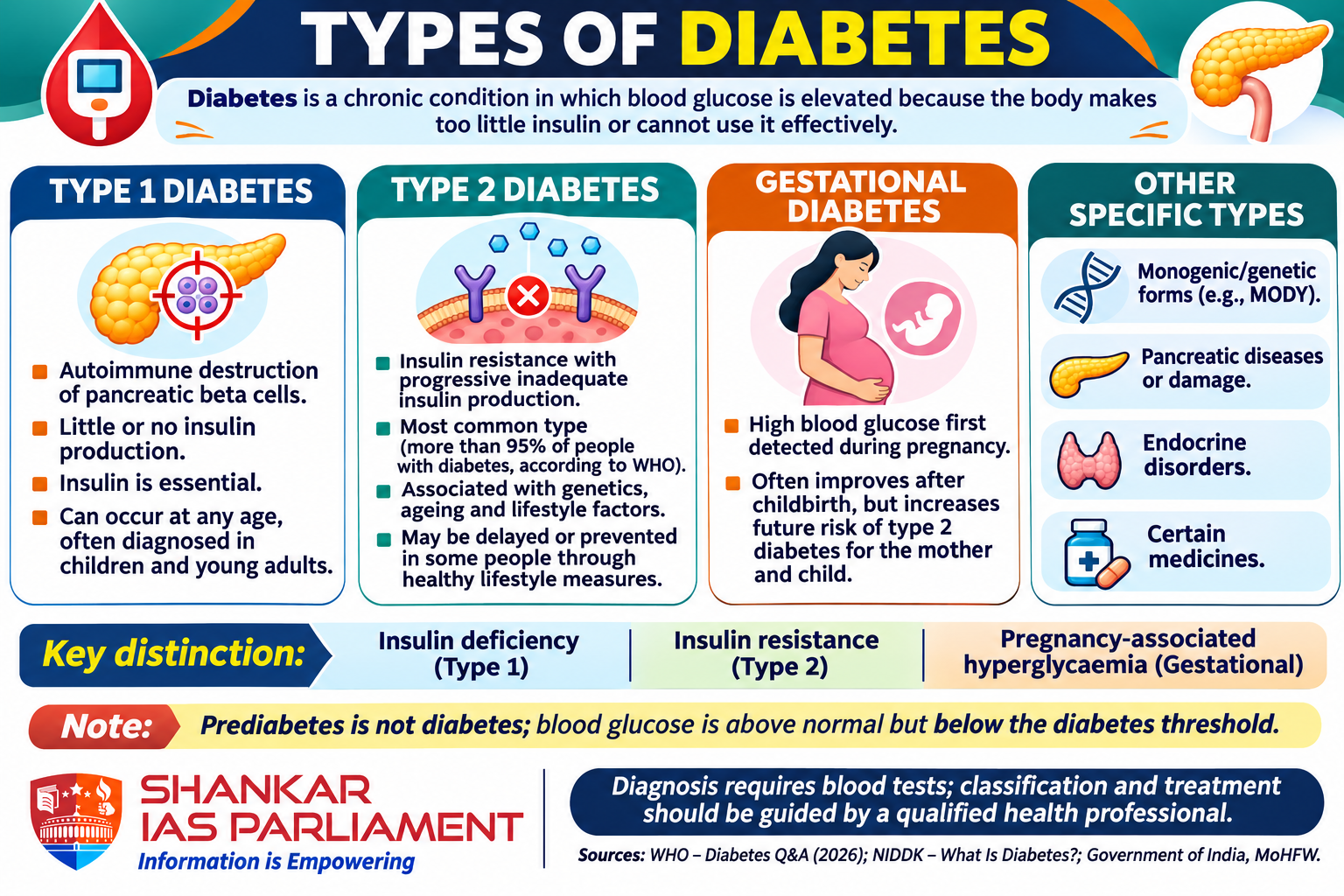
- Diagnosis & Care– The guidance addresses diagnosis and classification—noting that adult-onset type 1 diabetes can be misdiagnosed as type 2 diabetes—and encourages involving people living with type 1 diabetes in shaping care programmes.
Reference
WHO| Managing Type 1 Diabetes in Adults



