Prelims: Current events of national and international importance | Species
Why in news?
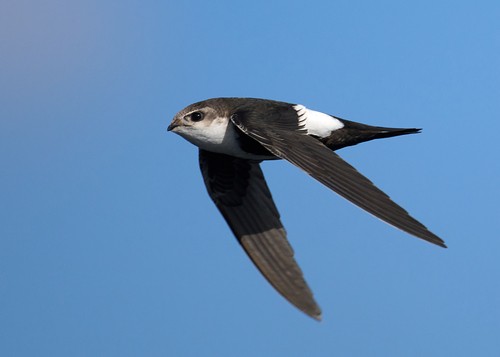
Recently, the Indian swiftlet made a surprise visit to the Adyar estuary in Chennai.
Scientific name – Aerodramus unicolor.
Habitat –Prefers rocky hills, mountainsides, caves and offshore islands that provide suitable nesting caves and disperses to plains during monsoons.
Distribution –Found in the hills and coastal areas of Sri Lanka and southwest India (primarily in Maharashtra, Goa, Karnataka, Kerala, and Tamil Nadu).
Appearance –
Size & Shape– It is small with 12cm long, compact swift with a shallow tail fork (unlike the Asian Palm-Swift’s deep fork).
Coloration –Darker brown upperparts, paler brown underparts, and a slightly paler rump.
Diet –Insectivorous (flees, wasps, bees, locust, etc) catching flying insects mid-air in swift flocks.
Breeding –The breeding season occurs mainly from March to June in India.
Nesting – Nests are bracket-shaped and attached to vertical cave surfaces. They are made by the male bird using grass, moss, and feathers bound together with thick, whitish saliva.
Echolocation – They uses echolocation to navigate in dark caves during breeding and roosting.
Conservation Status
IUCN – Least Concern
Threats – Habitat destruction, nest harvesting for bird’s nest soup, etc.