National Natural Farming Mission Portal
Union Agriculture Minister launched the National Natural Farming Mission portal at Krishi Bhawan, New Delhi.
- The National Mission on Natural Farming (NMNF) portal was launched at the first steering committee meeting of National Natural Farming Mission.
- The National Natural Farming Mission portal was developed by the Union Ministry of Agriculture and Farmers Welfare.
- The portal will help in promoting natural farming in the country and for the benefit of the farming community.
Natural Farming is a chemical free farming system based on livestock and locally available resources and rooted in Indian tradition.
National Mission on Natural Farming
- The Bhartiya Prakratik Krishi Paddhati (BPKP) is being up-scaled as National Mission on Natural Farming (NMNF) for implementation all across the country.
- BPKP is a sub-scheme of Paramparagat Krishi Vikas Yojna (PKVY) since 2019-20 for promoting natural farming.
- National Steering Committee (NSC) under the Chairmanship of the Union Agriculture Minister, is the policy making body of the mission.
- Mission Objectives
- To promote alternative system of farming and thereby increasing income of farmers.
- To popularize integrated agriculture-animal husbandry models.
- To collect, validate and document Natural Farming practices and to encourage participatory research with farmers.
- To undertake activities for awareness creation, capacity building, promotion and demonstration of Natural Farming.
- To create standards, certification procedure and branding for Natural Farming products.
References
- PIB - Union Agriculture Minister Shri Narendra Singh Tomar chairs steering committee meeting of National Natural Farming Mission
- Business Standard - Agriculture minister launches portal on national mission on natural farming
- National Mission On Natural Farming Management And Knowledge Portal
Performance Grading Index
Ministry of Education releases report on Performance Grading Index for States and Union Territories for the year 2020-21.
Indian Education System is one of the largest in the world with about 14.9 lakh schools, 95 lakh teachers, and nearly 26.5 crore students.
- Performance Grading Index (PGI) is a unique index for evidence based comprehensive analysis of school education system across State/UTs.
- The index measures the performance of states and union territories on a uniform scale to analyse the transformational change in the field of school education.
- Objective of PGI - To promote evidence-based policy making and highlight course correction to ensure quality education for all.
- The PGI helps States and UTs to pinpoint the gaps and prioritize areas for intervention accordingly.
- The structure of PGI
|
1000 points
Divided into ten grades.
|
Highest Grade
Level 1
|
|
Scores above
950/1000
|
|
Lowest grade Level 10
|
|
Scores below
551/1000
|
|
Across
70 Indicators
|
Outcomes
|
Learning Outcomes (LO) & Quality
|
|
Access (A)
|
|
Infrastructure& Facilities (IF)
|
|
Equity (E)
|
|
Governance Management
|
Governance Process (GP).
|
PGI 2020-21 Highlights
- A total of 7 States and UTs, Viz., Kerala, Punjab, Chandigarh, Maharashtra, Gujarat, Rajasthan, and Andhra Pradesh have attained Level II (score 901-950) in 2020-21.
- Maharashtra, Punjab and Kerala have been ranked first in this year’s PGI report.
- Gujarat, Rajasthan and Andhra Pradesh are the new entrants to highest achieved level.
References
- PIB - Ministry of Education releases report on Performance Grading Index for States/UTs for the year 2020-21
- The Indian Express - Despite pandemic impact, Maharashtra tops school education performance index
- Ministry of Education – UDISE+ - Performance Grading Index
Cordy Gold Nanoparticles
A collaborative research on a fungus-powered biosynthesised Nano gold particles has received an international patent from Germany.
- Cordy gold nanoparticles (Cor-AuNPs) is the outcome of a collaborative experiment by scientists from four Indian institutions.
- These nanoparticles could make drug delivery in the human body faster and surer.
- Cor-AuNP is derived from the synthesis of the extracts of Cordyceps militaris and gold salts.
Cordyceps militaris is a parasitic fungi that forms a small, 3- or 4-centimetre (about 1.3-inch) mushroom like fruiting structure with a bright orange head, or cap.
Gold salts are ionic chemical compounds of gold generally used in medicine.
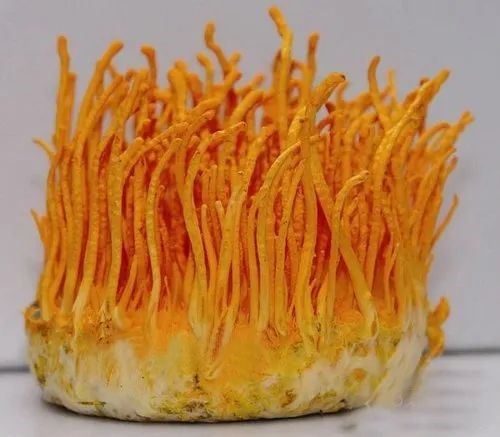
Cordyceps militaris
- Cordyceps militaris are called super mushroom because of its tremendous medicinal properties.
- Cordyceps are used in traditional medicine for centuries for its anti- aging an anti-inflammatory properties.
- It adds bioactive components to the synthesis of gold nanoparticles for better penetration.
- Biosynthesised Nano gold particles indicate a new application of nanoparticles in the development of therapeutic drugs which can be delivered as ointments, tablets, capsules, and in other forms.
References
- The Hindu - A gold-mushroom combo to ease drug delivery
- The Sentinel - German Patent Office recognizes research on Cordycep mushroom
Mauna Loa
The largest active volcano in the world, ‘Mauna Loa’ in Hawaii shows indications that it could erupt.
- Mauna Loa is one of five volcanoes that together make up the Big Island, the southernmost island of Hawaiian archipelago.
- Mauna Loa is the largest volcano and makes up about half of the island’s land mass.
- Mauna Loa volcano last erupted 38 years ago in 1984.
Nature of Mauna Loa Volcano
- Hawaii’s volcanoes are called shield volcanoes because successive lava flows over hundreds of thousands of years build broad mountains that resemble the shape of a warrior’s shield.
- Hawaii volcanoes like Mauna Loa non-explosive volcanoes and tend not to have explosion eruptions.
- Mauna Loa has a much larger magma reservoir than Kilauea, leading to larger lava flows when an eruption occurs.
- Their magma is hotter, drier and more fluid.
Volcanoes in Big Island
- Mauna Loa - Mauna Loa Observatory (MLO) is located on the north flank of this volcano.
- Mauna Kea - The tallest volcano in Hawaii.
- Kilauea volcano - It is currently erupting from its summit crater and is located south of Mauna Loa.
- Hualalai volcano
- Kohala volcano
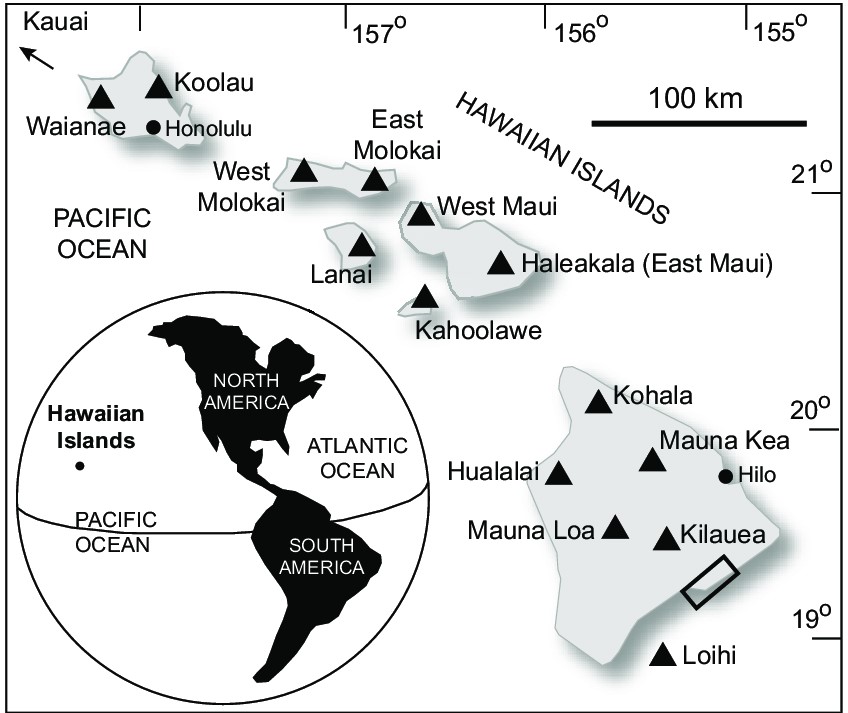
References
- The Indian Express - Where Mauna Loa, Hawaii’s biggest volcano, will erupt from
- CNN - Dozens of earthquakes detected as Hawaii's Mauna Loa, world's largest active volcano, remains in 'state of heightened unrest'
Rising Sun Water Festival 2022
The Meghalaya Chief Minister inaugurated the three-days-long ‘Rising Sun Water Fest 2022’ at Umiam Sports Complex.
Members of the Garo tribal community performed Wangala dance on the inaugural of the event.
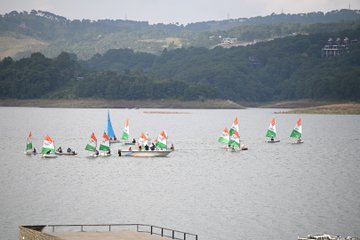
- The Rising Sun Water Fest-2022 is organised on the banks of Umiam Lake in Meghalaya.
- The event was organised by the Eastern Command Aquatics Node as a part of Khelo India programme.
- The Indian Army and the government of Meghalaya is organizing the rowing and sailing event for the first time.
- The sailing and rowing event witnessed participation from elite pan India clubs.
Wangala
- Wangala dance is performed by males and females to the rhythmic beat of drums and gongs and blowing of horns by the males.
- It is traditionally performed during Wangala festival by Garo tribes.
- Wangala festival (also known as 100 drums festival) is a celebration of thanksgiving after harvest.
- Garos are Sino-Tibetan ethnic tribe who live in Garo hills in Meghalaya.
References
- The Hindu – Festive Beats
- North East Today - Meghalaya CM Inaugurates ‘Rising Sun Water Fest 2022’



