Prelims: Current events of national and international importance | Environment
Why in News?
Recently, the Keralam has launched India’s first Ecosystem Red List Assessment project to evaluate the risk of ecosystem collapse across the State.
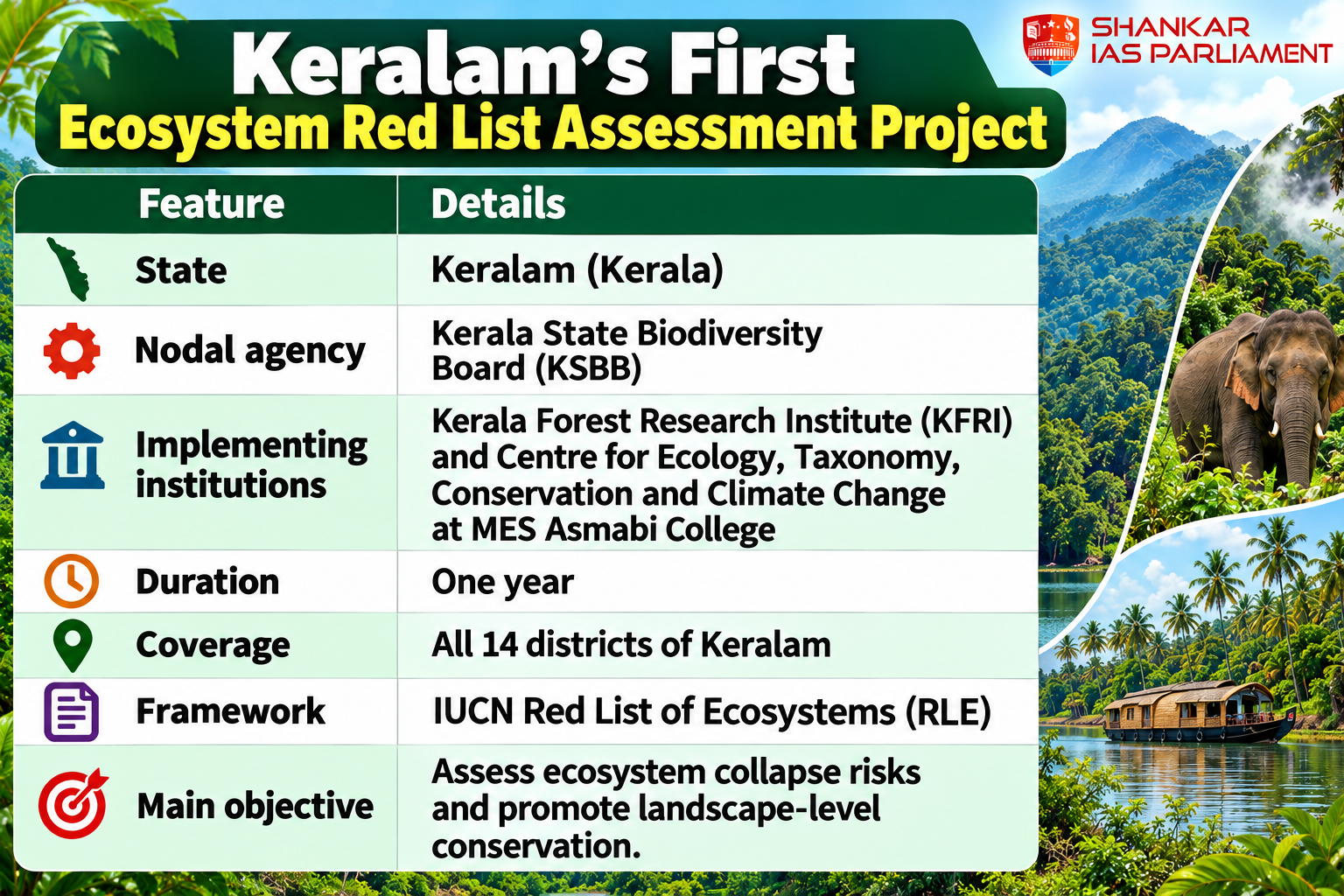
Objectives
- Transition from species-focused conservation approaches to strategies that encompass entire ecosystems.
- Conduct scientific assessments to evaluate the risk of ecosystem collapse throughout the State.
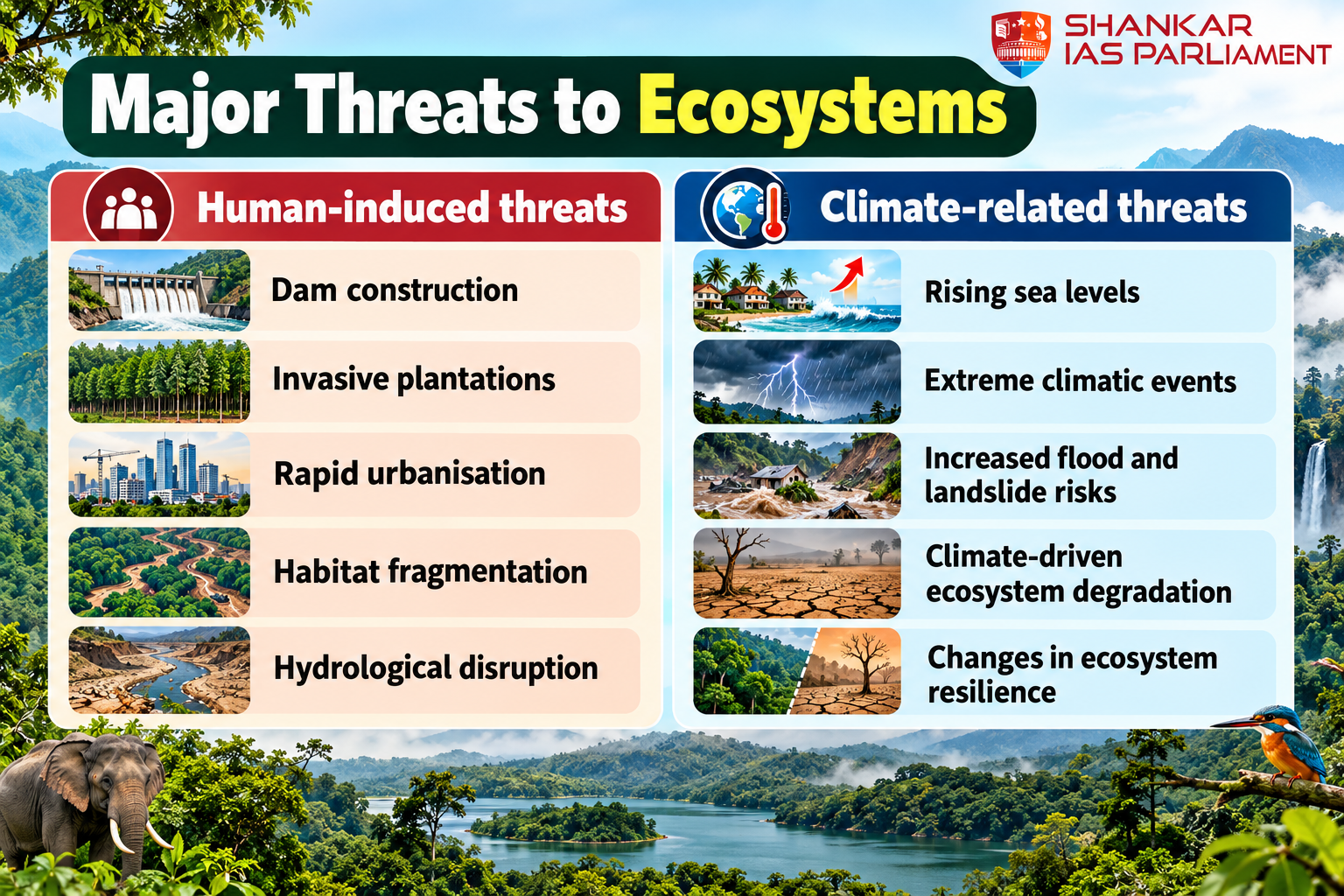
- Document historical patterns of ecosystem loss, habitat fragmentation, and hydrological disruption.
- Identify threats to natural habitats arising from both climatic and anthropogenic factors.
- Establish a scientific baseline to inform ecosystem restoration and promote sustainable development.
Key Ecosystems Evaluated in the Assessment
The assessment examines natural habitats located in mountainous, midland, and coastal regions.
- Tropical riparian evergreen forests – These forests, which are associated with riverbanks and river systems in the southern Western Ghats, have experienced an estimated 83% reduction in extent over the past century.
- Myristica swamps – These freshwater swamp ecosystems are recognized for their unique biodiversity.
- Shola–grassland mosaics – These are high-altitude ecosystems characteristic of the Western Ghats.
- Coastal mangroves – These ecosystems play a critical role in coastal protection and support significant biodiversity.
- Other habitats assessed include additional forests, river systems, and coastal belts.
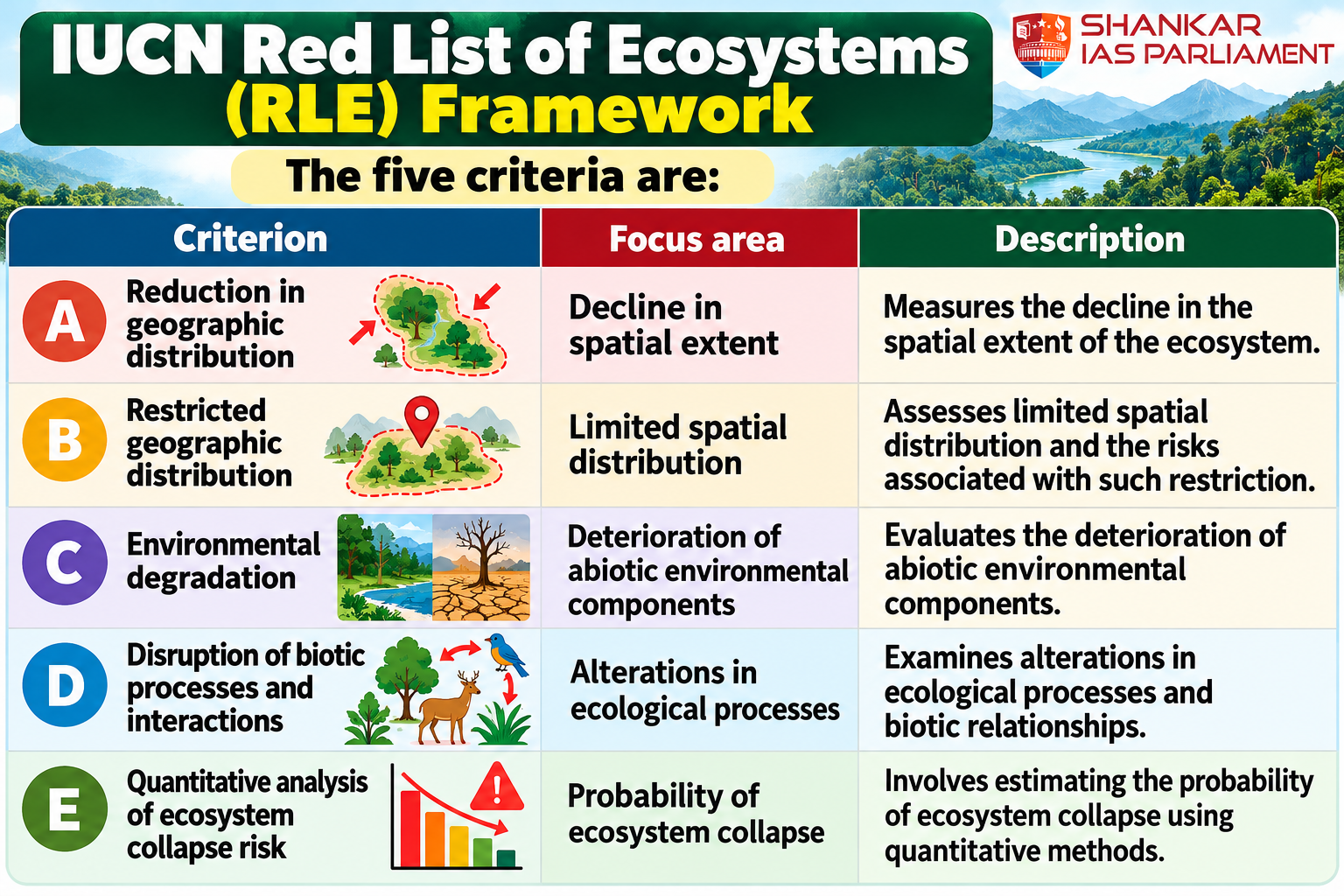
IUCN Red List of Ecosystems (RLE) Framework
- The project uses the International Union for Conservation of Nature (IUCN) Red List of Ecosystems framework.
- It evaluates ecosystems against five standardised criteria to assess their risk of collapse.
Note - The IUCN Red List of Ecosystems assesses the risk of ecosystem collapse, whereas the IUCN Red List of Threatened Species assesses the extinction risk of species.
Anticipated Outcomes
- Official Risk Register – Systematic identification and documentation of ecosystems at risk.
- Ecosystem Typology Atlas – Comprehensive scientific classification and spatial mapping of ecosystem types.
- Eco restoration Priority Maps – Delineation of areas prioritized for urgent ecological restoration.
- Integration with State Planning Portals – Application of scientific data to inform development and conservation planning.
Significance
- Evidence-based conservation – Establishes a scientific baseline to assess and monitor ecosystem degradation.
- Climate adaptation – Facilitates the implementation of nature-based solutions for addressing climate change.
- Disaster risk reduction – Contributes to the reinforcement of natural barriers that mitigate floods and landslides.
- Decentralised governance – Delivers actionable information to Biodiversity Management Committees (BMCs) and local panchayats.
- Sustainable development – Facilitates the integration of ecological considerations into local development planning.
- Community-led restoration – Advances Keralam’s objective of becoming a biodiversity-friendly state.
Reference
The Hindu | Keralam’s First Ecosystem Red List Assessment Project



