Why in news ?
As businesses shift priorities to enable remote work, it’s time to rely on an effective multi-cloud, multi-edge, hybrid approach
What is a hybrid cloud?
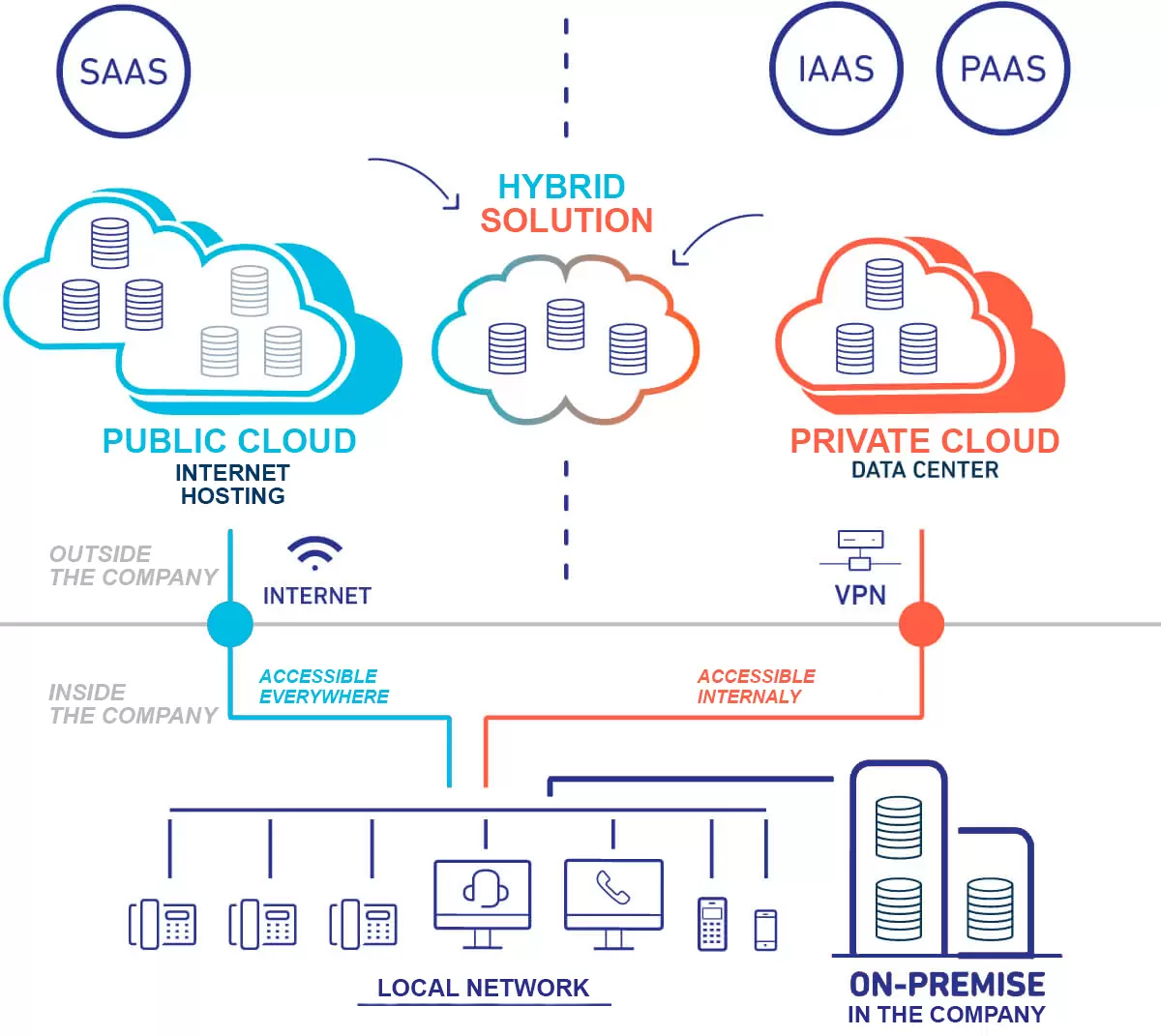
- Hybrid cloud is an IT infrastructure that combines and unifies public cloud and private cloud services from multiple cloud vendors.
- Hybrid cloud architecture focuses on the mechanics of transforming portions of a company's on-premises data centre into private cloud infrastructure
- It then connects that infrastructure to public cloud environments hosted off-premises by a public cloud providers such as Google Cloud Services, IBM Cloud, Microsoft Azure, etc.
What are the benefits of hybrid cloud platform?
- High scalability - With the scope of new additions in existing infrastructure
- Very secure - Giving businesses crucial control over their data and improved security
- High flexibility - Certain types of data can be stored on-premise while allowing less sensitive data to be stored on the cloud
- Greater infrastructure efficiency by strengthening remote work
- Cost and time efficient
- Modernisation of application landscape
- Seamless cross-functional communication
- Overall business acceleration
What parameters need to be assessed in this model?
- Regulatory requirements
- Security compliance
- Stringent latency
- Connectivity issues
- Dependency on internal IT infrastructure
- Managing multiple vendors and platforms
Source: The Hindu Businessline



