Why in news?
A large number of bird species in India are either currently declining or projected to decline in the long term, according to a report.
What is State of India’s bird report about?
- CMS COP 13 - In 2020, at the Conference of Parties to the Convention on Migratory Species joined the set of countries that regularly assess the status of their birds.
- They then launched the first report on the State of India’s Birds.
- Data - The State of India’s Birds report is a periodic assessment of the distribution range, trends in abundance, and conservation status for most of the bird species that regularly occur in India.
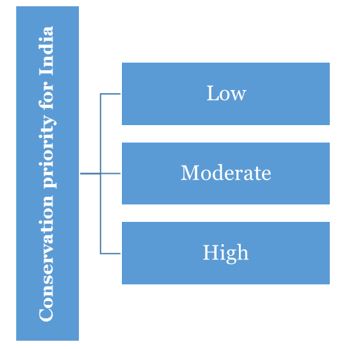
- IUCN data - Based on IUCN Red List of global threat status, this report places Indian species into three categories.
What are the key highlights of the 2023 report?
- Decline - India’s birds are facing a significant decline in numbers revealing a silent, gradual change in birds population.
- High Conservation priority - A large number of species that are thought to be common and widespread find themselves as of High Conservation Priority
- It means their abundance continues to decline after a considerable drop in the number over the years.
- Migratory birds - The number of long-distance migrants has declined 50%, with those that breed in the Arctic but winter in India seeing a decline of 80%.
- Overall analysis -
- Decline in raptors, migratory shorebirds, and ducks.
- Increase in Indian Peafowl and Asian Koel.
What are the major threats to birds in India?
- Increase in temperature - The average global temperature has risen by over 1 degree Celsius since pre-industrial times.
- This has resulted resulting in catastrophic consequences not only for humans but also for other living beings, like birds.
- Climate change - It affects bird reproduction and survival through the disruption of species interactions by phenological mismatches.
- It occurs when the timing of annual events like breeding, nesting and migration become out of sync.
- Mismatches in seasonal timing - It occurs between birds and their prey.
- This can reduce survival and reproduction and lead to fatal competition with other species.
- Adaptive changes - Soaring temperatures force sedentary birds to go through rapid adaptive changes.
- For instance, Amazonian birds over 50 years lost body weight to lose heat more efficiently, the report said.
- Dangerous interaction - Climate change leads to new and dangerous interactions between different species.
- Example - In Hawaii, mosquitoes have colonised higher altitudes due to rise in mercury.
- Urbanisation - As per the report, the most urbanised regions in India have the least number of bird species, the least number of rare species, and the fewest insectivorous species.
- Pollution - Cities have noise pollution, which forces birds to sing louder, or at different frequencies, or, in the worst case, to abandon otherwise suitable habitat.
- Light pollution may confuse and disorient them, causing them to collide with buildings.
- Lack of food - It occurs in urban areas which leads to the homogenisation of bird communities.
- Monoculture - It is the practice of growing one type of seed in a field at a time.
- Monocultures is known to harbour fewer bird species than natural forests within the same biome.
- Death of birds - A wide range of species are known to have been killed due to collisions with wind turbines.
- Transmission lines - It led to the death of many large-bodies species because of collision and numerous small-bodies species have been electrocuted.
References
- Indian Express- Threats to the bird species in India
- State of India’s Bird Report- 2023 key highlights and threats



