Why in news?
Indian Prime Minister recently announced the National Hydrogen Mission.
What is the National Hydrogen Mission?
- Budget 2021 found mention of Hydrogen Energy Mission in 2021-22 for generating Hydrogen from green power sources.
- Accordingly, the Ministry of New and Renewable Energy (MNRE) has drafted a National Hydrogen Energy Mission.
- It aims to scale up Green Hydrogen production and utilization across multiple sectors.
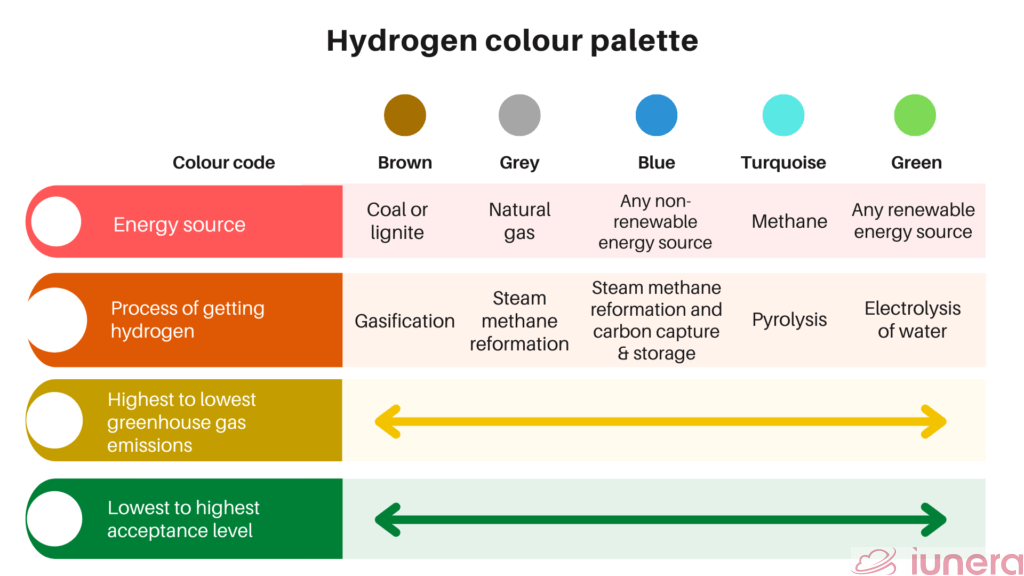
How is the current hydrogen production?
- Hydrogen is emerging as an important source of energy since it has zero carbon content and is a non-polluting source of energy.
- But the current global production of hydrogen of about 80 million metric tonnes, is almost wholly produced through fossil fuels.
- It uses 6% of global natural gas and 2% of coal, and contributes 830 million tonnes of CO2.
What is green hydrogen?
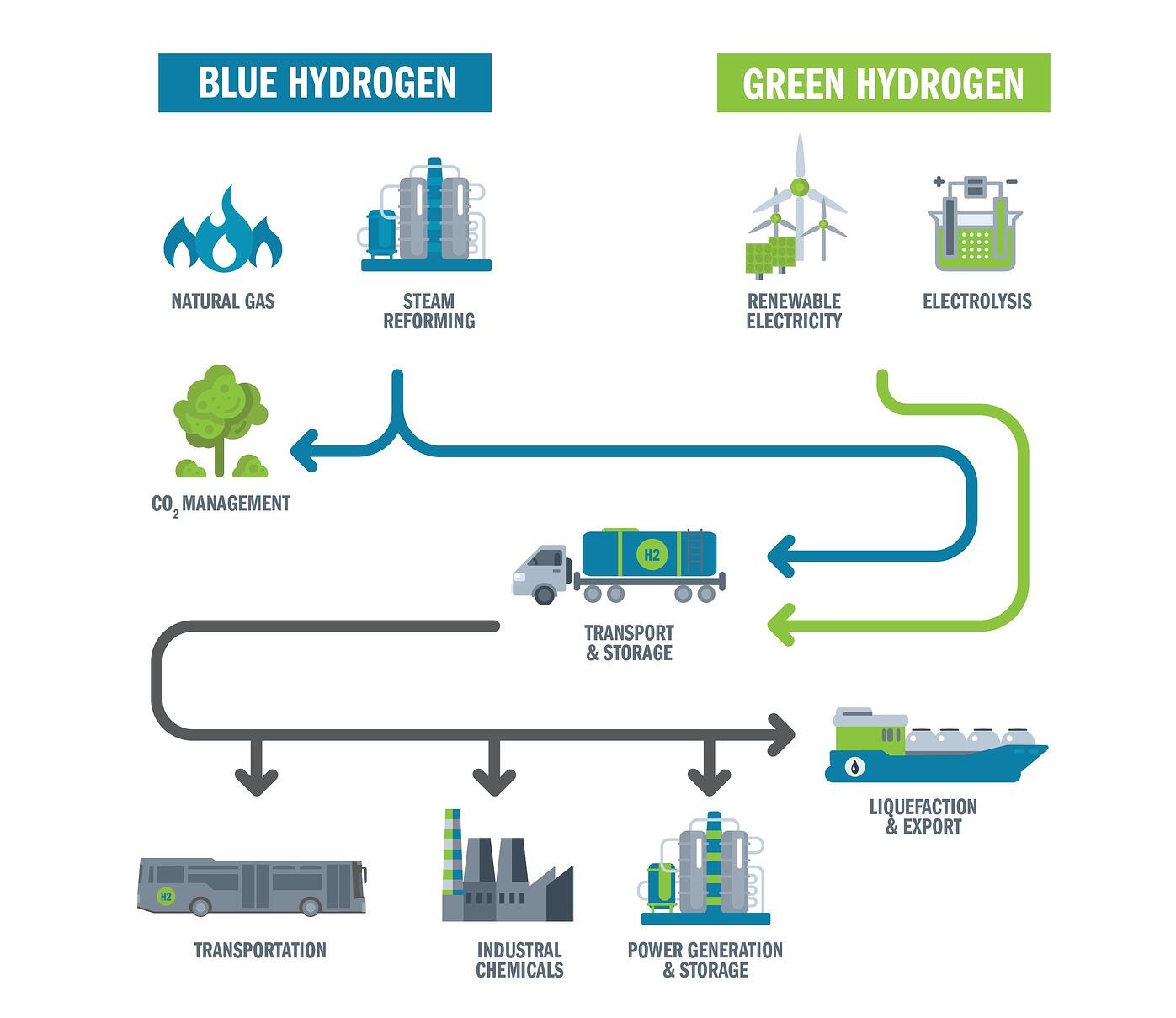
- Green hydrogen is produced by splitting water into hydrogen and oxygenusing an electrolyzer powered by electricity from green energy sources such as wind and solar.
- When burnt, it gives out water vapour, with no residue or climate-harming impact.
- Green hydrogen is aided by:
- Global energy transition toward renewables
- Declining costs
- Breakthroughs in technology - electrolyzer capacity projects
- High carbon taxes
The cost of producing green hydrogen could drop below $2 per kg in 10 years, if accompanied by scale, both in production and consumption.
Possibly, 22% of the global energy need by 2050 could be hydrogen-based.
What are the challenges?
- A lot of energy for the electrolysis of water is needed.
- Unless this electricity is produced with a zero-carbon footprint, it defeats the key aspect of ‘green’ hydrogen.
What are the advantages?
- Transform India from an energy-deficient to an energy-rich country.
- Make India a net exporter of energy.
- Play a key role in decarbonization efforts.
- Significantly reduce import dependence– India spends $160 billion on imports of crude oil, liquified natural gas, coal and fertilizer.
- Solar-to-hydrogen also solves an intermittence problem, as hydrogen substitutes the need for battery storage.
Favourable factor
- All-year sunshine - Most parts of India receive 4-7 kilowatt-hour of solar energy/sq. m/day.
What are the possible applications?
- Transportation, including trucks, buses, cars and rail.
- Feedstock for fertilizers, chemicals and refineries.
- Decarbonizing buildings and decarbonizing high-heat industries such as steel-making.
- Hydrogen fuel cells – A key complement to batteries.
- Grid-scale storage solutions and feedstock for ammonia production(thus eliminating the need for natural gas).
- Blending hydrogen with natural gas in city gas pipelines reduces the import of natural gas.
What are the interventions so far?
- The cost of green hydrogen made by electrolysis is estimated to be around Rs.350 per kg.The Centre plans to bring it down to Rs.160 per kg by 2029-30.
- Plans for green hydrogen consumption obligation (GHCO) in fertilizer production and petroleum refining; similar to renewable purchase obligations (RPO).
- The draft Electricity Rules, 2021have allowed green hydrogen purchase to help meet RPOs.
- Plans to callbids for 4 GW electrolyzer capacity.
- Extending the PLI (Production Linked Incentive) scheme for manufacturing electrolyzers.
- NTPC Renewable Energy is setting up India’s largest solar park of 4.75 GW in Gujarat, with plans to make green hydrogen on a commercial scale.
- NTPC has also called bids for setting up a pilot project for mixing green hydrogen with natural gas for the city gas distribution network.
- Besides, Reliance Industries Ltd has recently announced plans to build large-scale, low-cost and high-efficiency electrolyzers as part of its $10 billion renewables push.
What lies ahead?
- An enabling policy framework.
- A nudge to increase demand for green hydrogen.
- Infrastructure development, such as of pipeline networks and last-mile connectivity.
- Facilitating private capital to participate in the scaling-up effort.
Source: Livemint



