Why in news?
Recently Fitch, a global rating agency accorded “BBB” ratings to India’s sovereign rating.
What is credit rating agency?
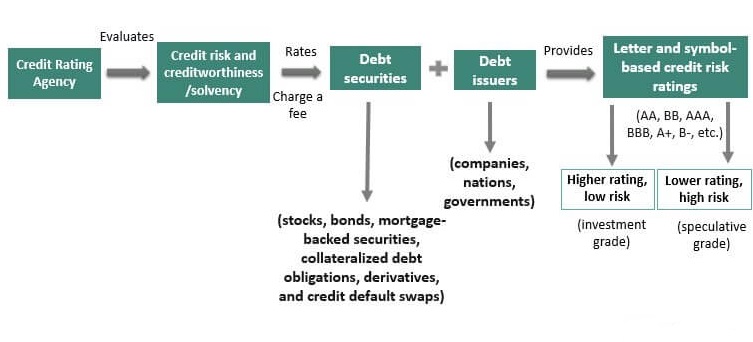
- A credit rating agency is an agency that assess the creditworthiness of organisation, individual or entity and assign ratings to it.
- In India, CRAs are regulated by SEBI (Credit Rating Agencies) Regulations, 1999 of the Securities and Exchange Board of India Act, 1992.
- The global credit rating industry is highly concentrated, with 3 agencies - Moody's, Standard & Poor's, and Fitch.
What is sovereign credit rating?
- A sovereign credit rating is an independent assessment of the creditworthiness of a country or sovereign entity.
- By allowing external credit rating agencies to review its economy, a country shows that it is willing to make its financial information public to investors.
- The factors that determine the sovereign credit rating of a country include:
- Per capita income
- GDP growth
- Rate of inflation
- External debt
- Economic development
- History of defaults
- A country with high credit ratings can access funds easily from the international bond market and also secure foreign direct investment.
What is the sovereign credit rating of India?
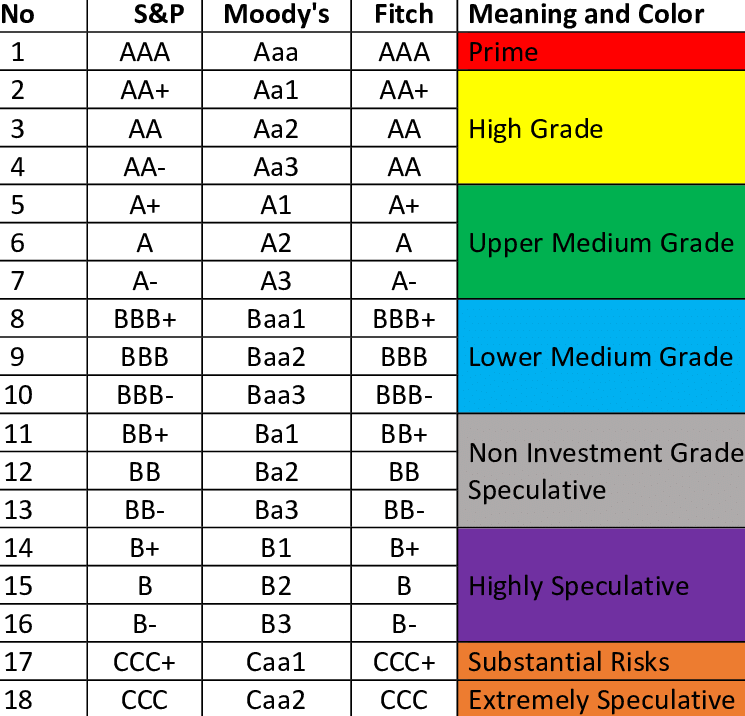
- India’s Rating - All three global rating agencies accorded lowest investment grade rating in India.
- Rating agency Fitch affirmed India's sovereign rating at ''BBB-'' with a stable outlook on robust growth and resilient external finances.
- BBB ratings – It indicates that expectations of default risk are currently low.
- The capacity for payment of financial commitments is considered adequate, but adverse business or economic conditions are more likely to impair this capacity.
- Reasons for low rating - India is expected to face headwinds from elevated inflation, high-interest rates and subdued global demand.
- Other concerns include low labour force participation rates and an uneven reform implementation.
- The fiscal consolidation path, under which the fiscal deficit is to be brought down to 4.5 % of GDP by 2025-26, remains challenging.
- Public finance remains weak while structural indicators are lagging.
What are the positive signs of growth in India?
- Low forex risk - Since all debt is exclusively in rupees and even participation of FPIs is in rupee bonds the forex risk is very low.
- So forex situation in India remains strong.
- Financial growth - The projected financial growth is 7% for the year 2023 which is quite impressive compared with rest of the countries.
- India’s response during COVID - The approach was more through the reform and policy route than fiscal deficits in the form of payouts, which was followed by developed countries.
- Banking system – It has as rebounded well to pandemic period levels indicating it can provide funds that enable the economy to move on to a higher growth path.
- RBI - Ensured a smoother path to normalcy compared with central banks of other nations in after math of the COVID (RBI moved the interest rates without any significant impact on growth)
- Rupee-Dollar - Even though the dollar appreciated, the rupee always remained at the median level of depreciation compared with dollar and other currencies.
- Quality of government spending - Budget has increased the share of capital expenditure from around 12-13 % pre-pandemic to 22 % for FY24.
- Rupee trade agreement with Russia - The strategy to go-domestic is a unique model even though may be slow and time taking.
- Digitization - The digitization drive has brought about structural changes in the economy making systems more efficient.
What lies ahead?
- The rating methodologies need to adapt with the changing times.
- Global credit rating agencies have to do away with the fixed mindset policy where it is believed that emerging markets can never really move up the scale.
References
- The Hindu Business Line│Issues With The Rating
- Telegraph India│Global Rating Agenices
- Fintech│About Ratings
- Wallstreetmojo | Picture



