Prelims: Current events of national and international importance | Environment
Why in News?
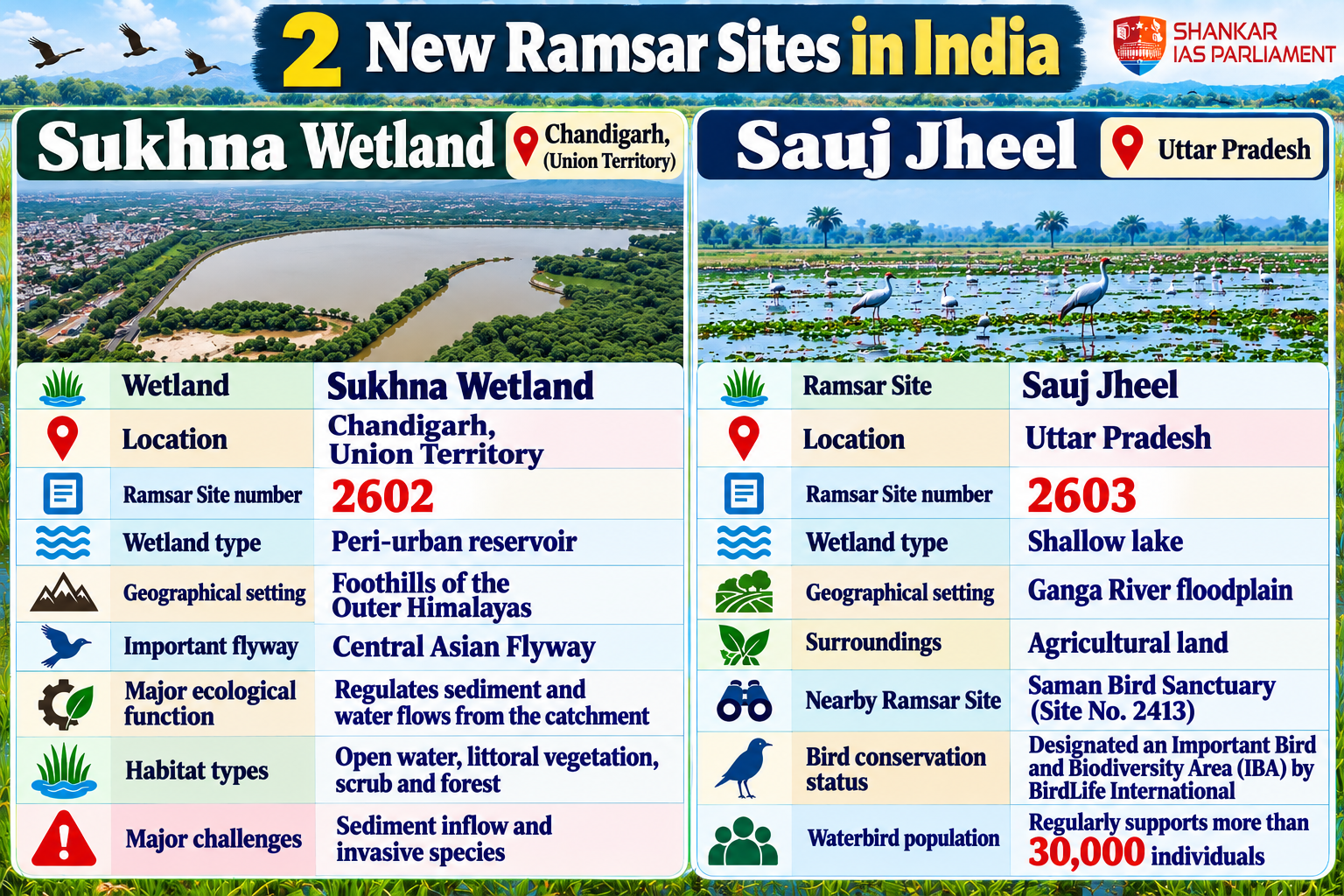
The Ministry of Environment, Forest and Climate Change recently announced that the number of Ramsar sites in India has reached 103.
- Recent addition
- Sukhna Wetland – Chandigarh (Union Territory).
- Sauj Jheel – Uttar Pradesh.
Sukhna Wetland, Chandigarh
- The site is situated at the periphery of Chandigarh, within the foothills of the Outer Himalayas, also known as the Shivalik Hills.
- The site covers approximately 565 acres.
- It represents a significant urban wetland ecosystem that supports biodiversity within a rapidly developing urban environment.
- Habitat for Birds
- The area supports both resident waterbirds and migratory bird species.
- It is situated along the Central Asian Flyway, a major migratory route for avian species.
- The site provides essential feeding, breeding, roosting, and wintering habitats.
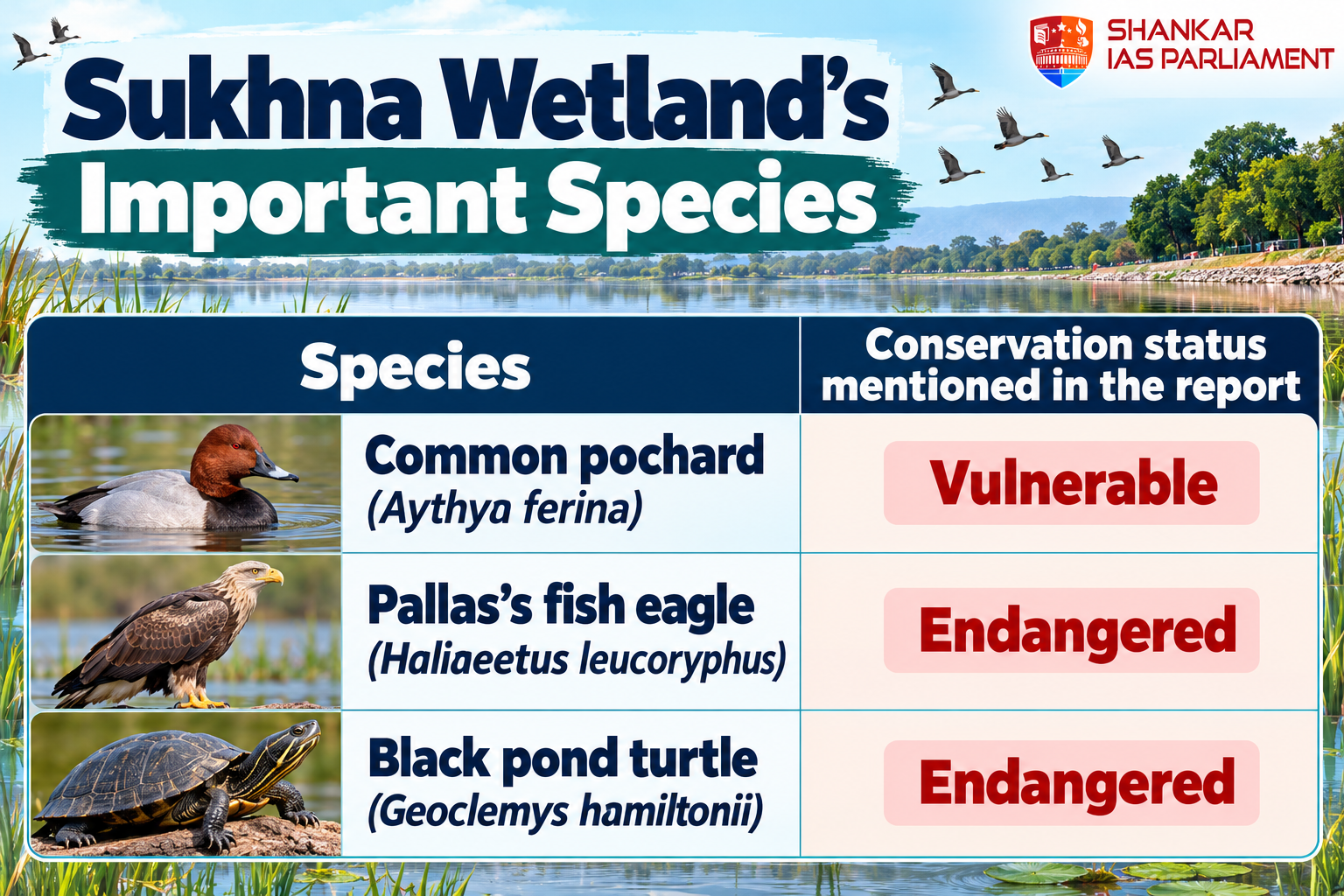
- Habitat Diversity – The wetland encompasses the following habitat types:
- Open-water habitats
- Shoreline vegetation
- Scrub and forest habitats
- Shallow littoral habitats that provide essential resources for wetland-dependent wildlife
- Major Conservation Challenges
- Siltation – The accumulation of sediments reduces the lake’s storage capacity
- Catchment erosion – Soil erosion within the catchment area increases sediment inflow
- Invasive species – Non-native species may alter native habitats and disrupt ecosystem functioning
- Urban pressures – Water quality and recreational activities require ongoing management to mitigate negative impacts
Sauj Jheel – Uttar Pradesh.
- It is a shallow lake surrounded by farmland in the floodplain of the Ganga River.
- It is part of a larger wetland network that supports ecological connectivity in the region and is located near Saman Bird Sanctuary.
- Wetland Vegetation
- Sacred lotus (Nelumbo nucifera)
- Wild sugarcane (Saccharum spontaneum)
- These plant species provide essential nesting, breeding, shelter, and food resources for wildlife.
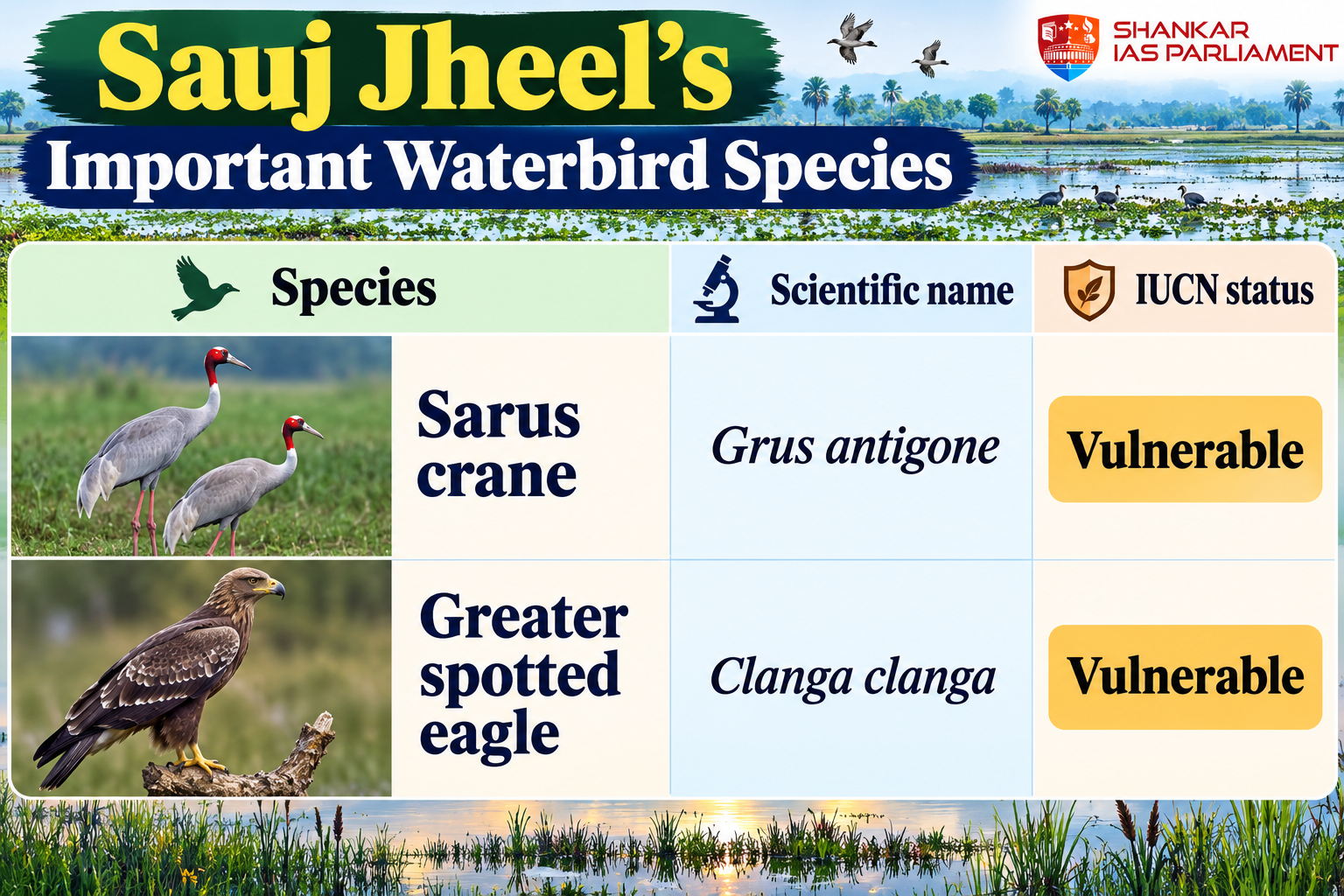
- Ecological connectivity
- This wetland forms part of a larger network within the Ganga floodplain.
- It supports ecological connectivity across the landscape.
- The wetland offers essential habitat for waterbirds and other species that rely on wetland ecosystems.
- Proposed Conservation Measures
- Seasonal Fishing Restrictions – Implement a seasonal fishing ban to protect aquatic fauna during critical periods.
- Sustainable Fishing Practices – Restrict the use of fine-mesh fishing nets to reduce the capture of juvenile fish and non-target aquatic organisms.
- Wetland Habitat Protection – Control cattle access to minimize disturbance, trampling, and degradation of wetland habitats.
Reference
Ramsar | New Ramsar Sites in India



