Prelims: Current events of national and international importance | Conservation
Why in news?
Justice P.S. Narasimha has criticized the anthropocentric bias of imported environmental principles like ‘inter-generational equity’, arguing - inadequate for protecting the Great Indian Bustard.
- Scientific Name – Ardeotis nigriceps.
- Family – Otididae.
- It is a flagship species for the health of grassland ecosystems.
- It is among the heaviest flying birds in the world.
- Population – There are currently 200 individuals worldwide.
- Habitat – It inhabit arid and semi-arid grasslands, open country with thorn scrub, and tall grass interspersed with cultivation, generally avoiding irrigated areas.
- Distribution range – Fewer than 150 Bustards are found in the Rajasthan alone.
- Small and scattered populations exists in Gujarat, Maharashtra, Karnataka, and Andhra Pradesh.
- Appearance – Distinctive black crown on forehead, pale neck and head, brownish body with wings marked in black, brown, and grey.
- Size – Males are generally larger than females, weighing between 8 to 18 kg, while females are considerably smaller.
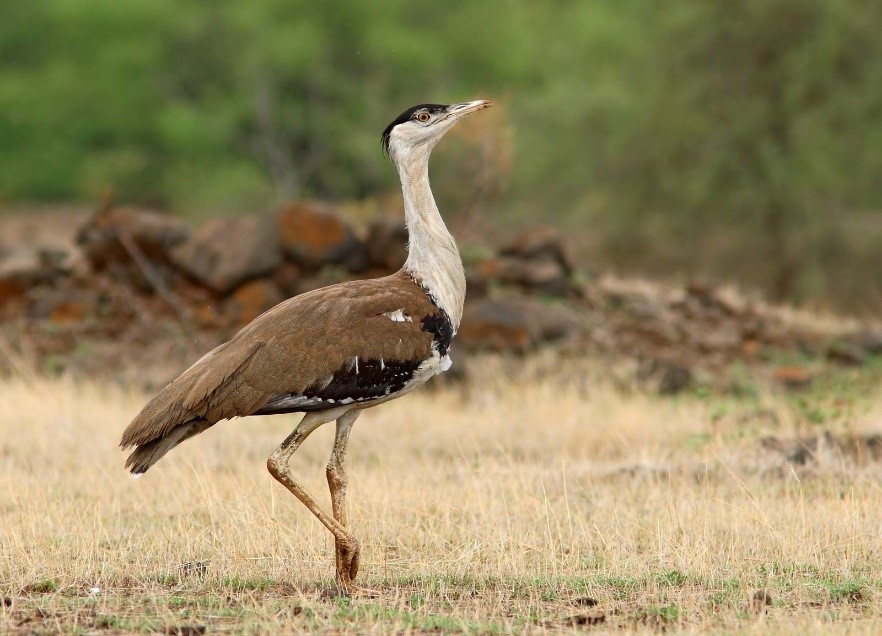
- Diet – Omnivorous with seasonal diet variation; feeds on insects, small rodents, seeds, and grasses.
- Behavior – They are primarily terrestrial birds, spending most of their time on the ground.
- Threats – Habitat loss from agriculture, mining, infrastructure, along with collisions with power lines (leading cause of adult mortality).
- Conservation Status
- IUCN – Critically endangered.
- CITES – Appendix I.
- Wildlife Protection Act, 1972 – Schedule I
To know about Great Indian Bustards’ Recovery Program, click here
References
- The Hindu | Petition on the conservation of Great Indian Bustard
- WWF | Great Indian Bustard



