Prelims: Current events of national and international importance | Environment
Why in News?
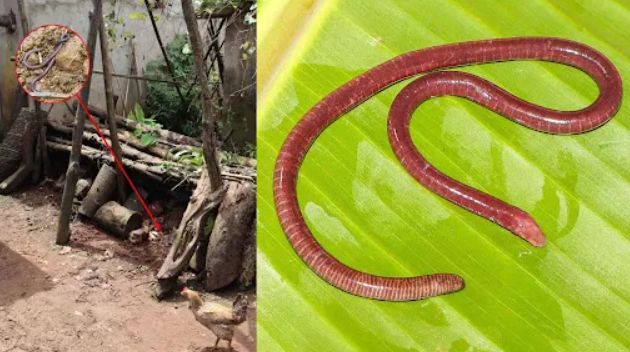
Scientists have discovered a new species of rare, subterranean, legless amphibian named Gegeneophis chandgadi in a backyard in rural Maharashtra.
- Family - Belongs to the family Indotyphlidae.
- Order - Gymnophiona (commonly known as caecilians).
- Genus Endemism - The genus Gegeneophis comprises caecilians endemic to India, predominantly distributed across the Western Ghats.
- Nomenclature - Named after "Chandgadi", a local dialect of the Marathi language spoken in the region where the species was identified.
- Appearance - Features a slender, worm-like, flesh-colored body. Often mistaken for earthworms, caecilians represent an ancient, limbless evolutionary lineage of amphibians.
- Annuli (Body Rings) - The species possesses distinct primary body rings (annuli) along the entire length of its body, with secondary rings concentrated along the posterior half.
- Subterranean Lifestyle - Highly adapted for a subterranean (fossorial) life, spending almost its entire lifecycle burrowing underground beneath soil, leaf litter, and woodpiles.
- Discovery Site- Uncovered in Buzawade village within Chandgad tehsil, Kolhapur district, Maharashtra.
- Habitat - Inhabits the Northern Western Ghats, a globally recognized biodiversity hotspot known for high levels of endemic herpetofauna.
- Sensitive Bio-indicators - Caecilians are highly sensitive to habitat degradation, microclimate shifts, and land-use changes.
- The discovery of a new subterranean amphibian in a domestic backyard underscores the ecological importance of rural micro-habitats.
Reference
Research Matters | Caecilian identified in a backyard in Maharashtra



