Mains: GSIII – Environment
Why in News?
There is a requirement for shifting climate policy from emission targets to unequal energy consumption and development needs, promoting climate justice through affordable clean energy and equitable global cooperation.
What are the Limitations of Global Climate Consensus?
- Western dominance – Western institutions shape climate policies, often overlooking the development needs of the Global South.
- Implementation gap – Limited climate finance and technology transfer leave developing countries short of resources to meet climate goals.
- Unequal energy needs – Developing countries need more energy to improve living standards, while developed countries have long enjoyed higher energy consumption.
- Production-focused approach – Climate models focus on emissions rather than energy consumption patterns and their role in human well-being.
What are the Alternative Models of Growth?
- Balancing development and decarbonisation – Developing countries may initially increase fossil fuel use as energy demand grows with economic development.
- China’s development model – China has improved living standards while expanding renewable energy, electrification and electric mobility.
- Renewable energy transition – Solar, wind and hydropower can meet rising energy needs but require better grids and government planning.
- Electrification – Electric vehicles and renewable electricity can reduce dependence on fossil fuels.
- Managing consumption – India and China can limit energy use relative to GDP and meet additional demand through clean energy.
What are the Emerging Global Trends?
- Energy-efficient development – Emerging economies are increasingly achieving urban well-being with less energy than Western countries used historically.
- Changing lifestyles – Electrification and electric mobility are transforming energy consumption patterns, but these changes are inadequately reflected in conventional global emissions models.
- Demographic transition – Population ageing and changing patterns of material consumption challenge assumptions underlying traditional climate projections.
- Disproportionate energy use – Energy consumption varies widely between developed and developing countries, highlighting the need to address inequality in climate policy.
- Climate vulnerability – Developing countries face frequent and severe extreme weather events but often lack adequate insurance and financial resources.
What Measures Can Strengthen Climate Justice?
- Reframe climate policy – Shift from global temperature targets alone towards national energy needs, equitable consumption and human well-being.
- Ensure climate finance – Developed countries should provide adequate financial resources and facilitate technology transfer to developing nations.
- Promote practical cooperation – Strengthen global early-warning systems, regional disaster-relief mechanisms and technical cooperation.
- Adopt country-specific pathways – Recognise different development stages and energy requirements while pursuing common climate objectives.
- Accelerate clean electrification – Expand renewable energy, electric mobility and supporting infrastructure through strategic public investment.
What is the Way Forward for India?
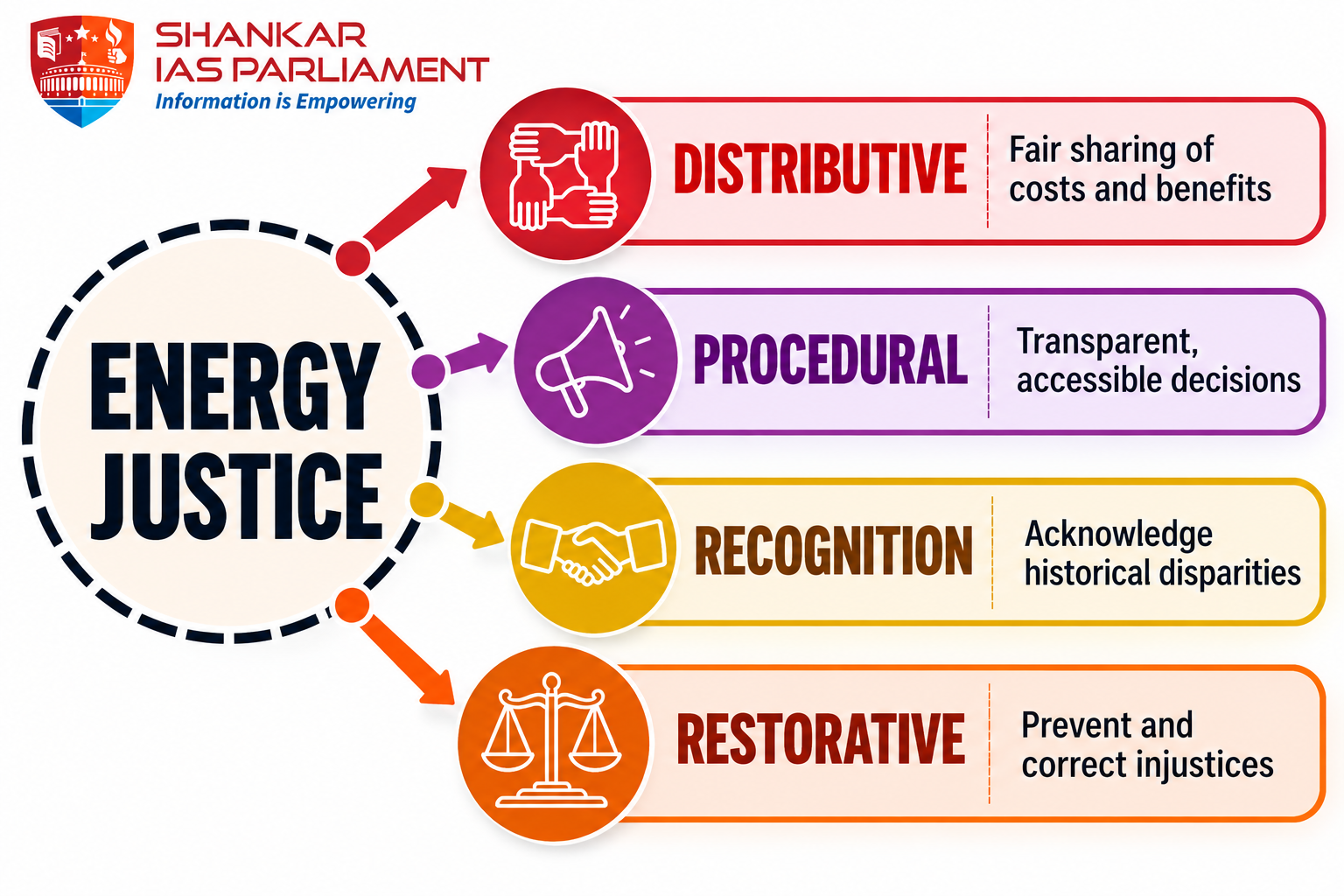
- Energy Justice – Frame climate change around equitable energy consumption, development needs and emissions reduction.
- Global Leadership – Leverage India’s status as the world’s third-largest economy and low per-capita emissions to advocate fair climate negotiations.
- Climate Finance – Demand adequate financial support for developing countries to pursue sustainable development.
- Technology Transfer – Promote technology sharing and differentiated climate pathways to achieve comparable living standards.
What lies Ahead?
- Climate justice requires balancing environmental sustainability with equitable access to energy and development.
- India can promote a more inclusive global climate framework that combines clean electrification, national development priorities and international cooperation.
Reference
The Hindu| From Climate Targets to Energy Justice



