Prelims: Current events of national and international importance | Health
Why in News?
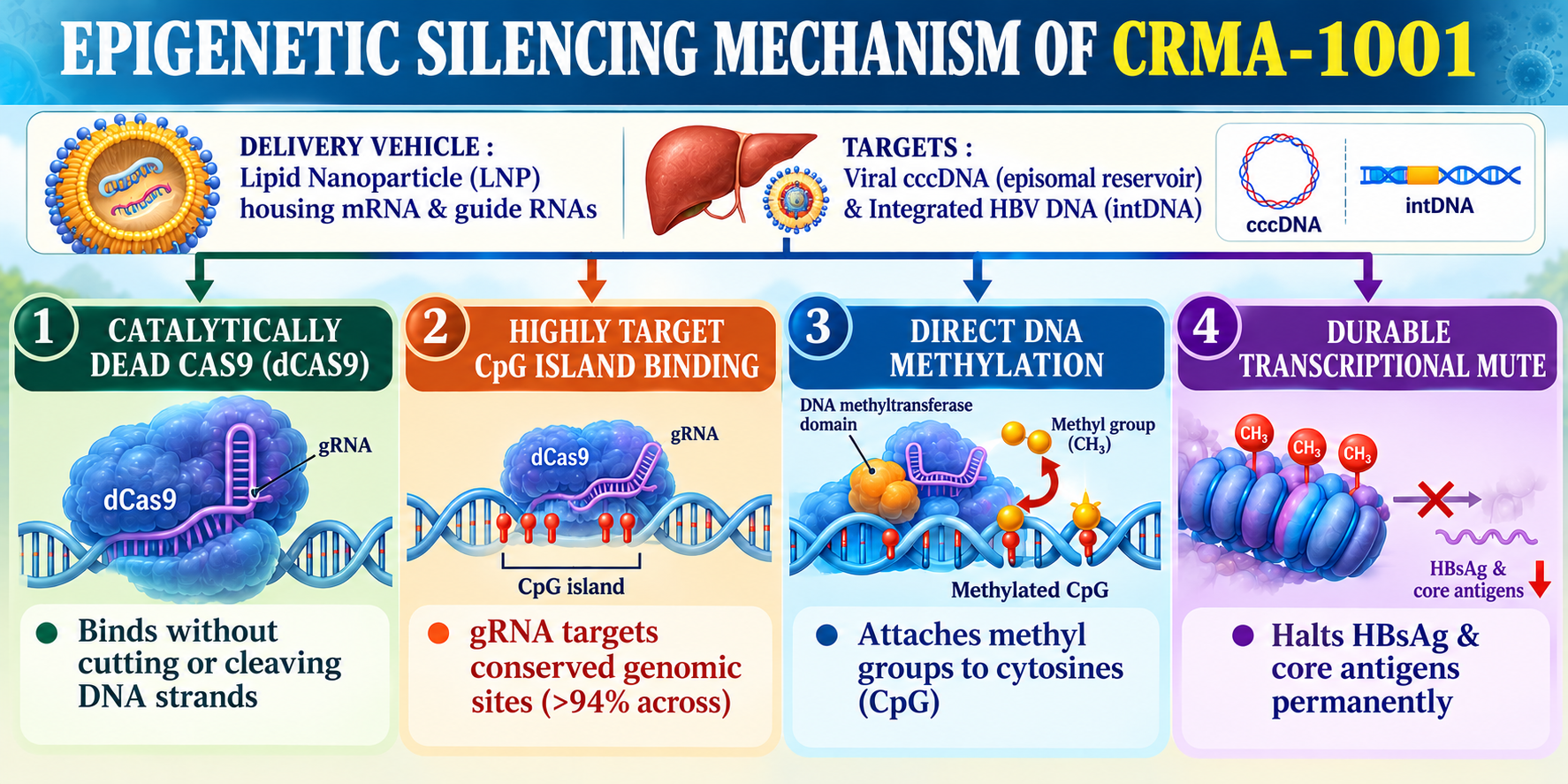
Recently, advances in genetic medicine highlighted CRMA-1001—an innovative, liver-targeted epigenetic editing therapy entering Phase 1/2 clinical trials (developed by nChroma Bio).
Key Highlights
|
Parameter |
Traditional Antivirals |
CRMA-1001 Epigenetic Silencer |
|
Mechanism of Action |
Inhibits reverse transcription (Nucleos(t)ide Analogs) or physically cuts DNA double strands (CRISPR-Cas9). |
Epigenetic Modification- Uses a catalytically dead Cas9 (dCas9) fused to a methyltransferase effector to methylate cytosines at viral target promoter regions. |
|
Target Reservoirs |
Suppresses circulating virus but fails to eliminate/silence nuclear cccDNA and integrated HBV DNA (intDNA). |
Dual Silencing - Directly methylates and silences both nuclear episomal cccDNA and integrated host-genome viral DNA (intDNA). |
|
Genomic Safety Profile |
High risk of insertion/deletion mutations (indels), off-target double-strand breaks (DSBs), and chromosomal translocations. |
Zero Strand Cleavage - Leaves the underlying host DNA sequence completely intact, avoiding double-strand break toxicity and unintended chromosomal damage. |
|
Delivery Strategy |
Daily lifelong oral pills or viral vectors (AAVs). |
Intravenous Lipid Nanoparticles (LNPs) delivering mRNA constructs transiently to hepatocytes. |
Addressing the Core Challenge of Chronic HBV
Strategic Significance
Reference



