Prelims: Current events of national and international importance | Environment
Why in News?
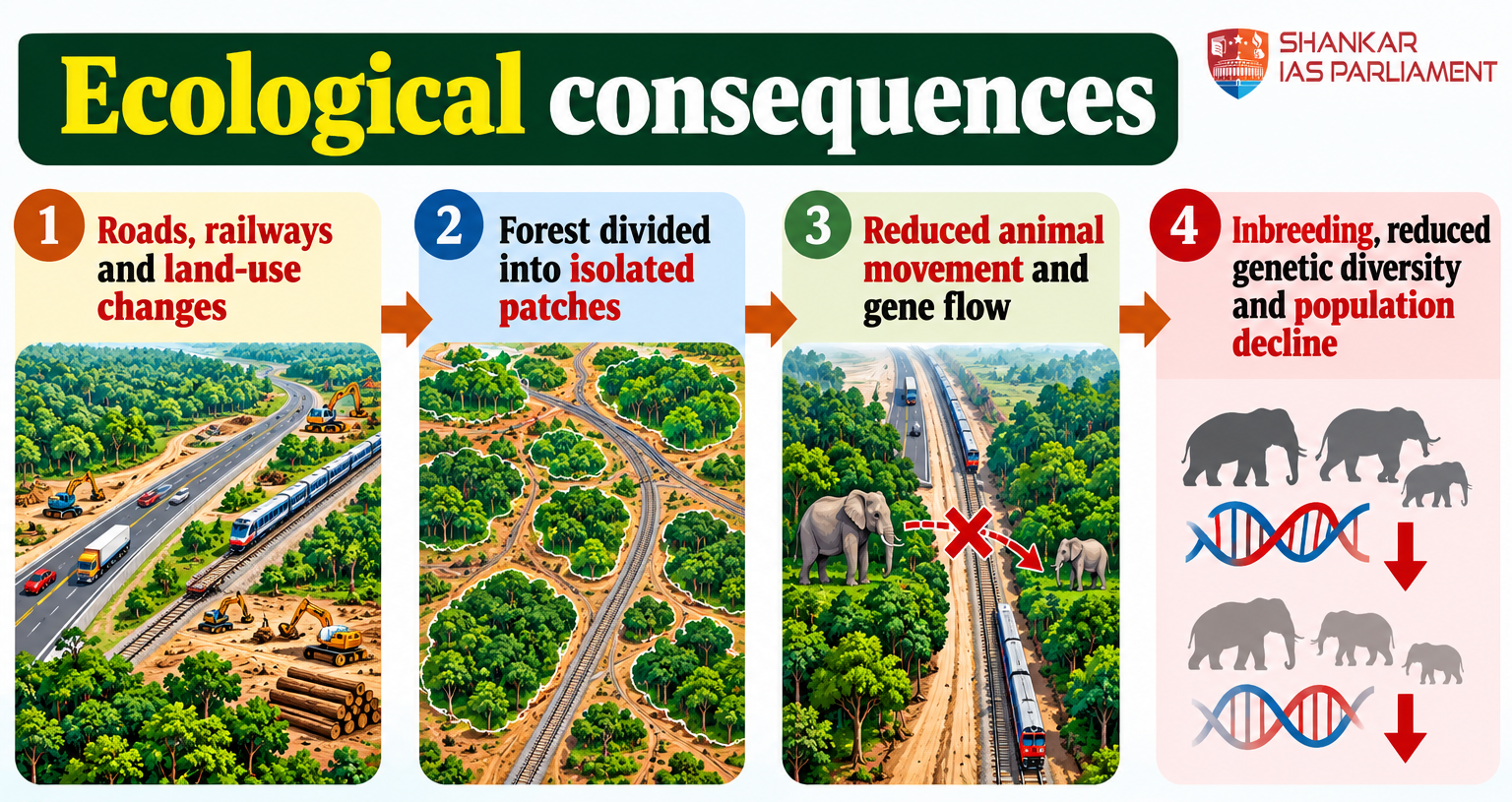
Habitat fragmentation resulting from roads, railway lines, and other linear infrastructure poses significant threats to wildlife populations in India.
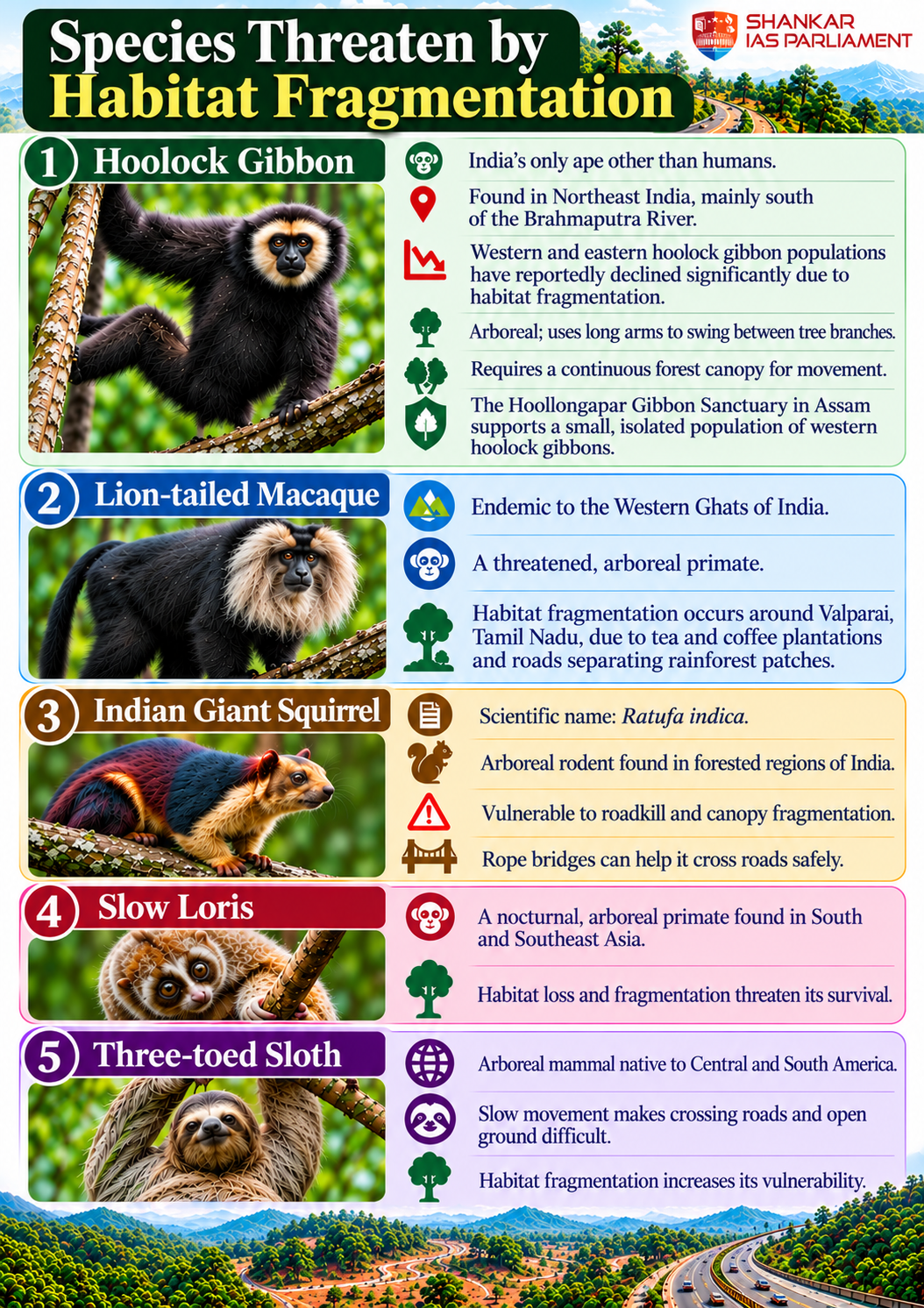
Habitat Fragmentation
Wildlife Crossings: Types and Functions
|
Type |
Description |
Importance |
|
Canopy bridges |
Trees planted or maintained to create continuous overhead vegetation |
Help arboreal animals cross roads or railway lines |
|
Rope bridges |
Ropes stretched between trees or across roads |
Assist squirrels and other tree-dwelling species |
|
Wildlife overpasses |
Vegetated structures built above roads or railways |
Allow animals to cross safely over infrastructure |
|
Wildlife underpasses |
Tunnels or passages beneath roads and railways |
Facilitate movement of terrestrial animals |
|
Green bridges / ecoducts |
Broad, vegetation-covered structures connecting habitats |
Restore habitat connectivity across major infrastructure |
Canopy and rope bridges are particularly suitable for arboreal species, whereas underpasses and overpasses are typically constructed to facilitate movement for terrestrial mammals, reptiles, and other wildlife.
Important Places and Conservation Examples
|
Location |
State / Country |
Key fact |
|
Hoollongapar Gibbon Sanctuary |
Assam |
Conservation of western hoolock gibbons; habitat fragmented by railway infrastructure |
|
Valparai |
Tamil Nadu |
Lion-tailed macaque habitat affected by plantations and roads |
|
Melghat Tiger Reserve |
Maharashtra |
Rope bridges have been used to help arboreal wildlife |
|
Srivilliputhur Grizzled Squirrel Sanctuary |
Tamil Nadu |
Important habitat for the grizzled giant squirrel |
|
Netherlands |
Europe |
Known for wildlife overpasses and ecological connectivity measures |
Reference



