18th BRICS Summit 2026 New Delhi Declaration
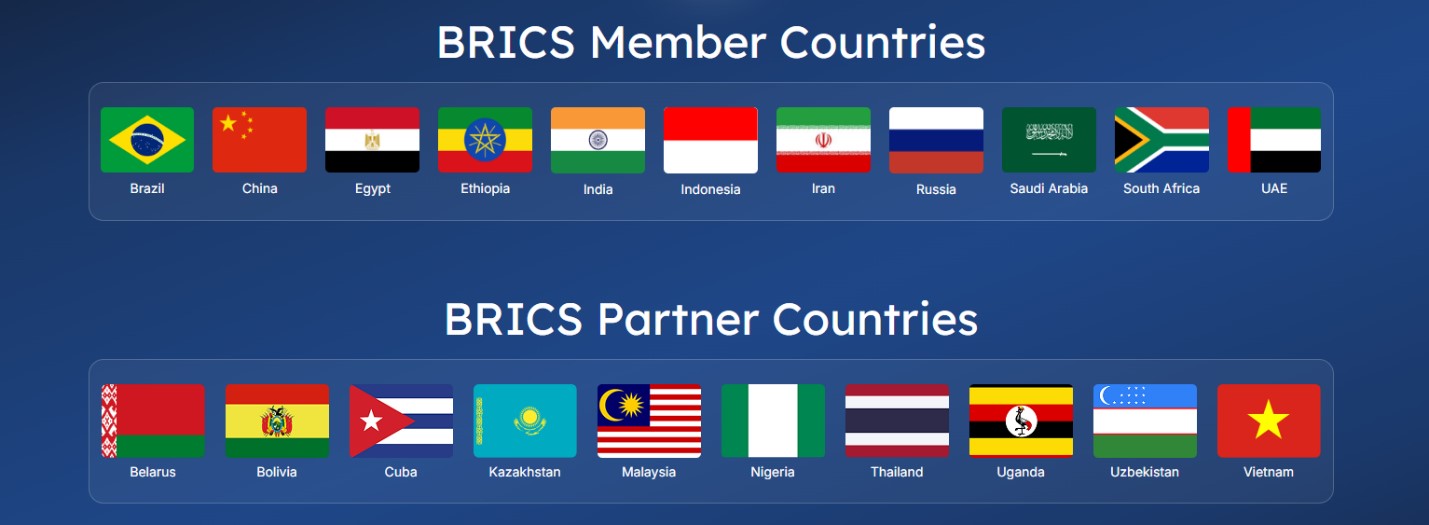
- The BRICS New Delhi Declaration was unanimously adopted by the 11 member nations at the XVIII BRICS Summit in New Delhi, India.
- India focused its BRICS chairship on four pillars: Resilience, Innovation, Cooperation and Sustainability.
- The New Delhi Declaration, adopted at the summit, covered cooperation on global development, peace, health, climate, technology and other areas.
- BRICS leaders expressed concern over the growing risks of nuclear conflict and called for protection of civilian infrastructure and peaceful nuclear facilities under International Atomic Energy Agency (IAEA) safeguards.
- India highlighted BRICS initiatives including an early warning system for infectious diseases, disaster-management early-warning data integration, a logistics supply-chain cooperation framework and a digital agriculture network.
- Prime Minister Narendra Modi warned against the weaponization of technology and critical minerals, stating that such disruptions could affect global supply chains and shared development.

- The statement — that did not directly mention the attacks against Iran by the United States and Israel nor Iran’s subsequent strikes on its Persian Gulf neighbours, including the UAE — called for “maximum restraint” in the war.
- It made no separate mention of the Russian war in Ukraine.
- India suggested that BRICS build a “troika” system like the G-20, so incoming and outgoing Presidents of the grouping bring continuity to discussions.
- Towards this, India proposed a BRICS Continuity and Implementation Mechanism, which the BRICS Troika could use to follow up on all initiatives and outcomes.
- India also proposed a roadmap for global governance reform, a seafarer distress network, and a BRICS global south mechanism for skill development in new technologies.
- The New Delhi declaration called for “comprehensive reform” of the United Nations, including support for Brazil and India to get a bigger role in the Security Council.
- The joint declaration also called for the protection of civilians and expressed “deep concern” over attacks on civilian infrastructure and nuclear facilities in West Asia, in a reference to the U.S. and Israel’s missile strikes in Iran.
- The grouping declared its strong criticism of Israel for its bombardment of Gaza.
- It expressed support for South Africa’s case against Israel in international courts, calling for the provision of humanitarian aid in Gaza.
- In addition, it supported a two-state solution for Palestine, with full rights at the UN, 1967 borders, and East Jerusalem as its capital.
- It also criticised the U.S. blockade of Cuba, and expressed concern over violence in Sudan.
- On economic issues, the BRICS countries resolved to increase intra-BRICS trade and payments in national currencies.
- The declaration says that the BRICS Payment Task Force, a collaborative grouping of central bank experts from BRICS nations, has been studying how their payment and messaging systems could work more easily with one another.
- The stated aim is to make cross-border payments among BRICS countries faster, cheaper, more accessible and safer.
- Separately, the declaration encouraged the New Development Bank to further expand local-currency financing, diversify its funding sources and mobilise resources for development and infrastructure projects.
- BRICS will also continue technical work on its proposed New Investment Platform, with members backing a consensus-based, phased approach rather than announcing a new investment mechanism at the summit.
- Members also expressed interest in taking forward discussions on India’s proposal for a BRICS Risk Lab at the GIFT City International Financial Services Centre in Gujarat.
- It also called for the immediate restoration of an effective and fully functioning two-tier, binding WTO (World Trade Organisation) dispute settlement mechanism.
- The declaration also contained several India-specific outcomes, from harsher language on cross-border terrorism to new cooperation mechanisms spanning digital public infrastructure, health and finance.
- The declaration expresses its condemnation of “unilateral coercive measures” which are contrary to international law and the United Nations Charter, and calls for their elimination.
- While the BRICS declaration does not name the US president — who has famously attacked the grouping and called it “anti-American” — the grouping acknowledges its role as a collective affected by such “unjustified unilateral protectionist measures”.
- The declaration also addresses climate-linked trade policy, explicitly opposing carbon border adjustment mechanisms when they are unilateral, punitive, discriminatory or protectionist.
- The declaration expresses its commitment to combating terrorism in “all its forms and manifestations”.
- It acknowledged the cooperation among member nations as part of the BRICS Counter-Terrorism Working Group (CTWG), the BRICS mechanism for coordinating counter-terrorism cooperation.
- The declaration specifically addresses artificial intelligence as an economic and governance opportunity for the Global South.
- It broadly calls for wider access to AI resources while stressing safety, security, inclusiveness, reliability, energy efficiency and “trustworthy AI”, while emphasising the needs of the Global South.
- In digital public infrastructure, the declaration notes a proposal to create a BRICS repository for digital public infrastructure (DPI) and undertake pilot projects using DPI solutions across member countries.
- In industry, the declaration welcomed the establishment of an India Centre for BRICS Industrial Competencies to support manufacturing firms and small businesses in adopting Industry 4.0 – which accounts for the integration of technology and automation with manufacturing – and advanced digital technologies.
- Among other India-led initiatives, BRICS welcomed a new Task Force on Growth and Development and the launch of a BRICS-New Development Bank Knowledge Portal to share policy experiences and lessons from development projects across member countries.
- It reiterated its “commitment to strengthening multilateralism and multipolarity”, noting that a multipolar world can expand opportunities for Emerging Markets and Developing Countries (EMDCs) to develop “constructive potential and enjoy universally beneficial, inclusive, sustainable and equitable economic globalisation and cooperation”.
BRICS Centres of Excellence
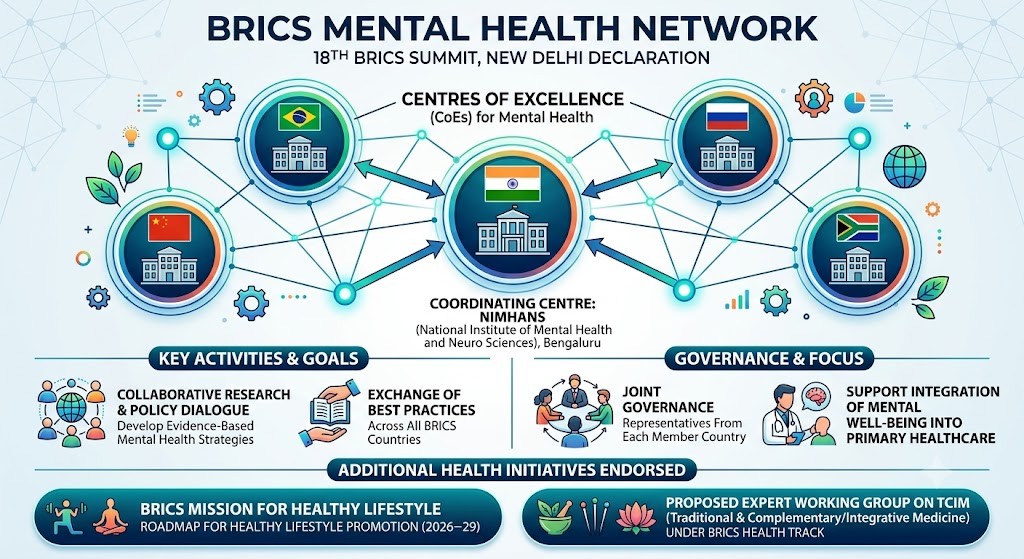
- Regarding health, the declaration backs the development of a BRICS Training Hub Network and a network of Centres of Excellence on mental well-being, with Bengaluru-based NIMHANS serving as the coordinating centre.
- Representatives from each BRICS member country will jointly govern the network to support the integration of mental well-being into primary healthcare.
- The Declaration also endorsed the BRICS Mission for Healthy Lifestyle and the BRICS Roadmap for Healthy Lifestyle Promotion (2026–29).
- BRICS also proposed an Expert Working Group on TCIM (Traditional and Complementary/Integrative Medicine) under the BRICS Health Track
BRICS education agenda
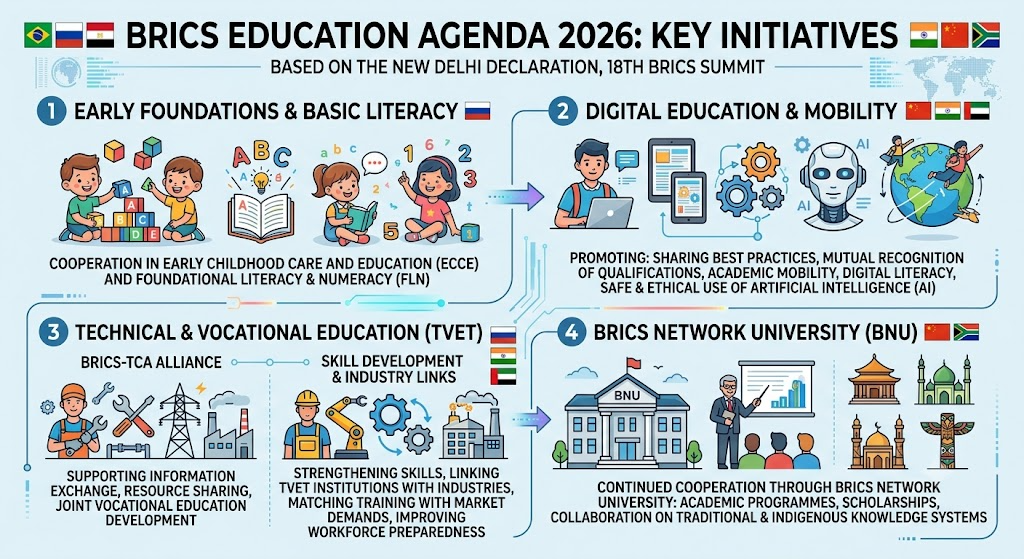
- The Declaration also highlighted another priority sector — the BRICS Technical and Vocational Education and Training (TVET) Cooperation Alliance (BRICS-TCA).
- The BRICS Technical and Vocational Education and Training (TVET) Cooperation Alliance (BRICS-TCA) will support information exchange, resource sharing and joint development of vocational education.
- The BRICS nations have called for cooperation in Early Childhood Care and Education (ECCE) and Foundational Literacy and Numeracy (FLN).
- The Declaration encouraged the BRICS Network University to consider traditional, indigenous and local knowledge systems as an additional International Thematic Group.
- Cooperation will continue through the BRICS Network University, including academic programmes, scholarships and collaboration on traditional and indigenous knowledge systems
Four agri initiatives
- It agreed to the establishment of a collaborative, non-binding, and farmer-centric BRICS AGRIN (Agro-Inputs, Genetic Resources, and Information Network), while welcoming the launch of a Global Forum on Farmers’ Rights in Seed Systems.
- It also welcomed the strengthening of cooperation in agriculture through the establishment of a BRICS Network of Centres of Excellence on Agroecology and Regenerative Agriculture for Climate Resilience and Productivity, and a BRICS Network on Digital Agriculture, including agroforestry, fisheries, and aquaculture.
- It also encouraged further cooperation under the BRICS Dialogue on Development of Fisheries and Aquaculture.
- The BRICS nation also reiterated their commitment to advancing agriculture negotiations at the WTO.
10-Point BRICS Reform Roadmap For Global Governance
- China said that the BRICS countries should help steer the international order towards greater “equity and justice”, while India called for the Global South to move from being a rule-taker to a “rule-shaper”.
- It called for greater representation for Asia, Africa and Latin America on the UNSC and argued that the shift towards a multipolar world was being resisted by established powers.
- The current structure of global governance resembles a pyramid, with power and decision-making concentrated at the top, while at the bottom are countries that are affected by these decisions but are unable to shape them.
- Yet India has also sought to distance BRICS from the idea that it exists simply to confront the West.
Photovoltaic industry action plan
- BRICS adopts photovoltaic industry action plan, calls for value addition in critical minerals.
- It adopted a Terms of Reference and Action Plan for the BRICS Photovoltaic Industry Working Group and called for “value addition and economic diversification” in resource-rich countries as part of a wider push to strengthen clean technology manufacturing and resilient supply chains across the Global South.
BRICS Carbon Markets Partnership
- The BRICS group backs carbon market cooperation while opposing unilateral CBAM (carbon border adjustment mechanisms) by the EU and UK.
- This development comes as the UK prepares to introduce its CBAM from January 1, 2027, while the European Union’s definitive CBAM regime began on January 1, 2026.
- It will be covering imports including cement, iron and steel, aluminium, fertilisers, electricity and hydrogen.
- This follows India’s Carbon Credit Trading Scheme (CCTS) gaining recognition under the United Kingdom’s emerging border carbon regime.
- The BRICS declaration places carbon markets within a broader discussion on climate finance.
- The BRICS group said high debt burdens were constraining climate and development investment in many developing countries and called for coordinated international action to enhance debt sustainability, expand fiscal space and support sustainable development and climate financing.
- It encouraged cooperation through the BRICS Contact Group on Climate Change and Sustainable Development.
- BRICS explicitly links the Carbon Markets Partnership to mobilising resources and says carbon market cooperation should support members’ climate strategies.
About BRICS 2026 Summit
- Theme - “Building for Resilience, Innovation, Cooperation and Sustainability”
Host and Chair - India (4th time chairing BRICS)
- Before this year, India has previously chaired BRICS in 2012, 2016 and 2021.
- Participants: Leaders from all 11 BRICS member countries (Brazil, China, Egypt, Ethiopia, India, Indonesia, Iran, Russia, Saudi Arabia, South Africa, and the UAE) alongside partner countries.
- India’s year-long chairship convened more than 400 meetings and engagements across 30 cities in 2026.
- China will take over the BRICS chairship in 2027 and host the 19th BRICS Summit.
BRICS Plus countries
- India also chaired a session of BRICS Plus countries and regional representatives for an outreach session that will include the leaders of Malaysia, Uzbekistan, Uganda, Vietnam, and Kazakhstan.
- History
- BRIC was formalised at the first meeting of BRIC Foreign Ministers on the sidelines of the United Nations General Assembly (UNGA) in New York in 2006.
- The inaugural BRIC Summit was convened in Yekaterinburg, Russia, in 2009.
- It was agreed to expand BRIC into BRICS with the inclusion of South Africa at the BRIC Foreign Ministers’ meeting in New York in 2010.
- Accordingly, South Africa attended the 3rd BRICS Summit in Sanya in 2011.
- Egypt, Ethiopia, Iran, Saudi Arabia and UAE became full member of BRICS from January 2024 and Indonesia in January 2025.
- Belarus, Bolivia, Kazakhstan, Cuba, Malaysia, Nigeria, Thailand, Uganda, Uzbekistan and Vietnam joined BRICS as Partner Countries in 2025.
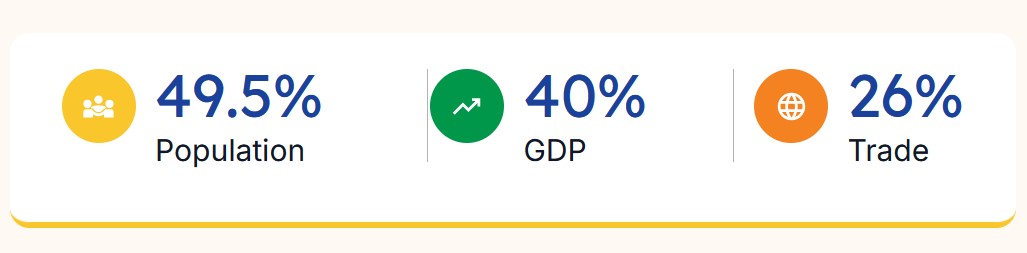
- The expanded grouping, which also includes 10 partner countries, represents 49.5 per cent of the world’s population, 40 per cent of global Gross Domestic Product and 26 per cent of global trade.
- The grouping had become the “world’s most influential platform for cooperation among emerging markets and developing countries”.

Rameswaram’s Ramanathaswamy Temple
- PM Modi greets BRICS leaders against backdrop of Tamil Nadu’s Ramanathaswamy temple, Rameswaram.
- It is one of the Char Dham shrines where Lord Rama is believed to have performed puja after his victory over the demon king Ravana.
- The other three are in northern India (Dwaraka, Puri and Badrinath).
- Of the 12 Jyotirlinga shrines in India, 11 are in the north and only the Ramanathaswamy Jyotirlinga shrine is to the south.
- The historic shrine was under the care of a monk up to the 10th century A.D.
- In the 15th century A.D., Ramanathapuram King Udayan Sethupathi and a Vaisya from Nagore built the western tower and compound walls.
- The session of BRICS Plus countries and regional representatives for an outreach session that will include the leaders of Malaysia, Uzbekistan, Uganda, Vietnam, and Kazakhstan.



