Why in news?
A recent study of hospitalised patients across India has found that infections caused by antibiotic-resistant “Gram-negative” bacteria are more likely to be fatal and more expensive.
What is Anti-Microbial resistance?
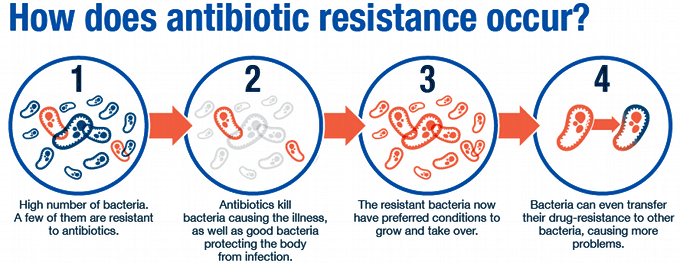
- Antimicrobial resistance (AMR) – It occurs when germs like bacteria, viruses, fungi, and parasites change and stop responding to the medicines designed to kill them.
- AMR specifically refers to resistance against antibiotics, antivirals, antifungals and antiparasitic drugs.
- Therefore, antibiotic resistance is one type of AMR.
- Gram-negative bacteria – These are a group of bacteria that can cause infections in different parts of the body, including the lungs, urinary tract etc.
- These include pathogens such as:
- Escherichia coli (commonly known as E. coli),
- Klebsiella pneumoniae,
- Acinetobacter baumannii and
- Pseudomonas aeruginosa.
- One important group of antibiotics used for serious infections is carbapenems.
- carbapenem-resistant Gram-negative bacteria are particularly concerning as they have very few effective treatment options.
- Recent ICMR study – across 20 tertiary-care hospitals (2022–2025), involving 1.59 lakh patients, highlights the growing clinical and economic burden of such infections.
|
Key Observations of the Study
|
- 61%+ of Gram-negative infections in the tertiary-care study population were carbapenem-resistant.
- Resistance was associated with a 16–43% higher relative risk of death across E. coli, Klebsiella pneumoniae, Acinetobacter baumannii and Pseudomonas aeruginosa.
- Bloodstream infections involving resistant organisms had mortality of around 39–51%.
- Antibiotic costs alone were 1.1–2 times higher for resistant infections.
- >85% of bloodstream infections were classified as healthcare-associated.
Note: These figures come from tertiary-care hospitals and therefore should not be treated as representative of the entire Indian population.
|
Why are Carbapenem-Resistant Infections a Concern?
- Fewer effective drugs – Carbapenem resistance eliminates one of the most important treatment options leaving doctors with limited alternatives.
- Delayed appropriate treatment – Resistance may take time to identify, causing delays in giving an effective antibiotic and allowing the infection to worsen.
- Higher complications & mortality – Inadequately treated resistant infections can rapidly progress to complications such as sepsis and organ failure.
- Higher healthcare costs – Resistant infections often require costlier antibiotics, longer hospital stays, intensive care increasing the financial burden.
What are the factors driving AMR?
- Antibiotic selection pressure – Excessive or inappropriate antibiotic use encourages survival of resistant bacteria.
- Healthcare-associated transmission – Hospitals can become reservoirs for resistant pathogens. Poor infection-control practices facilitate transmission.
- Invasive medical devices – Prolonged use of Catheters, ventilators and other devices increase can facilitate infection risks.
- Delayed diagnosis – Conventional diagnosis may take time. Delayed identification of resistance can result in inappropriate initial therapy.
- Inadequate infection prevention – Poor hand hygiene, Inadequate environmental cleaning, Weak surgical infection prevention, Improper device insertion/removal.
- Limited treatment options – Resistance to last-line antibiotics leaves clinicians with fewer effective alternatives.
What are the implications of AMR?
- Public Health – It results in increased mortality and morbidity. Particularly dangerous in bloodstream infections and critically ill patients.
- Longer hospitalisation – Increased diagnostic and prolonged supportive-care requirements.
- Economic burden – Additional costs from ICU care, investigations, procedures and prolonged hospitalisation.
- Threat to modern medicine – AMR can undermine the safety of Major surgeries, Cancer chemotherapy, Organ transplantation, Intensive-care treatment.
- Developmental concern – AMR can reduce productivity and impose a broader economic burden, making it not merely a medical issue but a developmental challenge.
What needs to be done to address AMR?
- Better surveillance – Move from isolate-based AMR surveillance to integrated surveillance that connects laboratory results with patient outcomes, and treatment.
- Accurate diagnostics – To distinguish bacterial infection from non-bacterial illness and identify resistance early.
- Responsible management – Antimicrobial stewardship has to become routine clinical practice—not an optional hospital programme.
- Attention to infection prevention – It must receive as much attention as antibiotic prescribing, particularly because these infections are healthcare-associated.
- New treatments – Responsible access to effective newer antimicrobials, coupled with stewardship, to make these drugs remain effective when patients genuinely need them.
What lies ahead?
- AMR cannot be solved by discovering another antibiotic every time an old one fails.
- It is needed to prevent infections, diagnose them early and preserve the antibiotics we still have.
Reference
The Indian Express| India’s AMR problem



