Daily Current Affairs Prelims Quiz 21-05-2024 (Online Prelims Test)
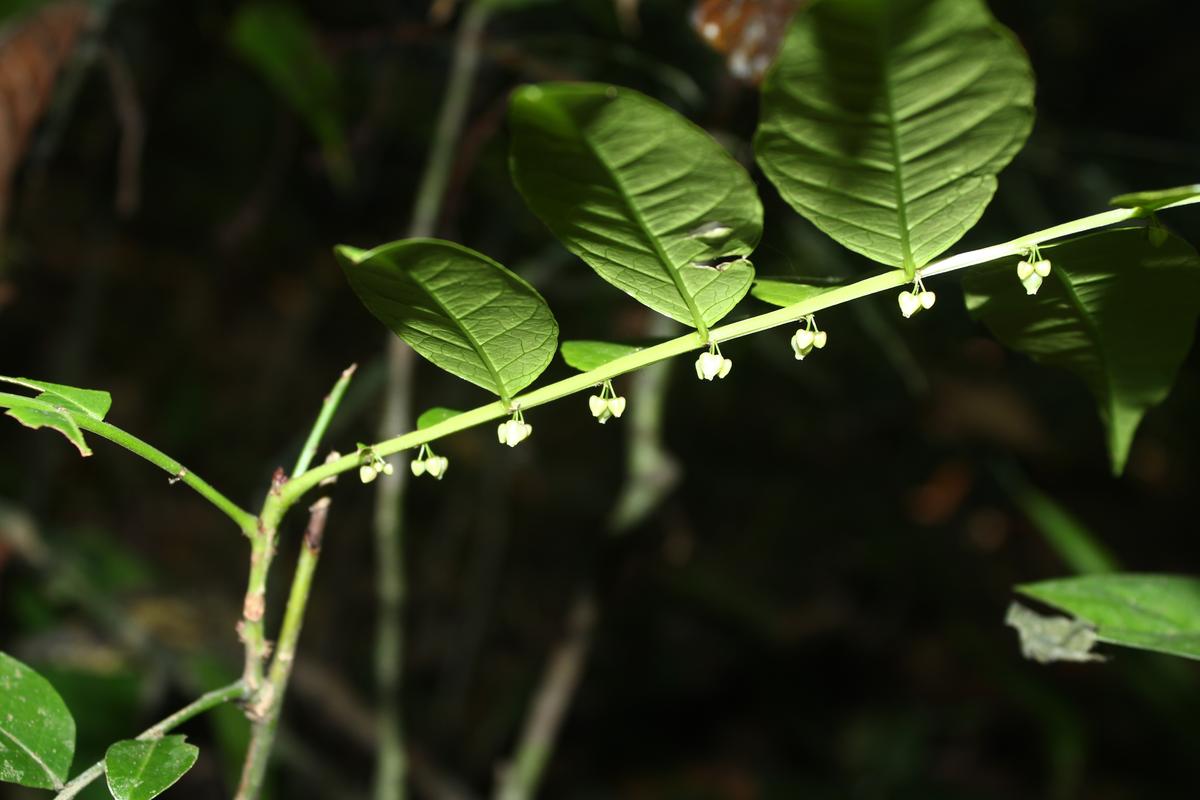
1) Emblica Chakrabartyi, sometimes seen in the news recently, is associated with?
a.
b.
c.
d.
Answer : a
Emblica Chakrabartyi
Emblica Chakrabartyi is a newly discovered species in Kerala.
The species belonging to the gooseberry (Phyllanthaceae) family, has been named after Tapas Chakrabarty.
Tapas Chakrabarty is the former scientist at the Botanical Survey of India, for his contribution to the study on Phyllanthaceae.
Features – The plant attains a height of approximately 2 metres.
The leaves are large with a shiny elongated oval shape of up to 13 cm.
The flowering and fruiting occur during December to June.
Male flowers are found in inflorescence whereas females ones are in single, on the leaf axils.
Each flower bears yellowish green coloured six petals.
The fruits are brown to black when they ripen and the seeds are black about 8-9 mm diameter.
2) Consider the following statements with respect to MPLAD Scheme
It enable MPs to recommend developmental works for creation of assets and amenities in sectors such as drinking water, primary education, public health, sanitation and roads.
The district administration must get approval from the Ministry of Statistics and Programme for the execution of the projects under it.
Which of the above statement(s) is/are incorrect?
a.
b.
c.
d.
Answer : d
MPLAD Scheme
Over the last 10 years, Delhi's 7 Lok Sabha MPs have not utilized Rs 100 crore out of their total entitlement of Rs 311.5 crore under the MPLAD scheme.
It aims to promote decentralized and participatory development at the grassroots level.
The primary objective of the MPLADS is to enable MPs to identify and address the developmental needs of their constituents through the creation of durable assets and infrastructure.
The scheme allows each MP Rs 5 crore annually to recommend development works in their constituency.
They can utilize for recommending and executing various projects in sectors such as drinking water, education, health, sanitation, and rural infrastructure.
The scheme mandates that unspent funds do not lapse and instead, they are carried forward to the next financial year or the succeeding MP of the constituency, ensuring continuity in developmental efforts.
Implementation Mechanism
Project Identification – MPs propose projects that align with local needs and MPLADS guidelines. These projects must be development-oriented and sustainable.
Administrative Coordination – The proposed projects are submitted to the district administration, which evaluates and forwards them to the Ministry of Statistics and Programme Implementation (MoSPI) for approval.
Fund Disbursal – Upon approval, funds are released to the district administration, which oversees project implementation.
Monitoring and Reporting – MPs must provide Monthly Progress Reports (MPRs) to ensure continued fund disbursal and project completion.
Challenges and Criticisms
Underutilization – As observed in Delhi over the past decade, a significant portion of allocated funds remains unutilized due to administrative delays, procedural bottlenecks and lack of proactive engagement by MPs.
Implementation Inefficiencies – Delays in project approval and execution by district administrations can stall developmental activities, rendering the scheme less effective.
Monitoring and Accountability – Ensuring transparency and accountability in fund utilization is a persistent challenge. Incomplete or irregular submission of MPRs can lead to funds being withheld.
Impact of External Factors
The COVID-19 pandemic notably disrupted MPLADS by halting fund disbursal for a substantial period.
This reduction in available funds impacted the ability of MPs to initiate and complete projects, highlighting the scheme's vulnerability to external shocks.
3) Consider the following statements with respect to Meitei Sagol
It is one of 7 recognised Indian equine breeds.
It is an integral part of Meghalaya's rich cultural heritage.
The population of it has seen a drastic decline in the 2019 livestock census.
How many of the statements given above are correct?
a.
b.
c.
d.
Answer : b
Meitei Sagol
The Government of Manipur has recently joined hands with various organisations and associations to save the Manipuri Pony or Meitei Sagol, its fabled equine, from vanishing into the pages of history.
The Manipuri Pony or Meitei Sagol is one of the 7 recognized horse and pony breeds of India.
The 7 recognized horse and pony breeds are Marwari Horse, Kathiawari Horse, Zanskari Pony, Spiti Pony, Bhutia Pony, and Kachchi-Sindhi Horse.
Declining Population – The population of Manipuri Ponies has seen a drastic decline from 1,898 in 2003 to just 1,089 in the 2019 livestock census.
Endangered Status – Due to the rapid decline in numbers, the Manipur government declared the Manipuri Pony as an Endangered Breed in 2013.
Reasons for Decline – Shrinking wetlands (natural habitat), lack of polo grounds, restrictions on pony usage, uncontrolled diseases, and exodus to neighboring states/countries.
Cultural Significance – The Manipuri Pony is closely tied to Manipur's history and culture.
It is being used in traditional events, sports like polo (originated from Sagol Kangjei) and as cavalry mounts.
Policy Efforts – The Manipur government framed the Manipuri Pony Conservation and Development Policy (MPCDP) in 2016 to conserve the breed.
Recent Initiatives – A joint meeting in May 2023 led to resolutions such as:
Herding ponies, demarcating temporary accommodation, and constituting a task force,
Surveying habitats, establishing ownership/maintenance responsibilities and conducting a census.
Significance of Conservation – Preserving the Manipuri Pony is crucial for safeguarding Manipur's cultural heritage and the legacy of the state's contribution to the game of polo.
4) Consider the following statements with respect to Stellar Nucleosynthesis
It refers to the process by which elements are formed through nuclear fusion reactions inside stars.
In massive stars, the carbon-nitrogen-oxygen (CNO) cycle plays a crucial role in stellar nucleosynthesis.
It is responsible for the production of all naturally occurring elements in the universe.
How many of the statements given above are correct?
a.
b.
c.
d.
Answer : b
Stellar Nucleosynthesis
Stellar Nucleosynthesis refers to the process by which elements heavier than hydrogen are formed through nuclear fusion reactions inside stars.
Hydrogen is the only element that was formed during the Big Bang nucleosynthesis, while all other elements were synthesized inside stars through stellar nucleosynthesis.
The extreme temperatures (millions of degrees Celsius) and pressures present in the cores of stars provide the necessary conditions for nuclear fusion to occur.
In main-sequence stars like the Sun, the proton-proton (p-p) chain is the primary process for fusing hydrogen nuclei into helium nuclei.
In more massive stars, the carbon-nitrogen-oxygen (CNO) cycle plays a crucial role in stellar nucleosynthesis, where carbon, nitrogen, and oxygen nuclei act as catalysts for fusing hydrogen into helium.
As stars age and run out of hydrogen fuel, their cores contract, leading to an increase in temperature and pressure, triggering the fusion of heavier elements, such as helium into carbon, oxygen, and so on.
This process of fusion continues until the star's core starts producing iron, which is the heaviest element that can be formed through fusion inside a star.
Elements heavier than iron, such as gold, platinum, and uranium, can only be synthesized during supernova explosions, which occur when a massive star runs out of nuclear fuel and its core collapses.
Stellar nucleosynthesis is responsible for the production of all naturally occurring elements in the universe, except for hydrogen, which was formed during the Big Bang.
Understanding nucleosynthesis is crucial for studying the chemical evolution of the universe and the formation of elements necessary for life.
5) Consider the following statements:
Statement-I: Sub-orbital trips refer to space flights that cross the Karman line.
Statement-II: Karman line is the farthest reaches of Earth’s atmosphere.
Select the correct answer using the codes given below:
a.
b.
c.
d.
Answer : c
Sub-orbital Trips
An Indian entrepreneur, Satish Thotakura, recently became the first Indian to take a sub-orbital trip aboard Blue Origin's spacecraft.
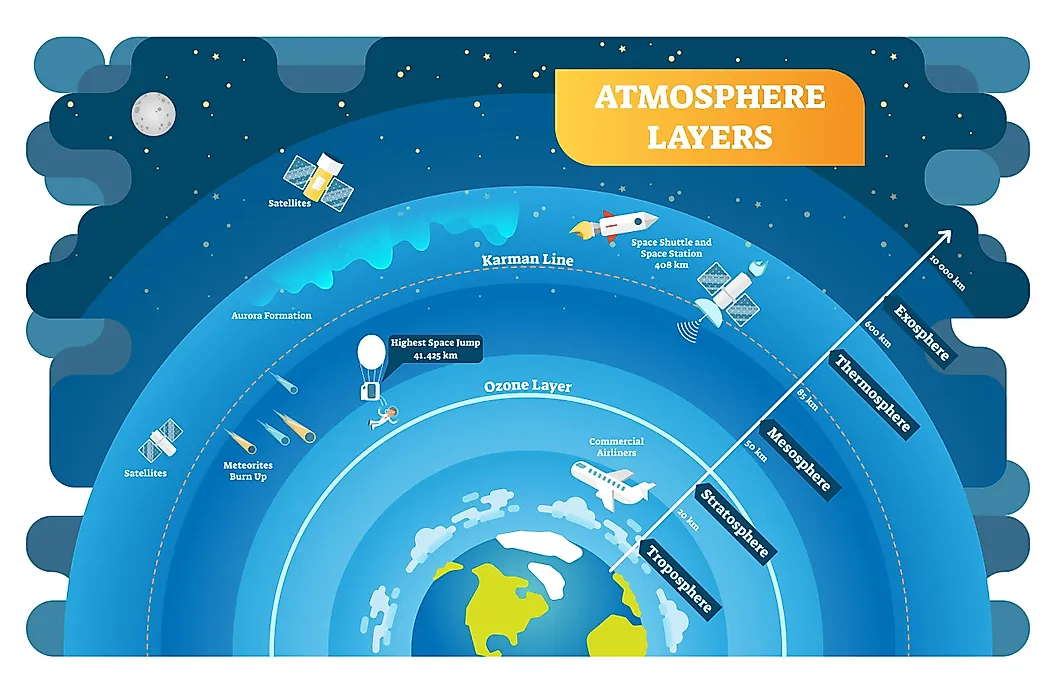
Sub-orbital trips refer to space flights that cross the Karman line (100 km altitude from Earth's surface).
These trips provide a brief experience of weightlessness and a view of the Earth from space but last only about 10-15 minutes from take-off to landing.
Private space companies like Blue Origin, Virgin Galactic, SpaceX, and others are offering sub-orbital space tourism flights to interested individuals.
The sub-orbital flights are currently the most accessible form of space tourism, as orbital trips and journeys to the International Space Station (ISS) or beyond are significantly more expensive.
The cost of a sub-orbital trip can range from around USD 450,000 for a Virgin Galactic flight to undisclosed amounts charged by Blue Origin and others.
In contrast, a trip to the ISS can cost between USD 20-25 million, while journeys around the Moon are estimated to be around USD 70-100 million.
Space tourism is currently accessible only to the ultra-wealthy, but the market is expected to grow rapidly as more private players enter the industry.
Karman line is an imaginary line that scientists use to define the border between outer space and the Earth’s atmosphere.
Anything past the Karman line is not subject to control by countries like their airspace.
Anything flying below Karman line is called an aircraft while those crossing this line get classified as a spacecraft.
The farthest reaches of Earth’s atmosphere is a cloud of hydrogen atoms called the geocorona.