World’s first-ever release of captive-bred slender-billed vultures
iasparliament
August 10, 2026
Prelims: Current events of national and international importance | Environment
Why in News?
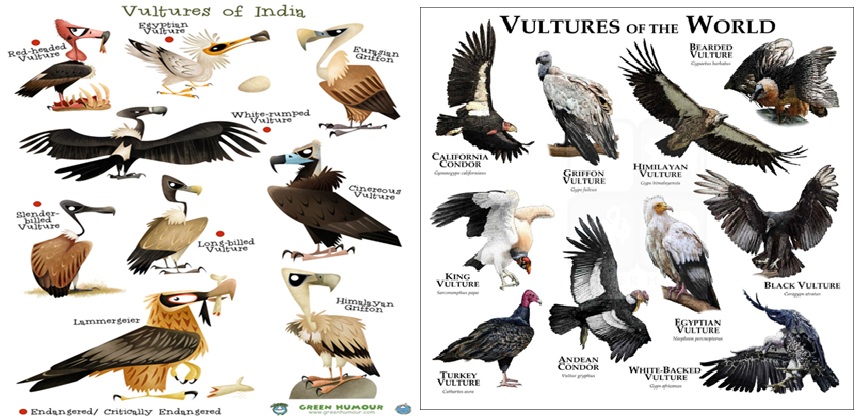
Assam records world’s first-ever release of captive-bred slender-billed vultures (Gyps tenuirostris).
Five slender-billed vultures bred in captivity at the Bombay Natural History Society (BNHS)’s conservation facility in Assam.
These were released at the Jatayu Soft Release Centre in the Biswanath Division of Kaziranga National Park and Tiger Reserve.
The population of Gyps vultures in India has declined by 99% over the last 20 years due to the use of veterinary painkillers.
Although the Centre banned four such drugs—diclofenac, aceclofenac, ketoprofen, and nimesulide—pesticide poisoning remains a threat to vultures in Assam.
The slender-billed vulture is an Old-World vulture species native to sub-Himalayan regions and Southeast Asia.
It is Critically Endangered since 2002 as the population on the Indian subcontinent has declined rapidly.
It is used to be the Indian vulture, under the name of "long-billed vulture".
But the Indian vulture is found only to the south of the Ganges and breeds on cliffs while the slender-billed vulture is found along and nests in trees.
The slender-billed vulture is found in India from the Gangetic plain north, west to Himachal Pradesh, south potentially as far as northern Odisha, and east through Assam.
They typically are sedentary birds, and do not tend to travel large distances nor migrate for any reason.
Bombay Natural History Society (BNHS), founded in 1883, is one of the largest non-governmental organisations in India engaged in conservation and biodiversity research.
The Asian waterbird census is an annual exercise undertaken in India by Bombay Natural History Society in association with Wetlands International.
The exercise is a part of 'International waterbird census', an international exercise.
BNHS is the partner of BirdLife International in India.
BirdLife International is a global partnership of non-governmental organizations that strives to conserve birds and their habitats.
It is the official International Union for Conservation of Nature's Red List authority for birds.
BirdLife International has nine conservation programmes implemented across Africa, the Americas, Asia, Europe and Central Asia, the Middle East and the Pacific.
It includes the Important Bird and Biodiversity Areas Programme, Marine Programme, Preventing Extinctions Programme, and Flyways Programme.
Wetlands International is a global organisation that works to sustain and restore wetlands and their resources for people and biodiversity.
It is an independent, not-for-profit, global organisation, supported by government and NGO membership from around the world.