What is the issue?
The National Family Health Survey (NFHS)-5 shows negligible gains in nutritional outcomes in under five children which needs urgent focus.
What does the NFHS-5 say?
- Malnutrition- There has been sluggish progress in reducing undernutrition, wasting and stunting.
- Even now 35.5% of under-five children are stunted, 19.3% are wasted and 32% are underweight.
- There is also increase in the proportion of overweight children, women and men with serious health consequences in the form of non-communicable diseases.
- Anaemia- The incidence of anaemia has increased from 58.6 to 67% in under-5 children, from 53.1 to 57% in women and from 22.7 to 25% in men.
- Anaemia is characterised as a serious public health concern by WHO and has to be focussed as it is as worsening as the COVID-19 effect.
- Breastfeeding- Though institutional delivery has gone up, early initiation of breastfeeding is static.
To know more about NFHS-5, click here
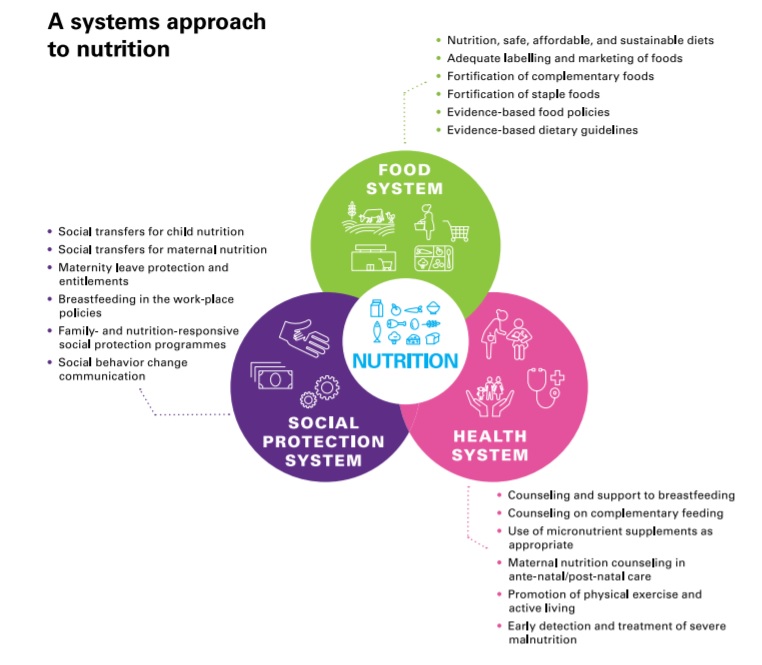
How to tackle malnutrition?
- Data- There is a need to monitor data and process indicators for programmatic evaluation and correction.
- Data generated quickly can lead to mid-course corrections and data-driven planning and strategies can lead to good governance with accountability.
- Exclusive breastfeeding- Anganwadi workers, ASHA workers and Auxiliary Nurse Midwives must continue to monitor exclusive breastfeeding till the infant is six months old.
- They must record the timely initiation of complementary feeding with soft gruel as this is the critical period of growth that cannot be compromised.
- Rations- It must be ensured that there is take-home ration for under-three children through the regular supply of supplementary nutrition from the Integrated Child Development Services.
- There is a need to know the regularity and quantity of dry rations supplied to anganwadis and schools, preparation of menu and procuring locally available vegetables for dietary diversification.
- Dietary supplement in the family- What goes into the family pot depends on what parents can earn and their purchasing capacity.
- As the National Nutrition Monitoring Bureau was shut down some years ago, there is no data on what families can cook and their affordability.
- It is important to monitor the MGNREG Scheme wages earned in areas where droughts frequently occur, where there is mass migration and where there is prevalence of high malnutrition.
- Monitoring PDS- PDS is a hunger-mitigation mechanism that does not enable nutrition security.
- The wheat and rice procured through the Food Corporation of India fill the stomach and hunger is averted but not malnutrition.
- Many established surveys seem to have methodological errors and the Consumer Expenditure Survey results of 2017-18 were withheld.
- Both Poshan Abhiyan and the Pradhan Mantri Garib Kalyan Anna Yojana need to be monitored with the help of the community to ensure sustainable nutrition security.
Reference
- https://www.thehindu.com/todays-paper/tp-opinion/the-way-to-tackle-malnutrition/article37876503.ece



