Why in News?
Urban farming, powered by Agriculture 4.0, is ushering in a new era of food production by integrating advanced technologies.
What are Urban Farming & Agriculture 4.0?
- Urban Farming – It is the practice of cultivating crops, livestock, or types of food in an urban environment.
- It takes advantage of available spaces in cities, such as rooftops, balconies, community gardens, and vacant lots.
- Need for Urban Farming - As urban populations grow, cities are embracing innovative solutions to ensure fresh, sustainable food for all.
- Urban farming is expected to play a critical role in addressing global food security challenges, particularly in cities, where 68% of the world’s population is expected to reside by 2050.
- Agriculture 4.0 - It is the use of Internet of Things (IoT), Big Data, Artificial Intelligence and Robotics to improve farming more precise, productive and efficient.
- Smart Urban Farming - Smart technology is at the heart of urban farming’s rapid advancement.
- Internet of Things (IoT) - It allows for real-time monitoring of environmental conditions such as soil moisture, light levels, and temperature to optimize plant growth.
- Potential - By 2028, the global smart agriculture market is projected to reach $25.4 billion, driven by the increasing adoption of IoT and precision farming techniques.
What are the urban farming methods?
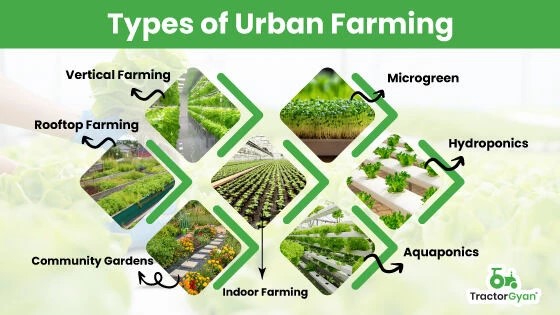
- Rooftop Farming – It utilizes the underutilized space on rooftops, this urban Farming method involves growing crops in containers or raised beds.
- Vertical farming - Vertical farming allows crops to be grown in stacked layers, optimising limited space and enabling year-round production.
- Community gardens - They are collaborative spaces where individuals or groups come together to cultivate plants collectively.
- These gardens are typically located on shared land, such as parks or vacant lots.
- Hydroponics - Hydroponic systems use nutrient-rich water instead of soil, conserve water while providing higher crop yields in smaller areas.
- Aquaponics - The practice of producing fish in tanks and soilless plant culture are combined in aquaponics.
- The aquaponic plants are naturally fertilized by nutrient-rich fish-raising water, and the plants also aid in the fish's water purification.
- Indoor farming – It is the cultivation of crops within enclosed structures, such as warehouses or shipping containers by controlling environmental factors like temperature, light, and humidity.
- Vertical farming, smart irrigation systems, and automated greenhouses are becoming integral to the future of food production in urban environments.
- Microgreen farming - It is the practice of growing microgreens for commercial purposes in a small space, such as a backyard.
What are the benefits of urban farming?
- Increased Food Production - Urban farming allows for the cultivation of fresh produce in areas where traditional agriculture is limited.
- Improved Food Quality - Access to fresh, pesticide-free produce, ensuring higher nutritional value and reducing health risks associated with chemical residues.
- Enhanced Food Security - Urban farming strengthens food security in urban areas, by reducing dependence on external food sources, particularly during times of crisis or disruptions in the supply chain.
- Environmental Development - Rooftop gardens utilise otherwise unused space, regulating building temperatures ,improving air quality, stormwater management, and reduction of the urban heat island effect.
- Environmental Sustainability – It promotes sustainable practices such as composting, rainwater harvesting, and waste reduction, contributing to a greener and more resilient urban ecosystem.
- Community Engagement - Engaging in urban farming fosters a sense of community and social cohesion.
- Eco sensitization - Urban agriculture provides an opportunity for individuals to connect with nature, learn about agriculture, and develop a deeper appreciation for the food they consume.
- Skill Development - Community gardens and shared spaces can serve as platforms for knowledge exchange and skill-building.
- Economic Opportunities - By cultivating and selling their produce locally, individuals can create small-scale businesses, contributing to their financial stability and reducing unemployment rates.
What are the challenges ?
- Limited Space - Rapid urbanization has led to a reduction in open spaces, making it difficult to establish large-scale farms.
- Soil Contamination - Urban areas often suffer from soil contamination due to industrial activities, pollution, and improper waste disposal.
- This contaminated soil can negatively impact crop quality and pose health risks to consumers.
- Water Management - Urban farming requires efficient water management, as water scarcity is a prevalent issue in many Indian cities.
- Regulatory Challenges - Obtaining necessary permits, adhering to zoning regulations, and addressing potential conflicts with existing urban infrastructure pose challenges for aspiring urban farmers.
What lies ahead?
- Create adequate policy supports to promote urban farming.
- Create awareness among people about the methods and benefits of urban farming.
- Enable funding and technological support to make urban farming a successful commercial initiative.
Reference
The Hindu Businessline | Urban Farming



