Leader of Opposition
Rae Bareli MP Rahul Gandhi is appointed as the Leader of Opposition in Lok Sabha recently.
- Statutory post - It is a statutory post officially described in the Salary and Allowances of Leaders of Opposition in Parliament Act, 1977. It is not mentioned in the constitution.
- Qualification
- The leader of the numerically biggest party in opposition to the government and recognized as such by the speaker/chairman.
- To be qualified as a Leader of Opposition, a party must have at least 10% of MPs in the House.
- The option of not recognizing him/ her by speaker is just not available.
- Functions - The main duty of the Leader of Opposition is to serve as the voice of the opposition in the House.
- Power of Appointment - Leader of Opposition is the opposition’s representative in the high-powered committees headed by the Prime Minister for appointment to key posts like
- Director of CBI,
- The Central Vigilance Commissioner and Chief Information Commissioner,
- The Chairperson and Members of the National Human Rights Commission, and
- The Lokpal.
- Order of precedence - Leaders of Opposition in Lok Sabha and Rajya Sabha is in order of precedence along with
- Union cabinet ministers,
- The national security advisor,
- The principal secretary to the PM,
- The vice-chairperson of the NITI aayog,
- Former PMs, and
- Chief Ministers.
- He will be a member of several Joint Parliamentary Committees, the committees of Public Accounts, Public Undertakings, Estimates, and many more.
- He will also have a say in the appointment of bureaucrats to key posts.
References
- The Indian Express | Role of Leader of Opposition
- Hindustan Times | Powers of Leader of Opposition
National Investigation Agency (NIA)
Recently, the National Investigation Agency announced reward for information on Canada-based terrorist Goldy Brar.
- It is the Central counter terrorism law enforcement agency in India.
- Established on – 2008.
- Head Quarters – New Delhi.
- Branch offices- Hyderabad, Guwahati, Mumbai, Lucknow, Kochi, Kolkata, Jammu and Raipur.
- It is constituted under the National Investigation Agency Act in response to the 2008 Mumbai terror attacks.
- It is empowered to deal with the investigation of terror related crimes across states without special permission from the states under written proclamation from the Ministry of Home Affairs.
- Functions
- Setting national standards for counter-terrorism and other national security investigations
- Developing a highly trained workforce that works in partnerships
- Deterring existing and potential terrorist groups and individuals
- It deals with offenses under acts that implement international treaties, agreements, conventions, and resolutions of the United Nations (UN), its agencies, and other international organizations.
- The NIA also works with state governments to designate Special Courts, which have precedence over other courts when trying NIA cases.
References
- Times of India | NIA announces reward for information
- National Investigation Agency | About
Rhisotope Project
South African scientists injected radioactive material into live rhinoceros horns to curb poaching
South Africa is home to the largest population of rhinos in the world, including the world's largest population of white rhinos and about half of the African continent's black rhinos.
- Aim - This project aims to insert measured quantities of radioisotopes into the horns of live rhinos.
- It is to reduce the demand and save rhinos from the very real threat of extinction in South Africa.
- It is founded in 2021 by Prof. James Larkin and Suzanne Boswell.
- Radioactively treated horns are more likely to be detected at international borders, making it more likely that smuggling syndicates are exposed, prosecuted and convicted.
African Rhinos
|
Species
|
White Rhino
|
Black Rhino
|
|
Scientific Name
|
Ceratotherium simum
|
Diceros bicornis
|
|
Habitat
|
Long and short grass savanna areas in grasslands
|
Semi-Desert Savannah, Woodlands, Forests, Wetlands
|
|
Size
|
2nd-largest land mammal
|
It is smaller compared to white ones.
|
|
IUCN Status
|
Near Threatened
|
Critically Endangered
|
|
Distribution
|
South Africa, Zimbabwe, Namibia and Kenya
|
South Africa, Zimbabwe, Namibia and Kenya
|
References
The Hindu | Rhisotope Project
WWF | African Rhinos
Great Nicobar Island
Recently, the Congress party demanded an immediate suspension of all clearances granted to NITI Aayog’s mega project on Great Nicobar Island.
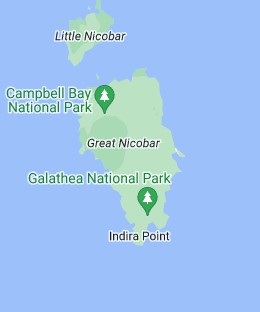
- Great Nicobar Island is the largest and southernmost island in the Nicobar Islands archipelago, located in the Bay of Bengal.
- Headquarters – Campbell bay.
- Vegetation - It is a hilly island mostly covered in tropical rainforest, with mangroves and Pandan forests along the coast.
- The island's main hill range runs from north to south, and its highest peak is Mount Thullier.
- Rainfall - Great Nicobar also receives an annual rainfall of around 3,500 mm.
- Rivers - Galathea, Alexandra and Dagmar are the major rivers.
- Species - It is known for its diverse wildlife, including many endangered and endemic species, such as the
- Giant leatherback turtle,
- Nicobar megapode, and
- Nicobar crab-eating macaque.
- UNESCO Listing - Great Nicobar Biosphere Reserve is designated as part of the UNESCO World Network of Biosphere Reserves (WNBR) in 2013.
- Indigenous communities - The Shompen and the Nicobarese.
References
- The Hindu | Great Nicobar island
- Nicobar District | About
Dendrophthoe longensis & Petrocosmea arunachalense
Researchers have discovered 2 new species of plants, Dendrophthoe longensis & Petrocosmea arunachalense recently.
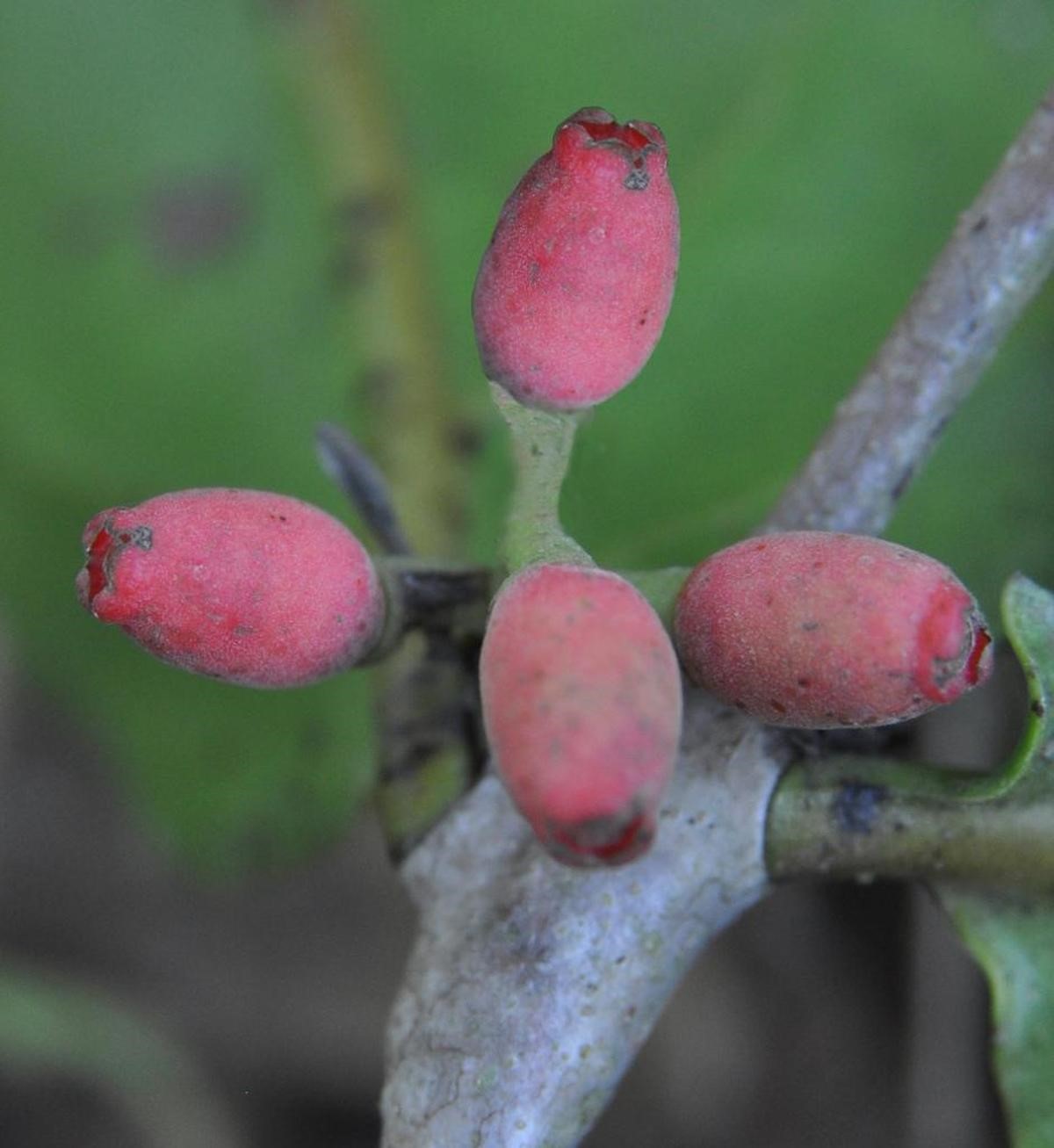
Dendrophthoe longensis
- It is an aerial stem-parasitic flowering plant discovered in long islands of Andaman and Nicobar islands.
- Family - Mistletoe (group of hemi-parasitic flowering plants).
- Habitat - It is found on the specific host plant, Mango (Mangifera indica) in the edge of evergreen forests, low land areas of tropical forests.
- Distribution - The species is sparsely scattered and confined to a few localities of Long Island.
- Conservation status – It is assessed as Endangered based on the IUCN categories and criteria.
Indian Dendrophthoe are represented by 9 species - 4 are from Andaman and Nicobar Islands and 2 species are endemic to the region.
Petrocosmea arunachalense
- Petrocosmea arunachalense is only the second known species from the genus Petrocosmea in India.
- Family – Gesneriaceae.
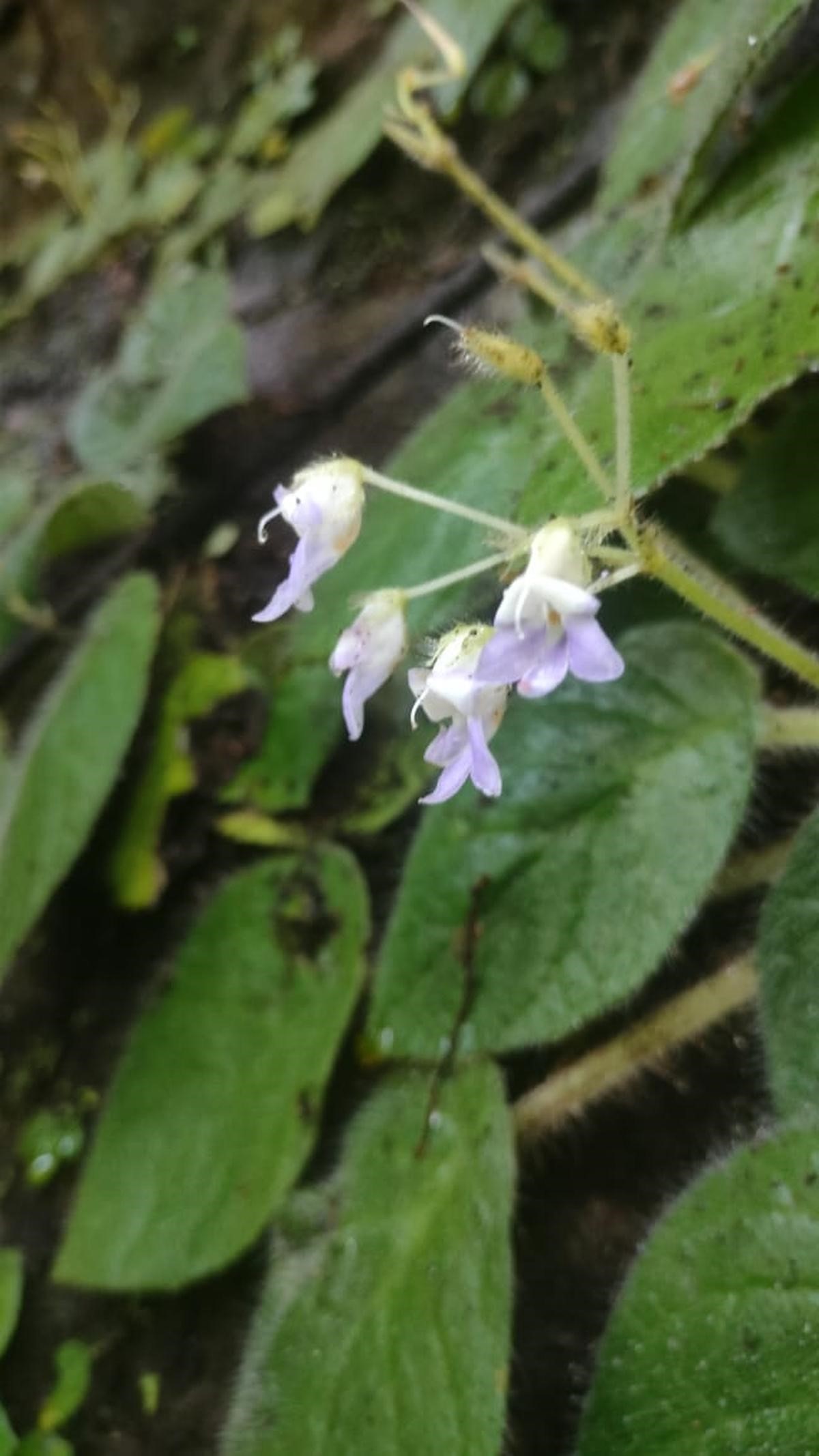
- It is a new herbaceous plant species discovered from West Kameng district in Arunachal Pradesh.
- It is a very very small herb, requires less sunlight.
- Appearance - It is completely white with purple blotch and the plant has a hairy texture.
Reference
The Hindu | Dendrophthoe longensis & Petrocosmea arunachalens



