|
One Liners 22-10-2026
|
|
Economy
|
|
Core Industrial Growth – September 2026
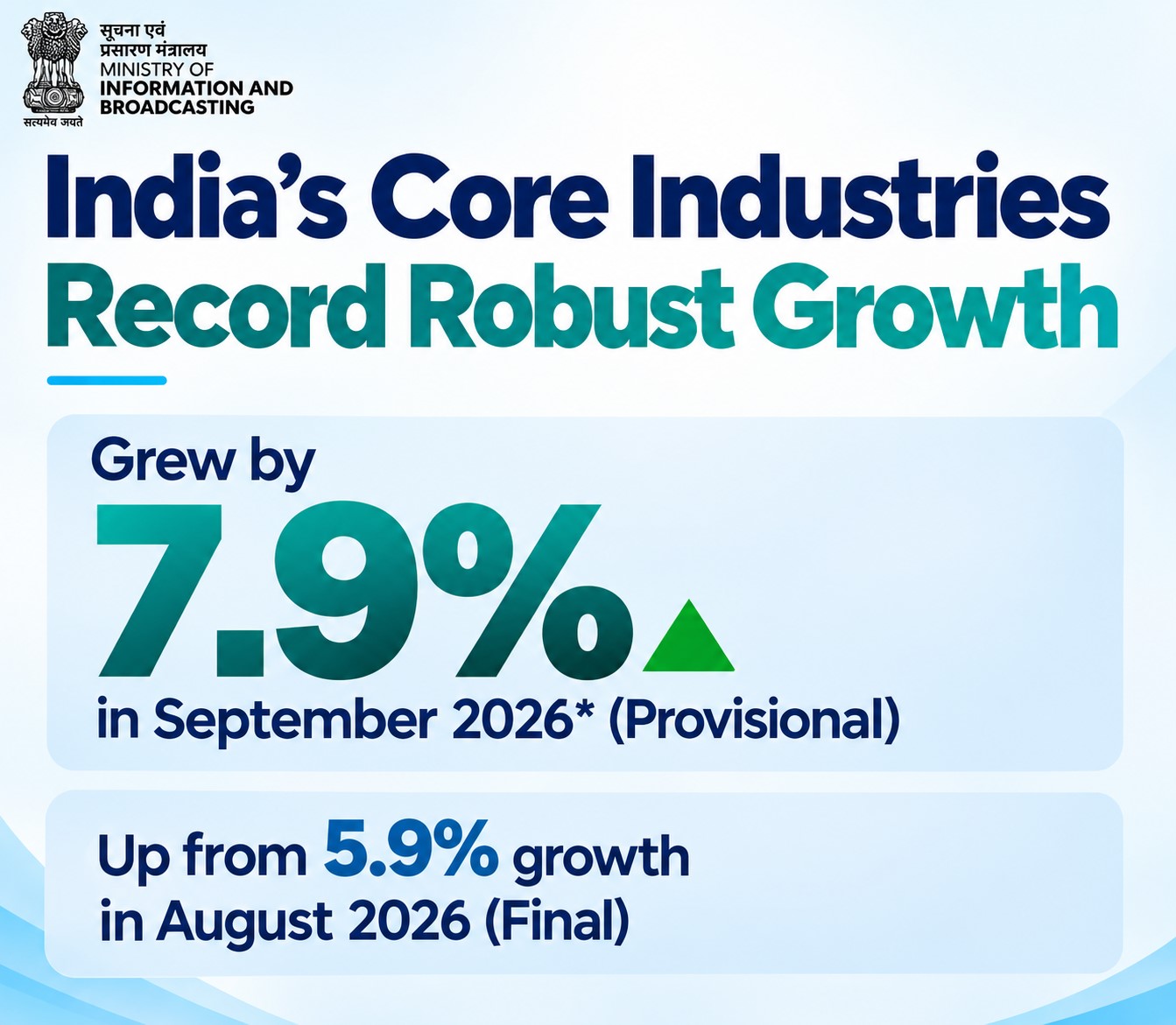
India's Index of Core Industries (ICI) grew by 7.9% in September 2026.
- This is the highest growth recorded since the new data series began in April 2024.
- Compared with the older series, it represents the strongest growth in nearly three years.
- Major Growth Drivers
- Iron ore grew by 18.4%, continuing its nearly year-long double-digit growth trend.
- Electricity grew by 11.4%, though slightly lower than 13.1% in August.
- Coal grew by 10.7%, its highest growth in 13 months.
- Refinery products grew sharply by 10.3%, compared with 5.6% in August.
- Cement grew by 9.8%, reflecting continued construction activity.
- Steel growth accelerated to 4.9%.
- Coal Sector
- Coal output increased by 10.7%, despite a favourable low-base effect.
- Coal had contracted by 1.1% in September 2025.
- The improvement was also supported by low coal stocks at power plants.
- Refinery Products
- Refinery products recorded 10.3% growth, up sharply from 5.6% in August.
- Despite this September surge, average growth during the first half of FY2026-27 was only about 1%.
- Iron Ore Sector
- Iron ore production expanded by 18.4%.
- The sector has maintained double-digit growth for almost a year.
- September growth was its highest in the last two months.
- Electricity, Cement and Steel
- Electricity– 11.4% growth.
- Cement– 9.8% growth.
- Steel– 4.9% growth.
- Strong performance in cement and steel indicates continued momentum in construction and infrastructure activity.
- Sectors Showing Contraction
- Crude oil– Contracted by 1.4%, improving from a 3.6% contraction in August.
- Natural gas– Contracted by 4.6%, compared with 4.9% in August.
- Fertiliser – Contracted by 11.7%, marking the seventh consecutive month of contraction.
- Key Reasons for Strong Growth
- Recovery in coal production.
- Strong and sustained iron ore output.
- Surge in refinery products.
- Continued growth in electricity, cement and steel.
- However, the low base of the previous year contributed to the sharp year-on-year growth in some sectors.
|
|
Two new species of marine fish from the Bay of Bengal
Researchers from Chennai discovered two new species of marine fish from the Bay of Bengal– a new sandperch and a new electric ray.
- The Two New Species
- Sandperch
- Role & Diet– Functions as a small predator feeding on crustaceans, polychaetes, and juvenile fishes, playing a vital role in seafloor-based (demersal) food webs.
- Distribution– Widely distributed along the east coast of India, including off the coast of Chennai.
- Electric Ray
- Habitat– Found in deep waters off the south-eastern and north-eastern Arabian Sea, as well as parts of the Bay of Bengal.
- Discovery Details
- Lead Team– Researchers from the Zoological Survey of India's (ZSI) Marine Biology Regional Centre in Chennai, led by scientist K. K. Bineesh.
- Collection– Specimens were gathered from commercial trawlers operating at depths between 30 meters and 80 meters off the coasts of Chennai (Tamil Nadu), Digha (Odisha), Visakhapatnam, and Kakinada.
|
|
Environment
|
|
Chiricahua National Park in the United States
Chiricahua National Park is the United States' 64th national park, located in the Chiricahua Mountains of southeastern Arizona.
- President Donald Trump signed the Chiricahua National Park Act into law on October 20, 2026, officially redesignating what was previously the Chiricahua National Monument (established in 1924).
- Location– Cochise County, Arizona (near Willcox; about two hours southeast of Tucson).
- Size– Approximately 12,025 acres.
- Geology– Known as the "Wonderland of Rocks," featuring towering rhyolite rock spires, hoodoos, and balancing rocks formed by a volcanic eruption roughly 27 million years ago.
- Ecosystem– A unique "sky island" range where the Sonoran Desert, Chihuahuan Desert, Rocky Mountains, and Sierra Madres converge, supporting diverse wildlife (nearly 200 bird species and over 70 mammal species).
- Cultural History– Ancestral homeland of the Chiricahua Apache, with deep ties to prehistoric Indigenous communities, Buffalo Soldiers, local ranchers, and the historic Faraway Ranch.
- Activities– More than 17 miles of hiking trails, the Bonita Canyon Scenic Drive (to Massai Point and Echo Canyon), stargazing (International Dark Sky Park), and camping at Bonita Canyon Campground.

|
|
Indonesia Wildfire Crisis – Key Points
Indonesia is facing a severe wildfire crisis in 2026, with fires particularly affecting Kalimantan.
- Satellite data estimates over 1.9 million hectares of land burned by the end of September.
- Cumulative satellite hotspot detections reached 1.16 million by 21 October 2026.
- The burned area during January–September was 38% higher than in 2019, previously the worst fire year in the monitoring record.
- Major Causes
- Severe drought and low rainfall since June have intensified the fires.
- An exceptionally strong El Niño has further reduced rainfall across Indonesia and surrounding regions.
- Land-use changes, agricultural clearing and plantation activities are important human-related drivers.
- Fires started for land clearing can spread into surrounding vegetation, including peatlands and forests.
- Worst-Affected Region
- Kalimantan is the worst-affected region.
- Around 684,000 hectares have burned there, accounting for approximately 36% of Indonesia's total burned area.
- Fires have also affected protected areas such as Gunung Palung National Park in West Kalimantan.
- Type of Land Burned
- According to satellite monitoring–
- Swamp vegetation – 35%
- Agricultural land – 20%
- Savanna and grassland – 20%
- Natural forest – 4.5%
- Some burned swamplands overlap with peatland, which can release significant amounts of carbon and produce persistent smoke when burned.
- El Niño Connection
- El Niño is the warmer-than-normal phase of the El Niño–Southern Oscillation (ENSO).
- It generally causes reduced rainfall and drier conditions in Indonesia.
- The 2026 El Niño has therefore created favourable conditions for the rapid spread and persistence of wildfires.
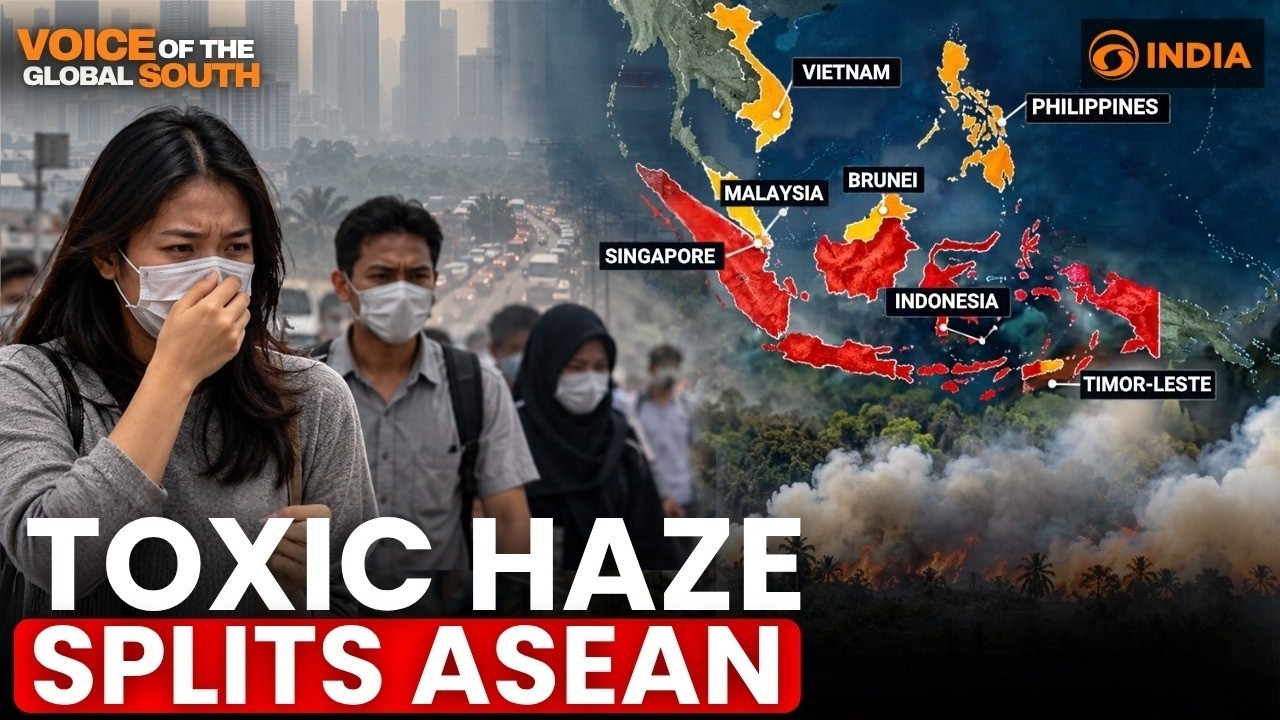
- Toxic Haze Across Southeast Asia
- Smoke has spread beyond Indonesia to Singapore, Malaysia, Timor-Leste and Parts of the Philippines.
- The haze has also contributed to elevated carbon monoxide concentrations over the region.
- Public Health Impact
- Several areas have experienced unhealthy air quality.
- Schools were closed in parts of Malaysia and Timor-Leste.
- Singapore experienced its longest consecutive period of unhealthy air quality since 2015.
- Singapore's Pollutant Standards Index (PSI) classifies air quality as unhealthy when it exceeds 100.
- Government Response
- Indonesia has deployed around 60,000 personnel and 47 aircraft to combat the fires.
- Malaysia has offered three aircraft and 52 ground personnel to assist Indonesia.
- Singapore's National Environment Agency sent notices to 10 Indonesian companies regarding the fires.
- Protests and Governance Concerns
- Protests took place in Jakarta, Bandung, Yogyakarta, Pekanbaru and Makassar.
- Demonstrators criticised the government's response to the haze and raised allegations of corruption and inadequate action.
- The government has disputed the satellite-based estimate of total burned area, stating that the figures cannot yet be readily confirmed
|
|
Health
|
|
First Imported Ebola Bundibugyo Case in Nigeria
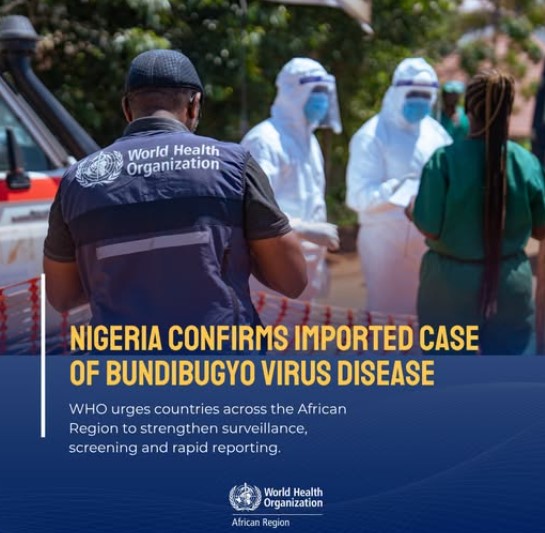
Nigeria confirmed its first imported case of the Bundibugyo strain of the Ebola virus disease in the Federal Capital Territory (FCT), Abuja, on October 20, 2026.
- Patient– A female diplomat who traveled from Uganda and arrived in Abuja, Nigeria, on October 3, 2026.
- Timeline of Symptoms & Care
- Symptoms began on October 7, 2026 (four days after arrival).
- She sought medical treatment at a private facility in Abuja on October 11, 2026.
- Molecular laboratory testing by the Nigeria Centre for Disease Control and Prevention (NCDC) confirmed the Bundibugyo strain on October 20, 2026.
- Current Status– The patient is placed in isolation and receiving medical treatment.
- Public Health Response & Contact Tracing
- Contacts Identified– Health authorities, coordinated by the Federal Ministry of Health and Social Welfare and the World Health Organization (WHO), have identified 44 high-risk contacts for active monitoring.
- Regional Context– This case is linked to the wider regional outbreak of the Bundibugyo strain that originated in the Democratic Republic of the Congo (DRC) on May 15, 2026, making Nigeria the fifth country to detect the virus in this specific wave.
|
|
Zytorvi (toripalimab)
Zytorvi (toripalimab) is an immune checkpoint inhibitor approved in India for first-line treatment of unresectable advanced, recurrent, or metastatic esophageal squamous cell carcinoma (ESCC).
- Overview of ESCC and Zytorvi
- ESCC– Accounts for about 80% of esophageal cancer cases in India and is a leading cause of cancer mortality.
- Mechanism– Toripalimab blocks the PD-1 receptor to reactivate T-cells against the tumor, without requiring mandatory PD-L1 testing.
- Regimen– Administered in combination with cisplatin and paclitaxel chemotherapy.
- Clinical Efficacy and Safety
- Trial Results (JUPITER-06) – Reduced disease progression or death risk by 42%, with median overall survival improving to 17.7 months versus 12.9 months for chemotherapy alone.
- Side Effects– Common adverse effects include anemia, leukopenia, alopecia, fatigue, nausea, vomiting, and constipation.
|
|
Measles outbreak in Bnagladesh
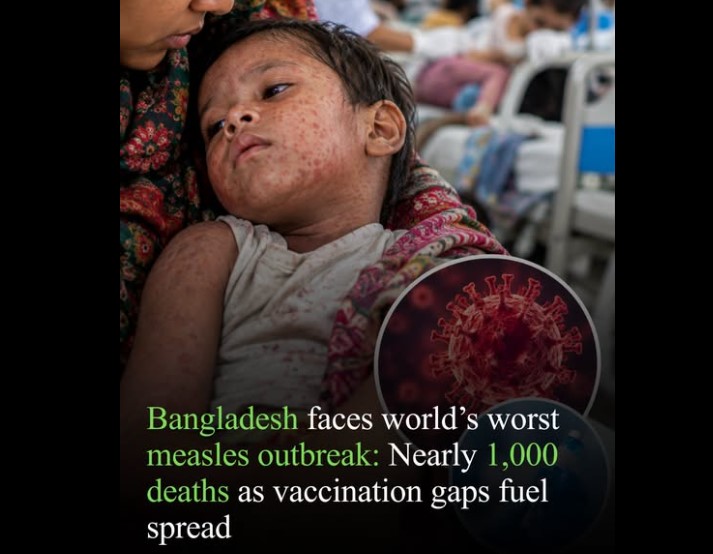
Bangladesh is facing the world's worst measles outbreak of the year, with over 202,000 suspected cases and 1,147 deaths reported since mid-March according to World Health Organization (WHO) data.
- Impacted Population– Children under the age of five account for 94% of the reported fatalities.
- Case Numbers– Roughly 22,000 of the cases have been laboratory-confirmed.
- Hard-Hit Regions– The northeast region of Sylhet and surrounding areas have been heavily overwhelmed, with facilities like the Shahid Shamsuddin Ahmed Hospital stretched past capacity.
- Causes of the Outbreak
- Declining Vaccination Coverage– Routine measles immunization coverage dropped to 90% for the first dose and 86% for the second dose, falling well short of the 95% threshold recommended by the WHO to prevent community outbreaks.
- Systemic Gaps– The crisis has been intensified by political upheaval, disruptions in health services, inaccurate or incomplete health and demographic tracking data, staffing shortages, and parental vaccine hesitancy.
- Emergency Response Hurdles– Rushed readiness checks and missed high-risk or unregistered children left millions unprotected despite emergency catch-up campaigns.
|
|
Security
|
|
SIMBEX-2026
The 33rd edition of the Singapore–India Maritime Bilateral Exercise (SIMBEX-2026) is taking place from October 21 to 26, 2026, in Visakhapatnam and the Bay of Bengal.
- Dates– October 21 – 26, 2026
- Location– Visakhapatnam (Harbour Phase) and the Bay of Bengal (Sea Phase)
- Participants– Indian Navy and the Republic of Singapore Navy (RSN), featuring the RSN ship RSS Supreme and Indian Navy ships including INS Nilgiri and INS Kamorta.
- Origin– Started in 1994 as Exercise Lion King.
- Exercise Phases
- Harbour Phase (October 21–23, 2026) – Held in Visakhapatnam with professional exchanges, cross-deck visits, and an opening ceremony aboard Indian naval ships.
- Sea Phase (October 24–26, 2026) – Conducted in the Bay of Bengal, featuring tactical manoeuvres, anti-submarine warfare, and combat drills.

|
|
Index
|
|
World Development Report 2026– The Promise of Artificial Intelligence
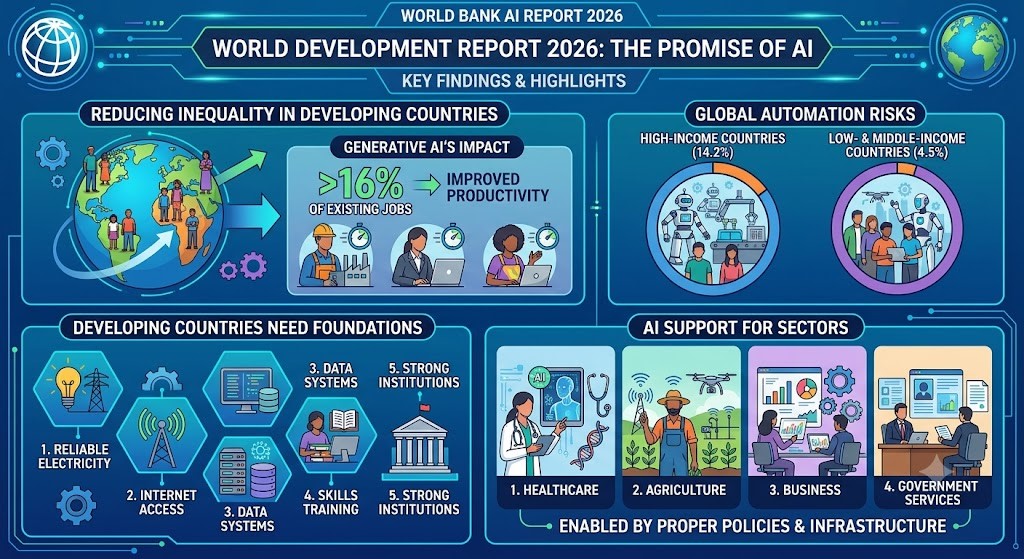
The World Development Report 2026– The Promise of Artificial Intelligence published by the World Bank outlines how artificial intelligence can help developing economies accelerate growth and bridge development gaps.
- Core Framework– Adopt, Adapt, and Advance
- Adopt– Start with off-the-shelf and low-cost AI tools ("small AI") that can run on basic mobile phones, voice calls, or text messages to deliver immediate help in agriculture, healthcare, and education.
- Adapt– Customize AI models to local languages, institutional needs, data, and constraints rather than relying purely on models built for high-income countries.
- Advance– Selectively build local infrastructure, research capacity, and specialized compute power without wasting scarce resources on expensive trillion-dollar frontier models from scratch.
- Key Findings & Statistics
- Automation Risk– Jobs in high-income countries face more than triple the risk of generative AI automation (14.2%) compared to low- and middle-income countries (4.5%).
- Productivity Boost– 16.2% of jobs in developing economies can experience meaningful productivity gains from AI, nearing the 18.7% expected in wealthy nations.
- Resource Concentration– A small number of firms across a handful of countries control the leading AI models, chips, and data centers, making local adaptation and regional compute-sharing vital.
- Country Focus (India) – Launched locally by Union Minister Ashwini Vaishnaw, the report highlights India's advantage in scaling AI deployment via digital public infrastructure like Aadhaar and UPI, supported by the IndiaAI Mission.
|
|
Miscellaneous
|
|
First Nation community in Canada uses data centre to preserve its heritage
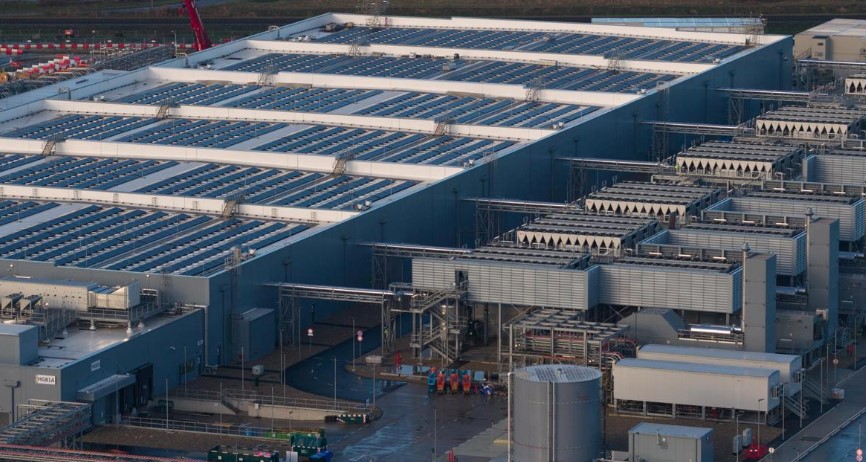
The Wiikwemkoong Unceded Territory, an Indigenous community on Manitoulin Island in rural Ontario, Canada, has installed a local micro data center to preserve its cultural heritage and assert control over its digital records.
- Preserving Language and Culture– The facility stores video recordings of elders and knowledge keepers speaking the native Anishinaabe language, protecting their legacy against language loss.
- Local Data Sovereignty– The data center—roughly the size of a single-car garage—migrated information away from a corporate Microsoft data center in Toronto (305 km away). This follows the OCAP principles (Ownership, Control, Access, and Possession) established by First Nations in 1998.
- Comprehensive Storage– Beyond cultural files, the secure bunker-style facility holds corporate documents, resident health-centre data, and security-camera footage.
- Infrastructure and Security– The bunker is accessed via a facial recognition scanner, uses air-cooling fans instead of water, and supports public safety tools like community surveillance cameras and a drone fleet.
- Trigger for Action– The initiative gained urgency after a 2022 flood destroyed digital records that had been scattered across various administrative offices.
|



