|
One Liners 09-11-2026
|
|
History, Art and Culture
|
|
100 Drums Wangala Festival
Meghalaya’s 100 Drums Wangala Festival begins in West Garo Hills with traditional music and cultural performances and is taking place from November 11 to 14, 2026.
- 100 Drums Wangala Festival – It is a harvest festival of the Garo tribe, celebrated to honour the Sun God, Misi Saljong, for a bountiful harvest.
- Hosted at – It is a historic four-day grand celebration is hosted at Wangala A·dam within the Garo Heritage Village in Chibragre, near Tura, West Garo Hills.
- Wangala – It is best known for its drum performances and traditional Garo dances.
- A group of performers play long, oval-shaped drums called ‘Dama’ while men and women dance to the rhythm of the music.
- It is famous for its lively folk music, community gatherings, traditional dances, and vibrant costumes featuring colourful ornaments and feathered headgear.
- Duration – Traditionally, Wangala celebrations continue for days.
- But the first day ceremony is known as 'Ragula ', while the second one is called 'Kakkat'.
- These rituals and performances reflect the Garo community’s connection with agriculture, nature and its cultural heritage.
- 2026 Golden Jubilee Milestone – This year’s celebrations are especially important because the Hundred Drums Wangala Festival is celebrating its Golden Jubilee, its anniversary.
- It brought together 1,000 traditional drums in a single, thunderous performance, which is the centrepiece of its Golden Jubilee celebration.
- Significance – The festival is not a celebration after the harvest; it is also an important way of preserving and passing on Garo traditions to younger generations.

|
|
Polity
|
|
Reduction in Visa Categories
The Union Government has rationalised the Indian Visa Regime, reducing the main categories from 13 to nine.
- Rationalised visa regime – Reducing the number of main visa categories from 13 to nine and sub-categories from 49 to 23.
- Aim – To simplify the procedures and make the system more accessible to foreign nationals visiting the country.
- The consolidation of categories with similar purposes is intended to provide greater clarity to applicants and facilitate legitimate foreign travel to India.
- Previous reforms – The exercise follows an earlier rationalisation in October 2025, when the number of main categories was reduced from 22 to 13 and sub-categories from 63 to 49.
- e-visas – Currently, e-visas are processed through electronic travel authorisation under 13 sub-categories and are available to nationals of 172 countries.
- Implementation – The Ministry of Home Affairs is currently upgrading its backend IT infrastructure to reflect the streamlined rules.
- Visas under this newly rationalised framework are scheduled to be fully active and issued by the end of December 2026.

|
|
Governance
|
|
Yuge Yugeen Bharat Museum (YYBM)
The Cabinet Committee on Economic Affairs approves the development of the Yuge Yugeen Bharat Museum at the North and South Block Complex, New Delhi.
- YYBM – It is an ambitious mega-museum project approved by the Union Cabinet of India to become the largest museum in the world.
- Location – Housed in the historic North Block and South Block buildings on Raisina Hill in New Delhi, repurposing the former government administrative offices.
- Background – The establishment of the YYBM was announced by the Prime Minister on 18 May 2023.
- Display Area & Scale – It spans over 1.8 lakh square meters (with a display area of over 1 lakh sq. m).
- It is going to be the museum with the largest display area in the world, surpassing global institutions like the Louvre, the British Museum, and the State Hermitage Museum.
- It is designed to eventually replace the existing National Museum.
- Timeline & Phasing – The project will be rolled out in phases from FY 2026–27 to FY 2030–31.
- The first inaugural gallery (themed around Adornment) is scheduled to open in the North Block in 2027.
- Themes & Collections – It will showcase over 5,000 to 10,000 years of India's civilisational journey, continuity, and cultural diversity using modern, non-linear, and immersive technologies.

|
|
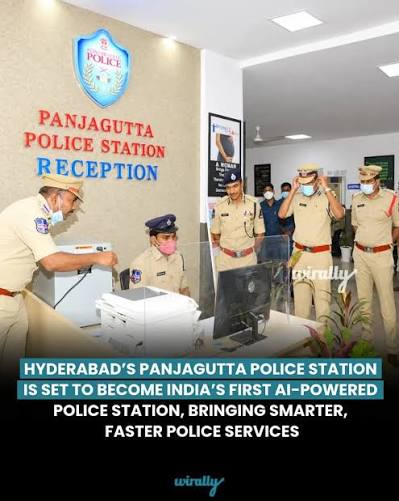
India’s First AI Police Station
Hyderabad's Panjagutta Police Station is being developed as India's first AI Police Station.
- Panjagutta Police Station – It is set to launch a pilot project in the first week of December 2026 as India’s first AI-powered police station.
- Features
- Automated Drafting – AI will assist police officers in drafting First Information Reports (FIRs), case diaries, and investigation reports.
- "Sethu" Kiosk – A multilingual kiosk named "Sethu" will accept public complaints in roughly 10 different languages and route them directly to the authorities.
- Integrated Services – The pilot project integrates AI across routine station services to speed up paperwork and improve technology-driven policing.
- Predictive patrolling & resource deployment – The software will analyse regional crime patterns, local hostels, commercial establishments, and real-time traffic congestion.
- This intelligence will dynamically optimise the deployment of local patrolling units (Blue Colts).
- Training – Personnel at the Punjagutta station are currently undergoing specialised technical training.
|
|
Environment
|
|
World’s Largest Artificial Reef
The famed ship SS United States has been deliberately sunk off the Florida coast to become a reef.
- SS United States – The SS United States is the world's largest artificial reef, having been deliberately sunk to become an artificial reef in the Gulf of Mexico.
- Artificial reef – It is a human-made structure placed on the seabed or in a freshwater body—often in areas with flat or featureless bottoms—to mimic some of the characteristics of a natural reef.
- Location – About 25 miles southwest of Destin, Florida, on the Northwest Florida Shipwreck Trail.
- Length – It is 990 feet, making it around 102 feet longer than the previous record holder.
- The controlled scuttling of the vessel was completed in a multi-million-dollar project funded by Okaloosa County to prevent the iconic ship from being scrapped, transforming it instead into a thriving marine habitat and a world-class diving attraction.
- Ecological Purpose – The battle-grade steel hull provides a massive hard surface in an otherwise barren, sandy stretch of the Gulf.
- It is expected to quickly gather a biological layer of sponges, barnacles, and corals, which will build a food chain to support game fish like red snapper, grouper, tuna, marlin, and swordfish.

|
|
Royal Bengal Tiger in Debrigarh Wildlife Sanctuary
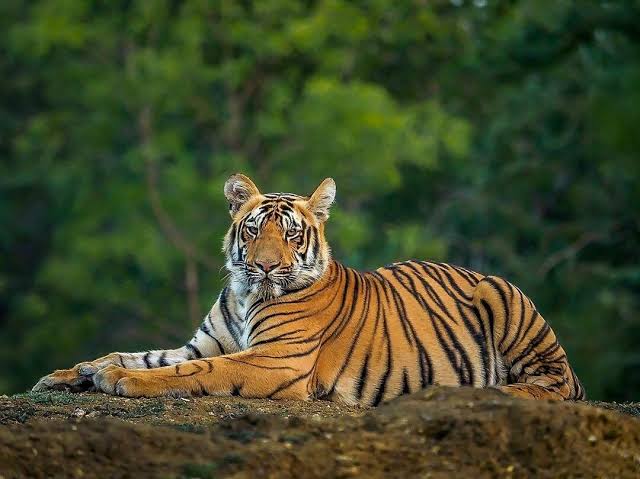
A Royal Bengal Tiger has been sighted inside the Debrigarh Wildlife Sanctuary in Odisha’s Bargarh district.
- A Royal Bengal Tiger had inhabited the Debrigarh sanctuary for around 1.5 years between 2022 and 2024.
- The animal later died due to electrocution in Chhattisgarh’s Gomarda sanctuary.
Royal Bengal Tiger
- Scientific name – Panthera tigris tigris.
- It is India's National Animal (declared in 1972), with India hosting 70% of the global tiger population.
- Geographic range – The vast majority of the wild population lives in India, with smaller numbers in Bangladesh, Nepal, Bhutan, and parts of Southwestern China.
- Diverse ecosystems – They thrive in tropical rainforests, dry deciduous forests, and alluvial grasslands.
- They also inhabit the mangrove swamps of the Sundarbans, where they have adapted to swim across wide, salty rivers
- Population – According to the All-India Tiger Estimation (conducted every 4 years by the NTCA and Wildlife Institute of India), India's tiger population stands at 3,682 (2022) with an annual growth rate of 6.1%.
- Top Tiger States – Madhya Pradesh holds the highest population (785), followed by Karnataka, Uttarakhand, Maharashtra, and Tamil Nadu.
- Conservation Status
- IUCN – Endangered
- Wildlife (Protection) Act, 1972 – Schedule I.
- CITES – Appendix I.
Debrigarh Wildlife Sanctuary
- Location – It is a premier 353-square-kilometre ecological haven in the Bargarh and Sambalpur districts of Western Odisha.
- Nestled right along the massive Hirakud Reservoir, the core sanctuary offers an exceptional amphi-terrestrial ecotone where dense dry deciduous forests seamlessly crash into a vast 90-kilometre shoreline.
- Mammals – Home to over 40 species. Beyond its flagship herds of Indian Gaur, it hosts leopards, sloth bears, chital, sambar deer, nilgai, etc.
- Avian Haven – Designated as an International Bird Area (IBA) and a Ramsar Wetland Site, it logs 234+ species of birds.
|
|
Security
|
|
Koalicja Military exercise
- Exercise Koalicja – It is a multinational military drill currently taking place in Poland, with the main land-based activities taking place near Nowa Dęba in southeastern Poland.
- Objective – To test how participating countries can coordinate, deploy, protect and supply a multinational force if hostilities in Ukraine come to an end.
- Jointly led by – the United Kingdom and France, and being conducted under the Multinational Force-Ukraine (MNF-U).
- MNF-U is the military arm of the Coalition of the Willing, an international grouping established in March 2025 through an initiative led by the United Kingdom and France.
- Participation – The drill involves approximately 2,800 to 5,000 personnel from 11 nations (including Poland, Germany, Belgium, Estonia, Lithuania, the Netherlands, Spain, Sweden, and Turkey), alongside Ukrainian troops.
- Multi-Domain Scope – Beyond ground manoeuvres in Poland, the drills include simulated aerial defence operations in Romania and naval mine-clearance exercises led by Turkey in the Black Sea.
|
|
Science
|
|
PRAGYA - India’s first privately developed tokamak
Bengaluru-based deep-tech startup Pranos Fusion has unveiled Pragya, described as India’s first privately developed compact tokamak.
- PRAGYA – The machine is designed as a compact, low-aspect-ratio tokamak that will serve as an experimental platform for studying and controlling plasma, the superheated state of matter essential for achieving nuclear fusion.
- Tokamak – A tokamak is a device that uses magnetic fields to trap very hot plasma inside a ring-shaped vacuum chamber.
- Plasma – A fourth state of matter, it is a gas whose atoms have been stripped of their electrons, leaving free electrons and charged nuclei.
- Purpose – It isn’t yet designed to generate commercial fusion power, but will act as a critical testbed for the technologies needed to build future fusion reactors.
- Timeline & Testing frequency – The reactor took around eight months to build. The company plans to operate Pragya for nearly two decades, targeting between 10 and 12 experimental shots a day, or roughly 3,000 shots annually.
- Architecture – Features a stainless steel 304 vacuum vessel with a compact, low-aspect-ratio design (1.9 to 2.2).
- Plasma Operations – Uses an ultra-high vacuum system and microwaves to ionise helium and argon gases, reaching temperatures up to 10,000°C & it achieved its "first plasma" on September 3, 2026.

|
|
Miscellaneous
|
|
Public Service Broadcasting Day
- Observed on – 12th of November every year.
- It is also known as Jan Prasaran Divas.
- To commemorate the historic address of the Father of the Nation and freedom Fighter Mahatma Gandhi through the radio (Akashvani).
- Historical significance – An important day in the History of Broadcasting, Mahatma Gandhi paid his first and only visit to the Broadcasting House in New Delhi on this day in 1947.
- Official recognition – In the year 2000, then Union Minister for Information and Broadcasting, Sushma Swaraj, announced that every 12th of November would henceforth be observed as Public Service Broadcasting Day.
- The Day inspires Broadcasters to carry forward the ideals and teachings of Mahatma Gandhi to every corner of the country.

|
|
Booker Prize, 2026
The Booker Prize for the year 2026 was announced recently.
- Booker Prize – It is one of the world's most prestigious literary awards, given each year for the best full-length novel written in English and published in the UK or Ireland.
- Prize Details – The winner receives £50,000, and each shortlisted author receives £2,500.
- Eligibility – Open to any original novel written in English and published by a registered UK or Irish imprint during the prize year, regardless of the author's nationality.
- 2026 Winner – M. John Harrison won the Booker Prize 2026 for his post-apocalyptic novel, “The End of Everything”.
- Significance – At age 81, Harrison became the oldest winner in the prize's history, and the novel marked the first time a science fiction work has taken the award.
Indian-born winners
- Salman Rushdie (1981) – Midnight’s Children, the novel later won the special "Booker of Bookers" (1993) and "Best of the Booker" (2008) awards.
- Arundhati Roy (1997) – The God of Small Things - the first Indian citizen and first Indian woman to win the prize.
- Kiran Desai (2006) – The Inheritance of Loss
- Aravind Adiga (2008) – The White Tiger.
|



