Prelims: Current events of national and international importance | Environment
Why in News?
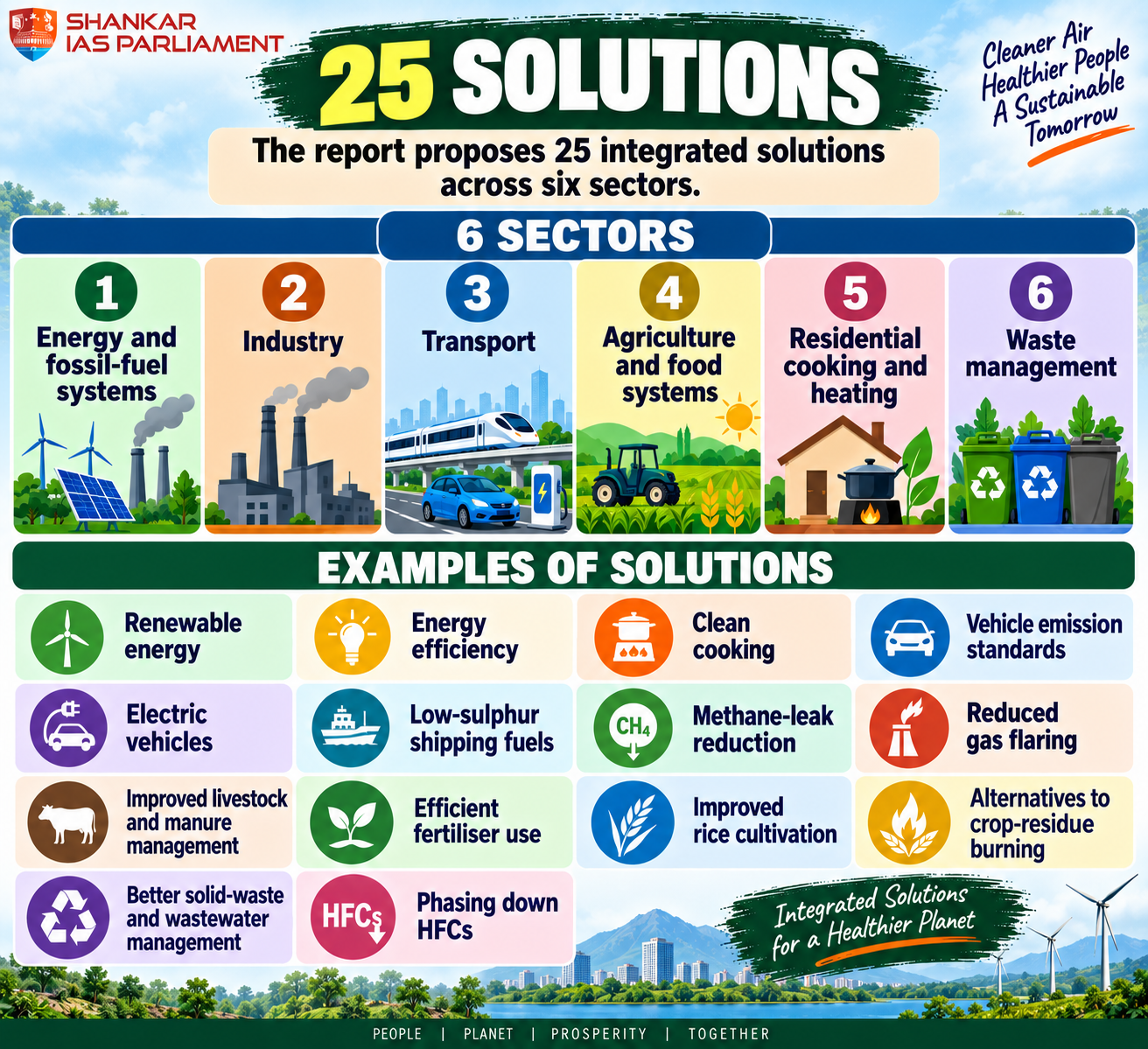
A new UNEP assessment, “Hidden Assets: The Economic and Health Case for Climate and Clean Air Action”, examines the benefits of tackling air pollution and climate change together.
Key Findings of UNEP assessment – South Asia
- Economic burden – The current air pollution burden accounts for approximately 10% of South Asia's gross domestic product (GDP).
- Benefit-Cost Ratio – Implementing 25 integrated climate and clean-air solutions in South Asia could yield approximately $21 in economic benefits for every $1 invested.
- Implementation of 25 targeted solutions could prevent damages equivalent to the following proportions of GDP:
- Approximately 4% of GDP by 2035
- Approximately 14.5% of GDP by 2100.
- These economic benefits include:
- Lower healthcare expenditure
- Higher labour productivity
- Avoided physical damage
- A reduction in premature deaths and improvements in overall population health.
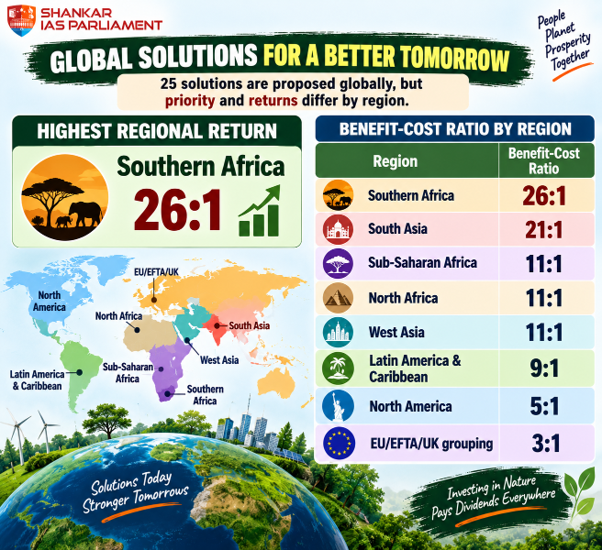
Projected Global Economic Benefits
- At the global scale, each 1 dollar invested is projected to yield approximately 15 dollars in benefits.
- Implementation of the 25 proposed solutions could generate benefits equivalent to the following proportions of global GDP:
- 2.8 percent of global gross domestic product (GDP) by 2035,
- 4.5 percent by 2050,
- and 11.4 percent by 2100.
- Even when non-market welfare benefits are excluded, the benefit is ~$4 for every $1 invested.
- Global Health Burden
- Estimated Impacts for 2025 – Anthropogenic outdoor air pollution, including fine particulate matter (PM2.5) and ozone, is associated with the following health outcomes:
- An estimated 6.4 million premature deaths globally.
- Household air pollution is further associated with:
- An additional 2 million premature deaths
- This figure includes approximately 300,000 children.
- Air pollution is also implicated in the following health conditions:
- An estimated 5.5 million new cases of childhood asthma
- Approximately 2 million new cases of dementia projected for 2025.
- Cost of Delay – Every year of delayed action can forfeit more than $1.5 trillion in combined annual market and non-market benefits.
- This figure represents approximately 0.5 per cent of global gross domestic product (GDP).
- Duration of Implementation Delays – The estimated global delay is approximately 7.5 to 8 years.
- Primary contributing factor – Institutional barriers account for approximately 2.4 years of delay.
- A delay of this magnitude could reduce the achievable emissions reductions by 2035 by approximately half.
Reference
UNEP | Hidden Assets



