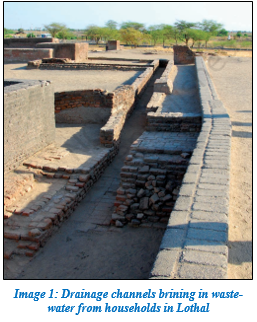
- Historical Roots – India's sanitation traditions predate the modern movement, with archaeological evidence showing planned layouts and extensive drainage networks in Indus Valley cities like Lothal.
- Infrastructure and Practice – Ancient homes featured private toilets connected to drains, inspection points, and solid waste management systems.
- Spiritual and Conduct Connection –
- Vedic traditions linked clean water, fresh air, and healthy surroundings with spiritual practice.
- Buddhist traditions instructed monks to avoid polluting water sources and to clean toilet areas for subsequent users.
- Archaeological evidence, such as a Gupta-period monastery in Bihar with a dedicated toilet chamber, confirms organized ancient sanitation.
- Core Philosophy – Cleanliness has historically been intrinsically linked with personal conduct, discipline, and community life.
- From Infrastructure to Social Behaviour Change
- Modern Challenges – Addressing modern sanitation requires both building physical systems and instilling habits for their sustained maintenance.
- Swachh Bharat Mission (SBM) Launch – Launched on 2 October 2014, SBM represents one of India’s largest government-led sanitation movements –
- SBM-Grameen (SBM-G) – Focuses on rural sanitation, toilet access/usage, and solid/liquid waste management.
- SBM-Urban (SBM-U) – Focuses on urban sanitation, public spaces, cleanliness infrastructure, and waste management.
- The Dual Mandate – Combines the decade-long construction of extensive infrastructure with the ongoing challenge of driving long-term behavioral change.
- The High-Density Test – Institutionalized waste management faces its toughest test during massive religious gatherings where millions assemble in short timeframes.
Key Pilgrimage and Community Initiatives
Maha Kumbh 2025 – Scale and Infrastructure
- Scale of Facilities – Over 28,000 toilets, 20,000 community urinals, and 20,000 source-segregation trash bins were established across the Prayagraj fairgrounds.
- Awareness and Engagement –
- Fairgrounds designated as plastic-free zones.
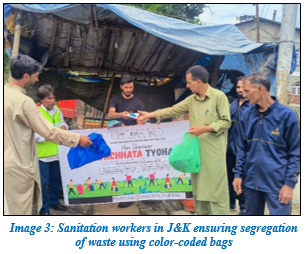
- Deployed a Swachhata Rath Yatra procession alongside street plays, musical performances, and public address systems to encourage waste segregation and bin usage.
- Community-Led Sustainable Alternatives – Women from 28 UP districts and regional artisans produced around 60 crore eco-friendly products (leaf plates, kulhads, jute/cloth bags) sold across 300 locations.
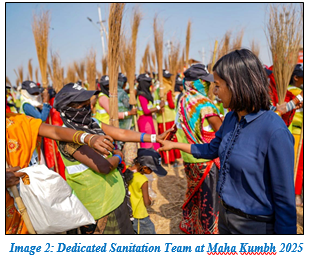
- Rapid Maintenance – Specialized sanitation teams performed immediate post-bathing cleanups, toilet maintenance, disinfection, and fogging.
Kanwar Yatra – Managing Linear Transit Routes
- Targeted Logistics – Delhi implemented round-the-clock sweeping, waste collection, and temporary toilets along heavy pilgrimage transit corridors.
- Plastic Reduction and Dignity –
- Distributed over 5 lakh steel Ganga-water containers and jute bags to replace single-use plastics.
- Introduced two Pink Kanwar Camps managed by female volunteers, offering clean, dedicated toilet and bathing facilities for women pilgrims.
Amarnath Yatra – Eco-Friendly Himalayan Stewardship
- Zero-Landfill Alignment – Aligned with SBM-U 2.0 to protect fragile mountain ecosystems.
- Waste Processing – 100% of the daily generated waste (~11.67 metric tonnes) was processed on-site.
- On-Ground Deployment –
- 1,300 SafaiMitras maintained round-the-clock cleanliness.
- 1,016 twin-bin stations installed for wet and dry waste, alongside dedicated sanitary waste bins near women's restrooms.
- Interactive Campaigning –
- Utilized public engagement drives such as ‘Plastic Lao, Thela Lejao’ and ‘Bin It, Win It’.
- Engaged over 70,000 devotees through a Green Pledge campaign and social media sharing.
Project Udvasana (Hyderabad) – Scientific Handling of Sacred Waste
- Targeted Waste Stream – Focuses on sacred and religious waste (flowers, garlands, religious texts, and damaged idols) through municipal collection and scientific processing.
- Phased Rollout in Greater Hyderabad –
- Phase 1 (Pilot at ISKCON Jubilee Hills) – Collected 66 kg of religious material.
- Phase 2 – Expanded collection to 443 kg.
- Phase 3 – Scaled to 6 major temples, engaging 124 devotees and recovering 753.59 kg of material for recycling and processing through authorized agencies.
Reference
PIB



