What is the issue?
Sudan has witnessed massive protests since Abdel Fattah al-Burhan took over in a military coup and upended the country’s transition to democracy.
What is the origin of the crisis?
- The present conflict in Sudan has its roots in 2018, when the then President Omar al-Bashir ended subsidies on fuel and wheat.
- Sudan was undergoing acute economic distress at that time with inflation at 74.29%, the second highest rate in the world.
- Protests spread across the country demanding for the ouster of Bashir, who had been in power for 30 years.
- This led to the army deposing the President.
How about the country during the Bashir’s reign?
- Bashir’s dictatorial reign was marked by charges of genocide, repression and human rights abuses.
- Bashir first came to power in 1989 and later appointed himself the civilian president.
- He disbanded the military junta and banned rival political parties.
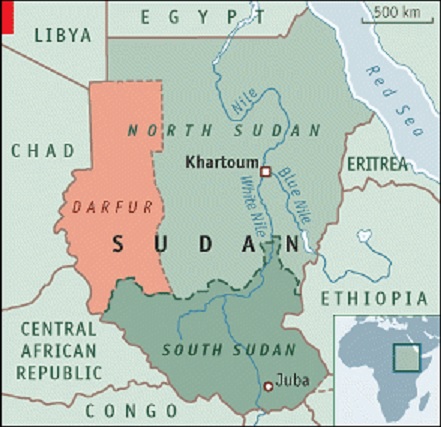
- The Bashir-led government was accused of genocide, war crimes and crimes against humanity against non-Arab communities in the Darfur region of Sudan.
- In 2009, the International Criminal Court issued an arrest warrant against Bashir.
- In 2019, the Transitional Military Council (TMC) led by Abdel Fattah al-Burhan was established in Sudan, which began talks with the protesting groups to establish the way forward for the country.
- The protests culminated in the Khartoum massacre when the TMC’s paramilitary forces opened fire on protestors.
What about the agreement for transitioning to democracy?
- In 2019, protestors and the TMC came to an agreement.
- The military would share power with officials that would be elected by civilian political groups constituting a ruling body called the Sovereignty Council, which would lead Sudan to elections at the end of 2023.
- The Sovereignty Council appointed Abdalla Hamdok as Prime Minister for the transitional period, and he was sworn in in 2019.
- However, in 2021, the military junta, led by Abdel Fattah al-Burhan, arrested PM Abdalla Hamdok in another coup and declared a state of emergency.
What is the present status of the country?
- Protesters felt that the military had hindered Sudan’s transition to democracy and massive crowds laid siege to cities across Sudan.
- Combined with international pressure to restore the civilian democracy, the military was forced to put back Hamdok as Prime Minister.
- But, Hamdok resigned from his role stating that he was unable to work with the military to find a solution.
- Recently, the US government called for the lifting of the ongoing state of emergency in Sudan and threatened sanctions on anyone that would interfere in the transition to democracy in Sudan.
- Burhan lifted the emergency, promising a transition to democracy.
Reference
- https://indianexpress.com/article/explained/sudan-politics-military-coup-state-of-emergency-government-democracy-protests-7947035/



