Prelims: Current events of national and International Importance| Environment
Why in News?
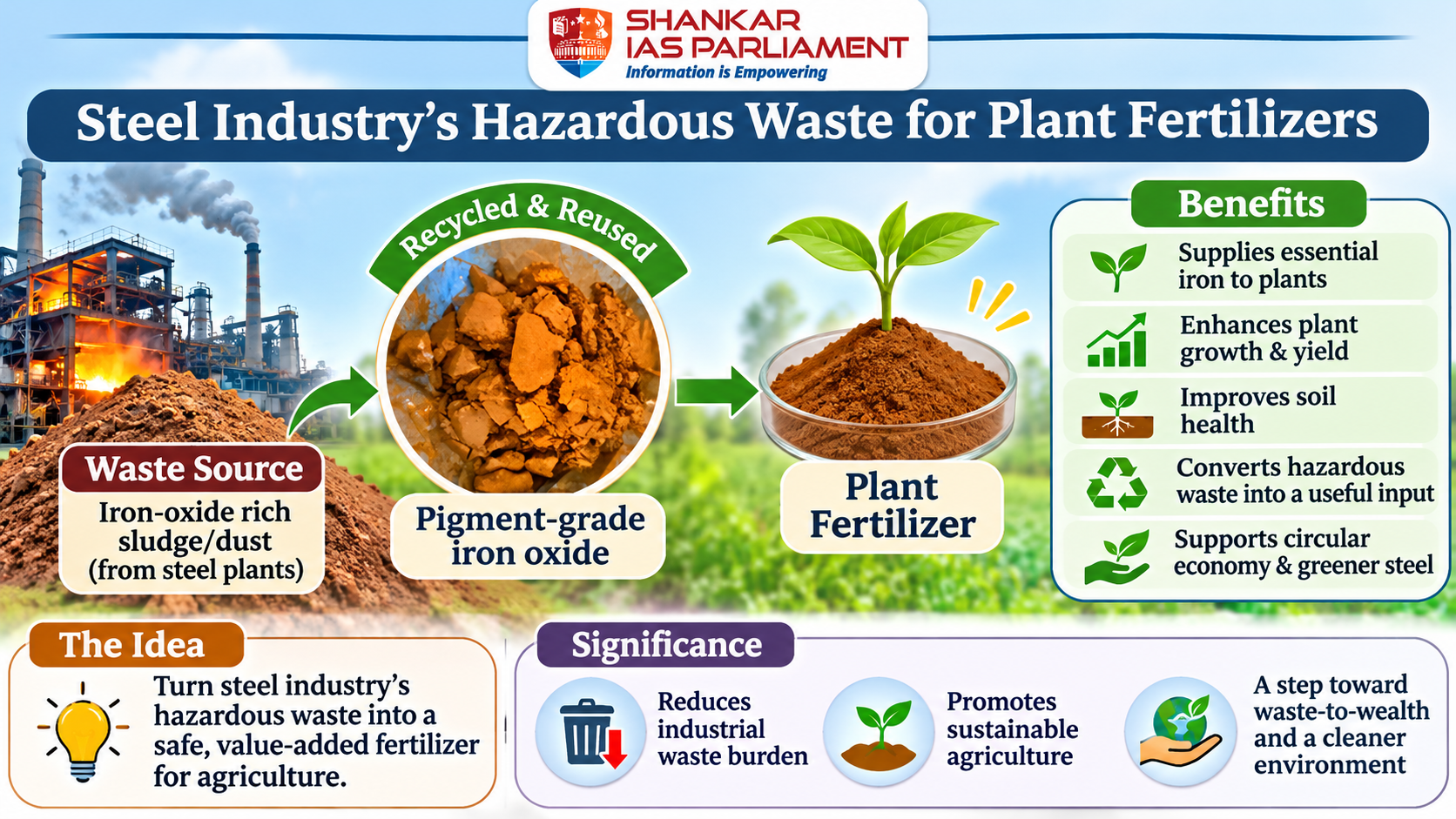
Researchers at CSIR-Central Leather Research Institute (CLRI) in Chennai have developed a process that converts hazardous waste from steel manufacturing into commercially useful inputs for paints, construction, and fertilisers.
The technology has been transferred to industry and targets spent pickling acid—the acidic liquid left over after hydrochloric acid baths remove rust and scale from steel surfaces.
How the Process Works?
- Source waste – Steel plants use hydrochloric acid baths to clean hot-rolled steel, generating roughly 30–60 litres of spent pickling acid per metric tonne of steel once acid strength drops by 75–85%.
- Iron recovery– Dissolved iron is oxidised from ferrous to ferric form—using atmospheric oxygen rather than chemical oxidising agents—and turned into pigment-grade iron oxide (including iron oxide nanoparticles) for paints and construction.
- Chloride recovery– Recovered chloride is converted into ammonium chloride, which can be used in the fertiliser industry.
- On-site setup & water reuse– According to CSIR-CLRI scientist S Easwaramoorthi, the system can run inside steel plants using about three tanks, scale up continuously, and output clean water for reuse without generating secondary waste streams that need separate treatment.
Why It Matters in India?
- India produced 151 million tonnes of steel in 2024–25 and projects output to reach 300 million tonnes by 2030, making scalable recovery of spent acid and metals a practical way to cut hazardous waste while creating value-added industrial inputs.
Reference
The Times of India| Steel industry’s hazardous waste for Plant Fertilizers



