Mains: GS III – Agriculture
India’s agriculture sector registered 4.45% decadal growth (FY16–FY25), the highest in recent decades, but sustaining this requires strengthening ecological foundations for long‑term productivity.
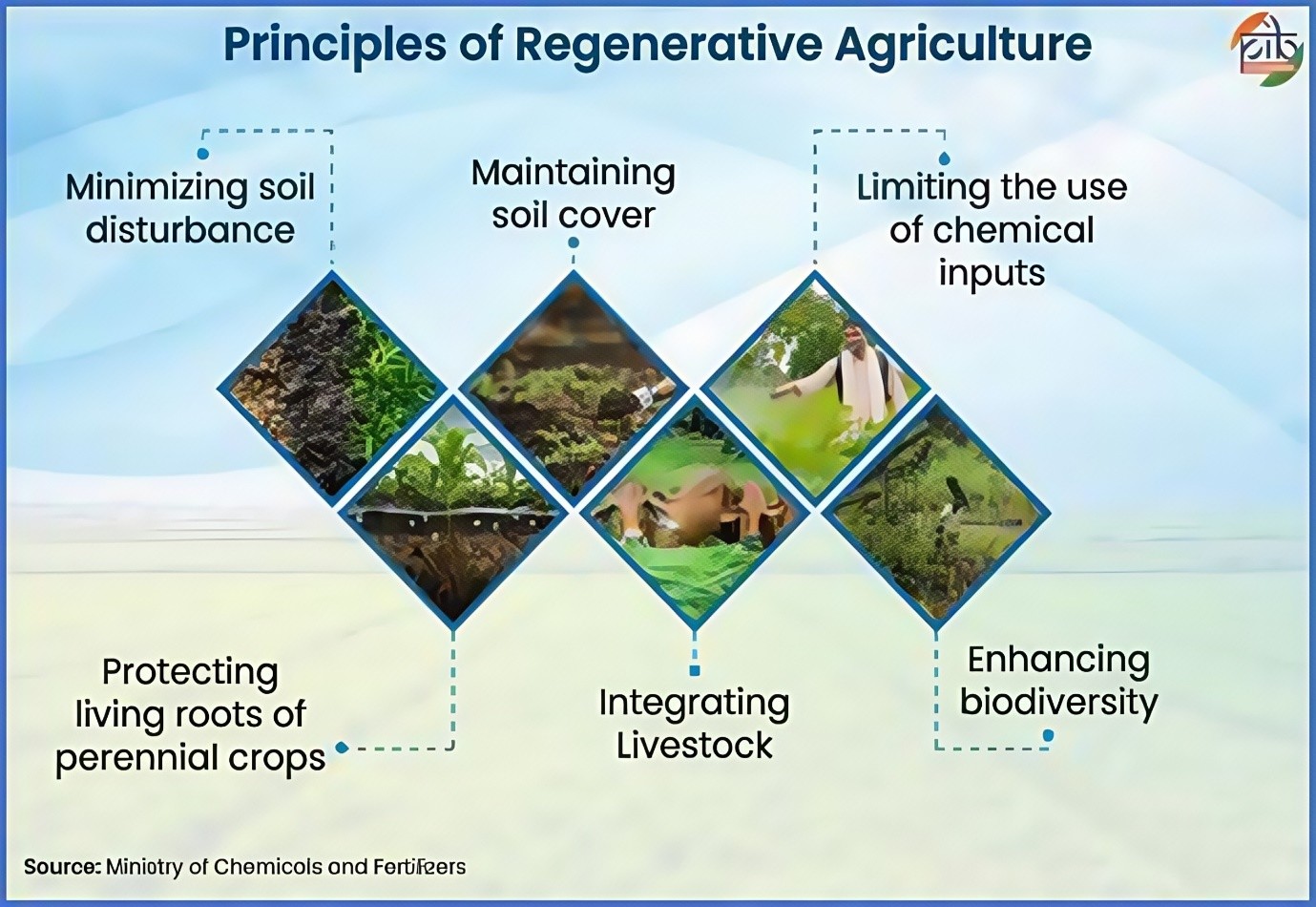
Regenerative agriculture – It is a holistic farming approach centred on restoring the health of farming ecosystems, especially soils, protecting the environment and improving climate resilience.
Based on – Various agricultural and ecological practices such as crop rotation, composting, the reduction of synthetic inputs or even agroforestry.
Regenerative agriculture, aligned with SDG‑13 (Climate Action), helps reverse emissions, reduce climate risks, and enhance farm‑level resilience and adaptive capacity against climate variability.
Micro-irrigation systems – Such as drippers, sprinklers, and foggers deliver water directly to plant roots, reducing water wastage and improves water-use efficiency.
By optimizing farm‑level water management, it enhances crop productivity, strengthen resilience to droughts/water stress, and make farming more climate‑resilient and economically viable.
Farm Mechanization – It involves the use of agricultural machinery and equipment to streamline and automate various farm operations.
It Optimizes inputs like water, fuel, and fertilizers improves resource management, boosts productivity, and reduces farming’s carbon footprint and environmental impact.
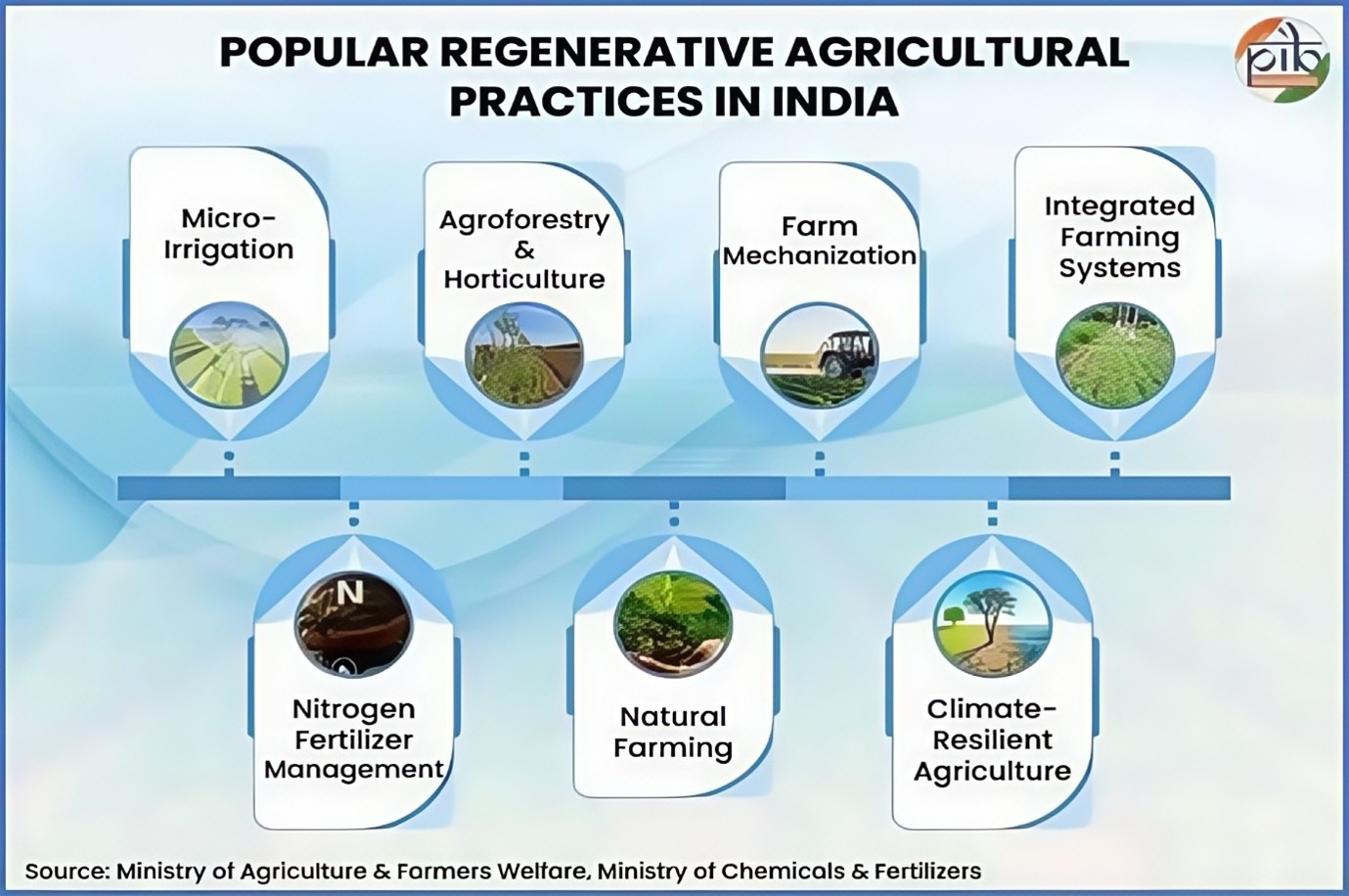
Nitrogen Fertilizer Management – It helps reduce nitrous oxide emissions while improving crop productivity.
It focuses on selecting the right fertilizer and optimizing application timing and dosage.
Practices like deep urea placement, leaf color charts, and biological inputs (cyanobacteria, legume intercropping) together enhance nitrogen‑use efficiency and reduce environmental losses.
Natural farming – It is a chemical-free agricultural approach relies on on-farm biological inputs such as Beejamrut, Jeevamrut, GhanJeevamrut, Neemastra, and Dashparni, prepared using inputs from native livestock.
Agro‑ecological Practices – It uses traditional seeds, tree integration, botanical pest control, cover cropping, multi‑cropping, mulching, and minimal soil disturbance to maintain soil fertility and balance.
Livestock Integration – It Combines livestock with diversified cropping systems improves soil health, restores ecosystems, and lowers input costs.
|
Agro‑Ecological Practices |
|
Integrated Farming Systems (IFS) – It is a holistic agricultural approach that integrates crops, livestock, fisheries, and allied activities like horticulture, agroforestry, and apiculture into a single system.
It promotes practices such as intercropping, crop rotation, multi-cropping, and mixed farming that maximize resource use.
Agroforestry – Integrating perennial tree systems with fruit and plantation crops creates a sustainable, profitable farming system that improves soil moisture, regulates local temperatures, and stores more carbon.
In rainfed regions, it rejuvenates degraded land, mitigates rainfall variability, enhances resilience, and lowers greenhouse gas emissions.
Climate-Resilient Agriculture (CRA) – It encompasses a plethora of strategies and technologies to fortify agricultural systems against a changing climate. Its key components include:
Balanced use of nutrients and fertilizers,
Effective pest management,
Efficient and judicious use of water,
Conservation of soil moisture at the field level, and
Appropriate land preparation practices that safeguard soil health and enhance crop performance.
It includes innovations like water‑sharing groups, seed/fodder systems, nurseries, and collective marketing strengthen agriculture to withstand climate stresses and shocks.
Soil restoration – It rebuilds soil organic matter, improve soil structure, and enhance long-term soil fertility, supporting stable agricultural productivity.
Biodiversity enhancement – It approaches create favourable conditions for a wide variety of species, including pollinators, beneficial insects, and soil microorganisms.
Climate change mitigation – These systems absorb and store more carbon than they emit, helping reverse agricultural emissions.
Water efficiency – Healthy soils retain more water and reduce runoff, which limits soil erosion and the movement of sediments and pollutants into rivers and lakes.
Profitability – Healthier soils reduce dependence on synthetic fertilizers, pesticides, and irrigation which lowers input costs, stabilizes yields, and enhances farmers’ net incomes.
Employment generation – It creates new livelihood opportunities across farming, advisory services, technology, and ecological management.
Greater resilience – Farms adopting regenerative practices are better equipped to withstand climate variability and market fluctuations.
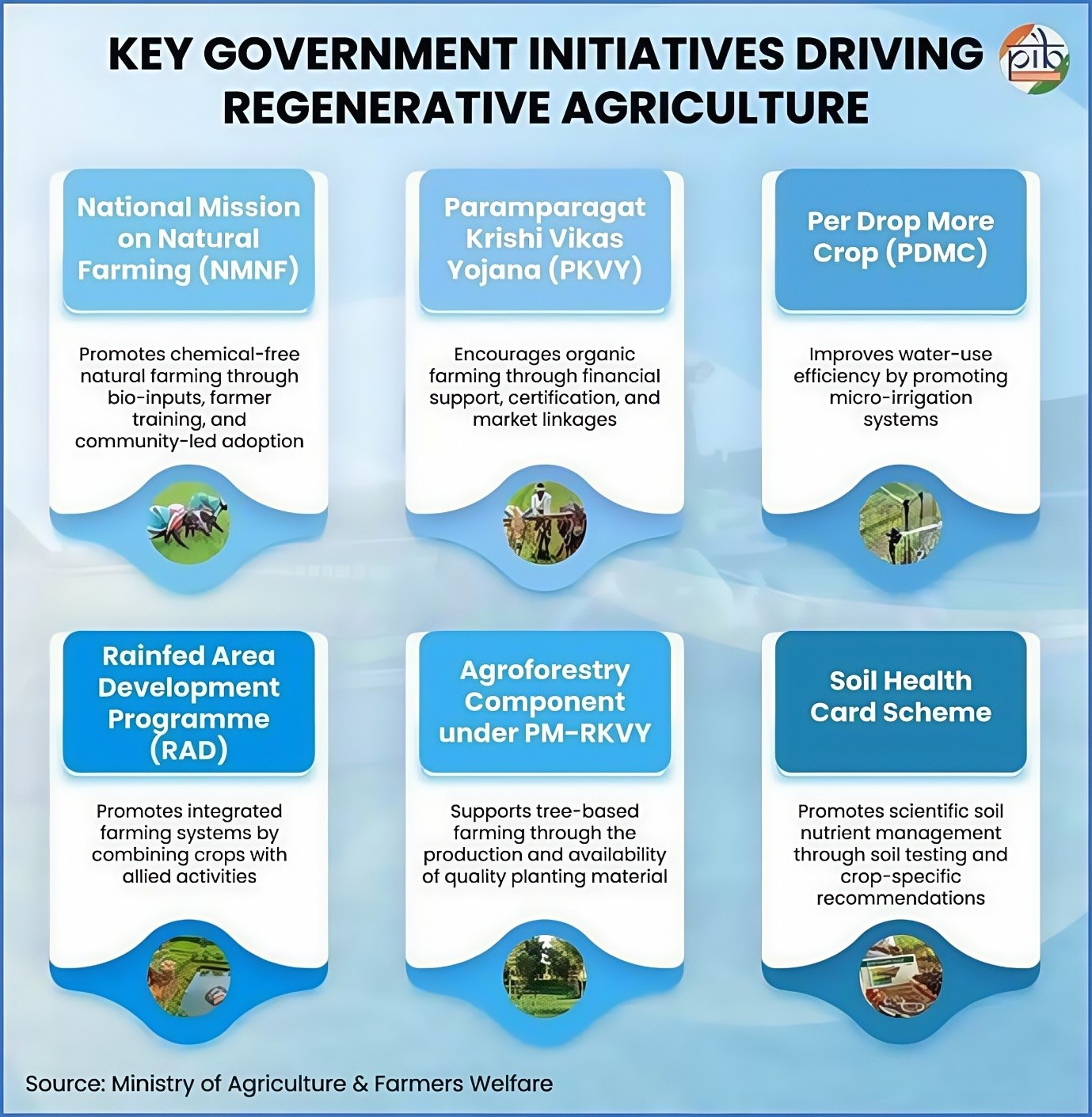
Regenerative agriculture is gradually reshaping the future of Indian farming which restores soil health while improving resilience and resource efficiency.
As more farmers embrace regenerative practices, agriculture can become both environmentally sustainable and economically rewarding.
The journey begins with healthier soils and leads towards more resilient farms and secure livelihoods.
PIB | Rebuilding Farming Systems



