What is the issue?
- For generations, the Asia-Pacific region has thrived on our seas, which provide food, livelihoods and a sense of identity.
- Escalating strains on the marine environment are threatening to drown progress and our way of life.
What are causes of concern?
- In less than a century, climate change and unsustainable resource management have degraded ecosystems and diminished biodiversity.
- Levels of overfishing have exponentially increased, leaving fish stocks and food systems vulnerable.
- Marine plastic pollution coursing through the region’s rivers has contributed to most of the debris flooding the ocean.
- While the COVID-19 pandemic has temporarily reduced pollution, this should not be a moment of reprieve.
- Rather, recovery efforts need to build a new reality, embedded in sustainability.
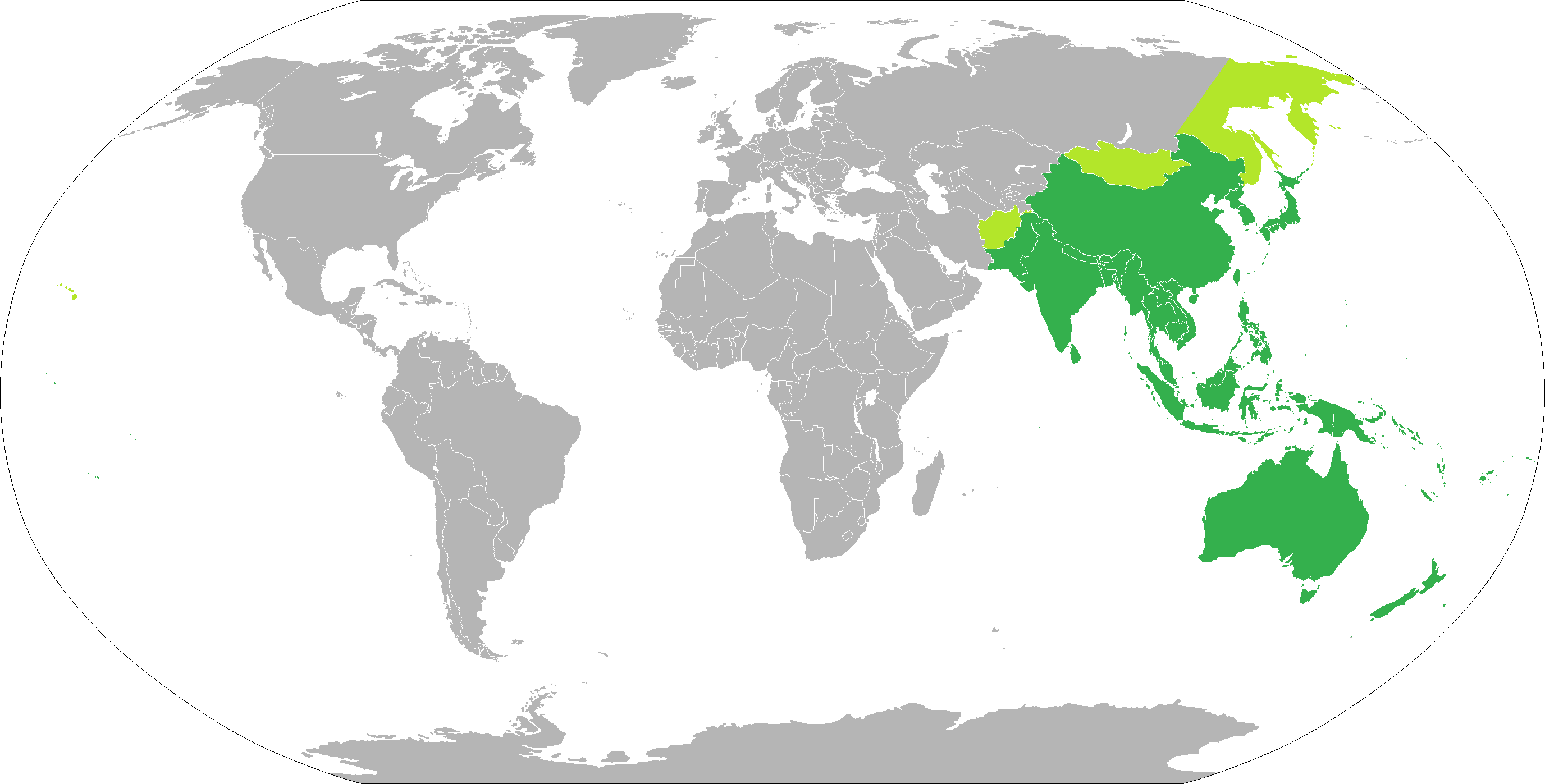
Asia-Pacific Region in World map
Is there enough data available?
- The Economic and Social Commission for Asia and the Pacific (ESCAP) has released its theme study for this year.
- The theme study ‘Changing Sails: Accelerating Regional Actions for Sustainable Oceans in Asia and the Pacific’, talks about lack of data.
- Data are available for only two out of ten targets for the Sustainable Development Goal 14, ‘Life Below Water’.
- Due to limitations in methodology and national statistical systems, information gaps have persisted at uneven levels across countries.
What is the level of plastic pollution?
- Asia and the Pacific produces nearly half of global plastic by volume, of which it consumes 38%.
- Plastics represent a double burden for the ocean:
- Their production generates CO2 absorbed by the ocean, and
- As a final product enters the ocean as pollution.
- Beating this challenge will hinge upon effective national policies and re-thinking production cycles.
What is the impact of unsustainable fishing?
- Environmental decline is also affecting fish stocks.
- Asia-Pacific region’s position as the world’s largest producer of fish has come at the cost of over-exploitation.
- The percentage of stocks fished at unsustainable levels has increased threefold from 10% in 1974 to 33% in 2015.
- Generating complete data on fish stocks, fighting illicit fishing activity and conserving marine areas must remain a priority.
Is there a gap in maritime connectivity?
- The most connected shipping economies are in Asia.
- But, the small island developing States of the Pacific experience much lower levels of connectivity.
- This connectivity gap relatively isolates them from the global economy.
- Closing the maritime connectivity gap must be placed at the centre of regional transport cooperation efforts.
- There must be work with the shipping community to navigate toward green shipping.
- Enforcing sustainable shipping policies is essential.
Why regional data should be collected?
- The magnitude of our ocean and its challenges represent how extensive and collaborative our solutions must be.
- Trans-boundary ocean management and linking ocean data call for close cooperation among countries in the region.
- Harnessing ocean statistics through strong national statistical systems will serve as a guide for the countries to monitor trends, devise timely responses and clear blind spots.
- Through Ocean Accounts Partnership, ESCAP is working with countries to harmonise ocean data and provide a space for regular dialogue.
What could be done?
- The international agreements and standards must be translated into national action to get tangible results.
- ESCAP is working with member states to implement International Maritime Organization (IMO) requirements.
- Keeping the ocean plastic-free will depend on policies that promote a circular economy approach.
- This minimises resource use and will require economic incentives and disincentives.
Source: The Hindu
Quick Facts
Economic and Social Commission for Asia and the Pacific (ESCAP)
- ESCAP is the UN’s regional hub promoting cooperation among countries to achieve inclusive and sustainable development in the Asia-Pacific region, with priority accorded to,
- Implementation of 2030 Agenda for Sustainable Development,
- Achievement of the SDGs.
- It is the largest regional intergovernmental platform with 53 Member States and 9 associate members.
- India is a member of ESCAP since 1947.
- ESCAP’s products and services support its member States in building national capacities in:
- Strengthening and implementing equitable and sustainable economic and social development policies and programmes;
- Preparing for and participating in multilateral trade, transport, ICT, energy and environmental partnerships and agreements;
- Building effective partnerships with civil society entities and the private sector;
- Reviewing progress in achieving the SDGs and targets adopted at global and regional conferences.



