Mission Mausam
The Union Cabinet recently approved Mission Mausam with a budget outlay of 2,000 crores over two years.
- Mission Mausam - It aims to make India ‘Weather Ready’ and ‘Climate Smart’.
- The mission seeks to enhance the country’s weather and climate observations, understanding, modelling and forecasting.
- Mission Period - 2024-26.
- Nodal Ministry - Ministry of Earth Sciences.
- Implementing Agencies
- India Meteorological Department(IMD), Mausam Bhavan, New Delhi
- National Centre for Medium Range Weather Forecasting (NCMRWF), Noida
- Indian Institute of Tropical Meteorology, Pune
- Objectives
- Develop Cutting Edge Weather Surveillance Technologies & Systems
- Implement Higher resolution atmospheric observations with better temporal and spatial sampling/coverage
- Implement Next-generation radars, and satellites with advanced instrument payloads
- Implement High-Performance Computers (HPC).
- Improve understanding of weather and climate processes and prediction capabilities
- Develop improved earth system models, and data-driven methods (use of AI/ML)
- Develop Technologies for weather management
- Develop state-of-art dissemination system for last mile connectivity
- Capacity building
- Features – The mission will establish
- 50 Doppler Weather Radars (DWR)
- 60 Radio Sonde/Radio Wind (RS/RW) stations
- 10 Wind Profilers
- 25 radiometers
- 1 Urban testbed
- 1 Process testbed
- 1 Ocean Research station
- 10 Marine Automatic Weather Stations with upper air observation.
- 100 disdrometers.
A disdrometer is a device that measures the size and velocity of falling raindrops, snowflakes, and hail. It can also differentiate between different types of precipitation.
- Benefits – Mission will improve forecasts on both spatial and temporal scales and air quality data and help strategize weather management/intervention in the long run.
- Improved services for weather, climate, and natural hazards
References
PIB | Project Mausam
Vertical Launch Short Range Surface-to-Air Missile (VLSRSAM)
Defence Research & Development Organisation (DRDO) and the Indian Navy successfully conducted back-to-back flight tests of the Vertical Launch Short Range Surface-to-Air Missile (VLSRSAM).
- VL SRSAM – It is the indigenously built short-range surface-to-air missile.
- It is a ship-borne weapon system designed to neutralise various aerial threats at close ranges, including sea-skimming targets.
- Missile Developed by - Defence Research and Development Organisation (DRDO).
- Operational range – 80 Km
- Flight altitude - 16 km (52,000 ft)
- Maximum speed - Mach 4.5
- Guidance Technology- During mid-course flight, the missile uses fibre-optic gyroscope based inertial guidance mechanism while in terminal phase uses active radar homing.
- VLS - Each Vertical Launch System (VLS) can hold forty missiles in a twin quad-pack canister configuration.
- Replacing Barak - VL-SRSAM intended to replace older Barak 1 surface to air missile system onboard Indian Navy warships.
- Flight Test - The flight test was carried out from a land-based vertical launcher, targeting a high-speed aerial target flying at a low altitude.
- The missile system successfully tracked and engaged the target.
- Testing site - Integrated Test Range (ITR) in Chandipur, off the coast of Odisha.
Reference
PIB | VL-SRSAM
G20 Agriculture Ministerial Meeting
India Participated in G20 Agriculture Ministerial Meeting in Cuiabá, Brazil.
- 2024 G 20 Presidency - Brazil has assumed the presidency of the G20 until November 2024.
- G20 Countries - Argentina, Australia, Brazil, Canada, China, France, Germany, India, Indonesia, Italy, Japan, Mexico, Russia, Saudi Arabia, South Africa, South Korea, Turkey, United Kingdom, and United States.
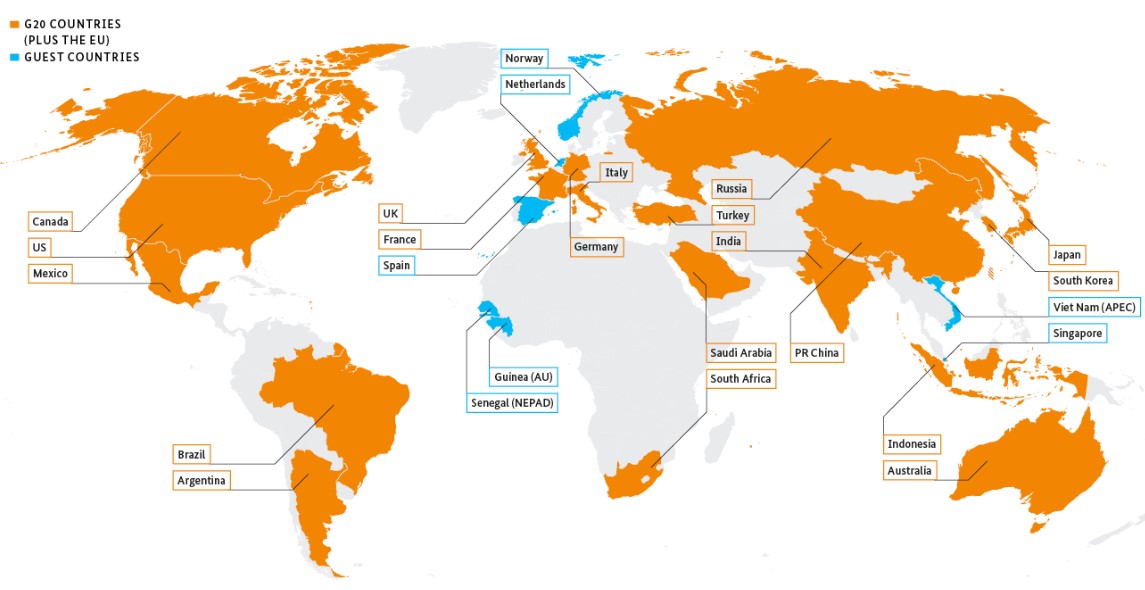
- Agriculture Ministerial Meeting - It is aimed to promote international cooperation in addressing critical issues for global agriculture such as food security, sustainable agriculture, technological innovation, and climate change adaptation.
- Venue - Cuiabá, Brazil.
- Priority Areas – The meeting centred around Four key priority areas for global agriculture.
- Sustainability - Sustainability of agriculture and food systems in their multiple paths
- International Trade - Enhancing international trade's contribution to food security and nutrition
- Inclusiveness - Elevating the essential role of family farmers, smallholders, indigenous peoples and local communities in sustainable, resilient and inclusive agriculture and food systems
- Aquaculture - Promote the integration of sustainable fisheries and aquaculture into local and global value chains.
Reference
PIB | India Participates in G20 Agriculture Ministerial Meeting
Herpetofauna Survey
The first-ever preliminary herpetofauna survey conducted in Grass Hills National Park and Karian Shola National Park.
- Key Findings- The survey revealed rich biodiversity, identifying 20 species of reptiles and 34 species of amphibians.
- Grass Hills National Park
- It is a protected area located in the Anamalai Hills of Tamil Nadu, India.
- Recorded 11 reptile species and 12 amphibian species.
- Montane shola grassland ecosystem unique to the Western Ghats.
- Karian Shola National Park
- It is part of the Anamalai Tiger Reserve in Tamil Nadu, featuring tropical rainforest ecosystems.
- Recorded 9 reptile species and 22 amphibian species.
- Grassland surrounded by semi-evergreen and deciduous forest.
Anamalai Tiger Reserve is located in the Western Ghats of Tamil Nadu, India. It also encompasses important ecological zones like the Grass Hills and Karian Shola.
- Critically endangered and endangered species
- Anaimalai flying frog (Rhacophorus pseudomalabaricus).
- Deccan night frog (Nyctibatrachus deccanensis).
- Cold stream torrent frog (Micrixalus frigidus).
- Resplendent Shrubfrog (Raorchestes resplendens).
- Rare and newly described reptiles
- Three-lined Shieldtail (Platyplectrurus trilineatus), last seen in 2018.
- Anamudi dwarf gecko (Cnemaspis anamudiensis), first report since discovery.
- Newly described species: Cnemaspis anaimalaiensis and Tail-spot Shieldtail (Uropeltis caudomaculata).
- Other notable amphibians
- Star-eyed ghat frog (Ghatixalus asterops).
- Green-eyed bush frog (Raorchestes chlorosomma).
- Kodaikanal bush frog (Raorchestes dubois).
- Yellow-bellied bush frog (Raorchestes flaviventris).
- Legless amphibian Ichthyophis tricolor.
- Tadpoles of the evolutionary distinct Purple frog (Nasikabatrachus sahyadrensis).
- Ecological significance- Nearly 85% of the species recorded are endemic to the Western Ghats.
- Many species are restricted to the Anamalai sub-cluster, highlighting the region's unique biodiversity.
Reference
The Hindu | Herpetofauna Survey
Poltava
49 people killed in Ukraine's Poltava after Russia Launches 2 Ballistic Missiles recently.
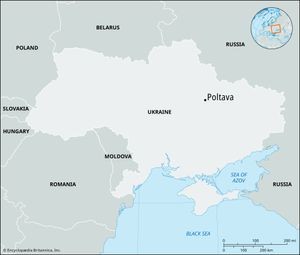
- Poltava is a city in east-central Ukraine.
- It is located 300 kilometres east of Kyiv, the capital of Ukraine.
- It lies along the Vorskla River.
- History
- Archaeological evidence dates the city from the 8th to the 9th century, although the first documentary reference is from 1174, when it was variously known as Oltava or Ltava.
- Destroyed by the Tatars in the early 13th century, it was the centre of a Cossack regiment by the 17th century.
- In 1709 Peter I the Great inflicted a crushing defeat on Charles XII of Sweden outside Poltava after Charles had laid siege to the town for 3 months.
- In 1802 it became a provincial centre.
- The modern city of Poltava is largely new, having been reconstructed after it suffered severe damage during World War II.
Reference
NDTV | Ukraine's Poltava after Russia Launches 2 Ballistic Missiles



