Prelims: Current events of national and international importance | Environment
Why in News?
A study published in Earth’s Future reports that more than 75% of the world’s tropical forests experienced unusually hot and dry conditions during the 2023–24 El Niño period.
Key Findings
- Study period – Climate data from 2000–2024; future projections from 2025–2100.
- Area studied – 15.9 million sq. km of tropical forests in the Americas (8.4 million sq. km), Africa (3.6 million sq. km), and Asia (3.9 million sq. km).
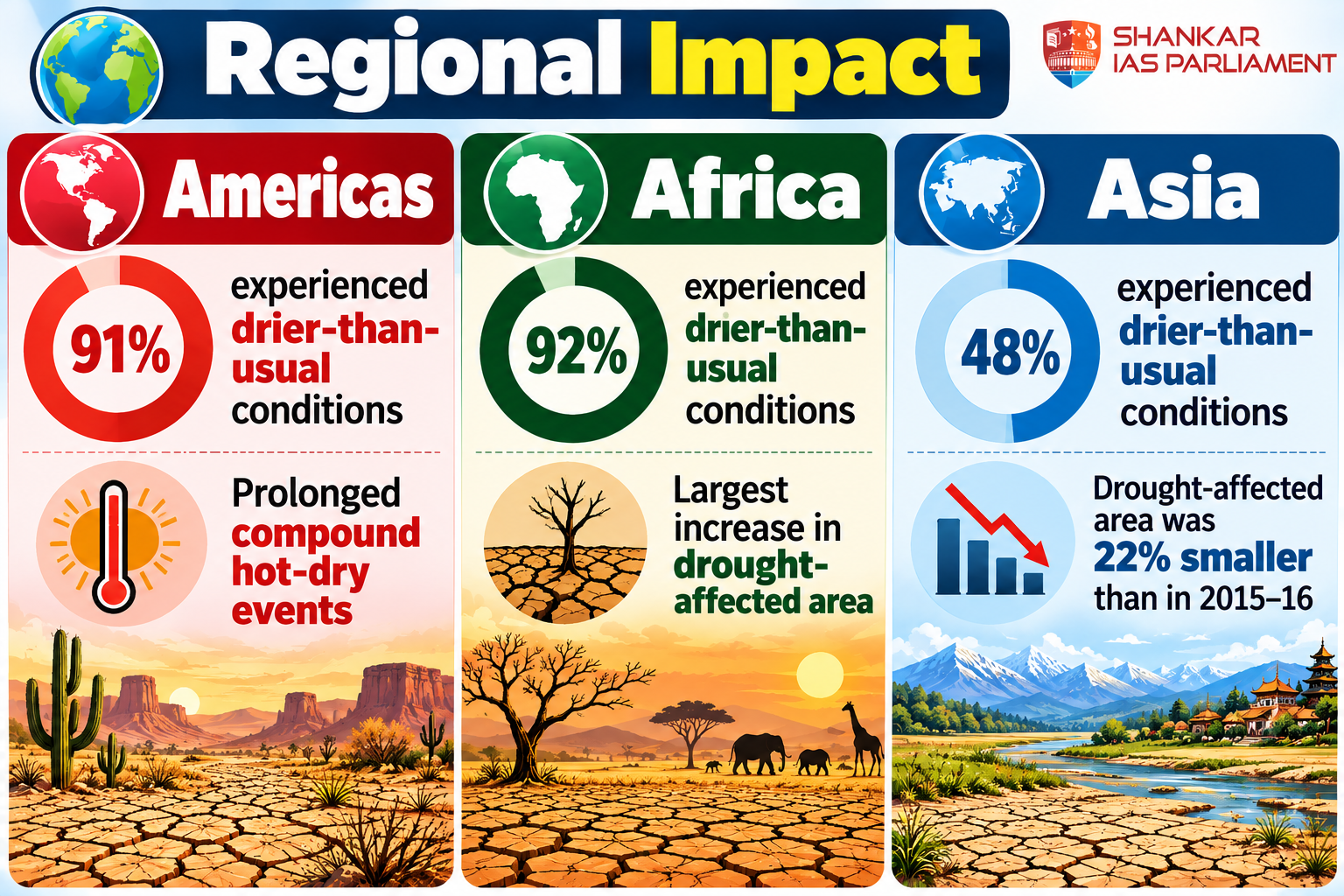
- Compound hot-dry events – Impacted about 88% of American, 89% of African, and 43% of Asian tropical forests.
- Drought – Drier-than-normal conditions impacted approximately 80% of pantropical forests.
- Wet-season vulnerability – About 80% of unusually hot and dry months occurred during the wet season, disrupting groundwater recharge.
- Forest degradation – Burned areas rose by about 9%, and reported degradation increased by 19% during 2023–24.
Impacts on Tropical Forests
- Tropical forests sequester approximately 1.2 petagrams of carbon annually (Pg C/year).
- Extreme heat and drought elevate tree mortality rates, increase the frequency of forest fires, and accelerate ecosystem degradation.
- Forests have the potential to transition from functioning as carbon sinks to becoming carbon sources.
- A decline in evapotranspiration diminishes atmospheric moisture recycling, which can intensify regional aridity.
- Consequences include biodiversity loss, disruption of hydrological and carbon cycles, and increased threats to local livelihoods.
Reference
Down to Earth | Tropical Forests and Extreme Droughts: El Niño 2023–24



